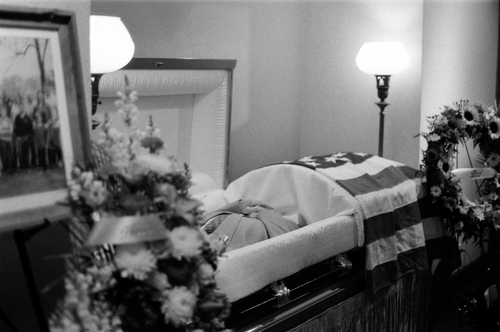
Artist from USA
Paige Young is a photographer located in the midwest of the United States. Her love with photography began with the connection between psychology and photography. She saw the intimacy between photographer and subject and how images can affect the love and compassion we find for ourselves.
Her commercial work and fine art work revolve around the idea of self-compassion, and tackles ideas of grief, eating disorders, mental health, and representation in communities that are being politically erased. She has owned her own business for more than 15 years, normalizing and representing all forms of love and diversity in her work. Besides equality, storytelling and freezing moments in time are elements that are incredibly important to Paige, especially as she ages.
more. paigekyoung.com

INTERVIEW with Paige Young
Carmela Loiacono talks with Paige Young who takes part in the International Art Exhibition STORIES OF IDENTITY – The 2nd Edition in Matera, at cultural hypogeum Lega Navale Italiana Matera-Magna Grecia.
Carmela Loiacono – Please introduce yourself and talk about the selected photo series: “These Died With You” presented during the exhibition STORIES OF IDENTITY – The 2nd Edition.
Paige Young – My name is Paige Young – I am a film and digital photographer, yet I find myself shooting more analog and in the darkroom the more the world leans into the digital era and moves 100 miles a minute. I’ve been working really hard on slowing down and embracing every moment, and the darkroom really makes you have to do that. “These Died With You” is a work that is of founded images from my grandfathers basement of images that range from 1850-1960. My family was extremely broke in these times, but my great great grandfather and my great uncle had an interest in photography and some how came about the means to develop and produce images in these times. I didn’t have the negatives, but I did have the darkroom prints. Being an educator who teaches film, I have create negative prints and positive prints from existing prints before, so I thought I would try to create something new from these old images.
When I inherited these images I didn’t really know the stories behind them. I was enthralled with the images because they were dated and showed the history, but I didn’t really know the people or the stories. Luckily my grandmother of my grandfather is still alive, so I took these images back to her and asked her about them. Even in my bachelor’s degree I was kind of obsessed with this idea of what we leave behind. Why do we keep things that if we didn’t have attachments to, would they be disregarded as trash? These images are kind of like that. Without my grandmother telling me these stories, I wouldn’t know them. However, these stories are stories she has heard, but none that she truly lived until she shows up in the frames of them. So as much as she can believe the stories, the identity behind them is still a mystery. I hope these people were good people – but it was the 1850’s, when racism was raging in America, and although we lived in the North, that doesn’t really say much.
Carmela Loiacono – How would you describe your creative process? What or who influenced or is influencing your work?
Paige Young – The creative process is very much experimental. This is so opposite of how my brain works, and opposite of every other process I have digitally. However, it works for my concept. The less I feel I know about the individuals in the photographs, the less I want the viewer to identify. I play around with distance between the papers while enlarging, causing them to be more out of focus, and I also play around with paper negatives, leaving the viewer a bit disoriented while reading them, since they are opposite than the positive intended.
I have SO many influences for my film art. Duane Michels, Diane Arbus, Mary Ellen Mark – all of these artists I teach about daily. I love the real and raw of their documentary while also telling the viewer a narrative. I love Michel’s post processing and double negatives in the darkroom and in camera. He was really the one that got me playing around in the darkroom and got me in an experimental mode with my work – that eventually made it into the way of all of the darkroom classes I teach.
Carmela Loiacono – What do you think about shared art on social media? Could it be an alternative way of communicating contemporary art?
Paige Young – I think sharing art on social media only globalizes art for accessibility. Not everyone can make it to an art gallery. Notoriously, art has always been so exclusive to certain classes and types of people. I truly believe that contemporary art and social media is breaking that stereotype, inviting people of all classes, races, and identities to join it. There have been so many cool pieces of art shared on social media, within websites, on google docs, and have also invited the general public to play along or add their voice to it. It’s not changing art, it’s adding a new genre. I think that is a beautiful thing – and something we really need today to unify us.
Carmela Loiacono – What are your future goals and/or projects?
Paige Young – As many people can see, the United States is a mess. We are so divided, it’s painful and feels so hopeless. One of the main reasons I shifted to grief and joy is because it does humanize us. It is the two emotions that we do all feel. Not everyone can feel empathy, but for the most part, everyone can feel sympathy… or can understand these two emotions. Along with that, I deal with my own set of obstacles – like manic depression, major anxiety, and autism. I am currently building two installations that focus on grief, but have an additive layer of medication that sometimes may this emotion difficult to feel, even though we are very aware we are in it. IT is VERY exciting to be making trans-disciplinary art with installation and photography.
You never have to be put in one category – just make what you need to make, to say what you need to say.
I will be showing work in Florence, Italy October 18-25, and Outside of the Louvre in Paris, France April 10-12.