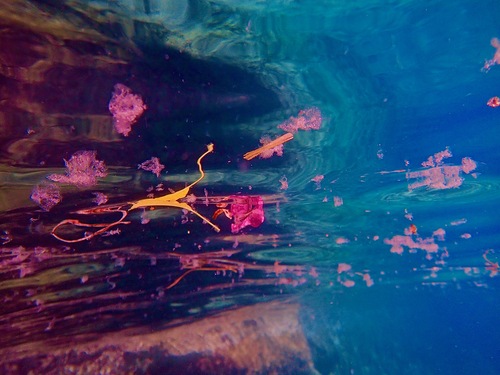
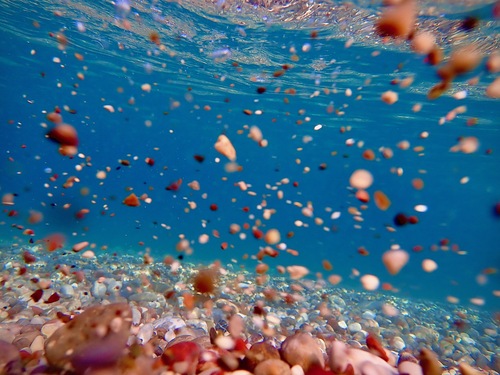
Autore: Carmela Loiacono

  • Carola Helwing

    Artist from Germany

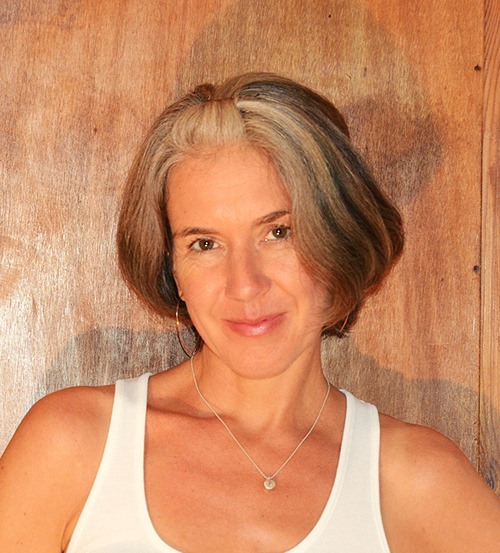
    Carola Helwing is a German painter based in Frankfurt/ Main, Germany. 
    The passion for creativity and especially painting reaches back to her childhood and as well as dancing it accompanies her through her whole life. 
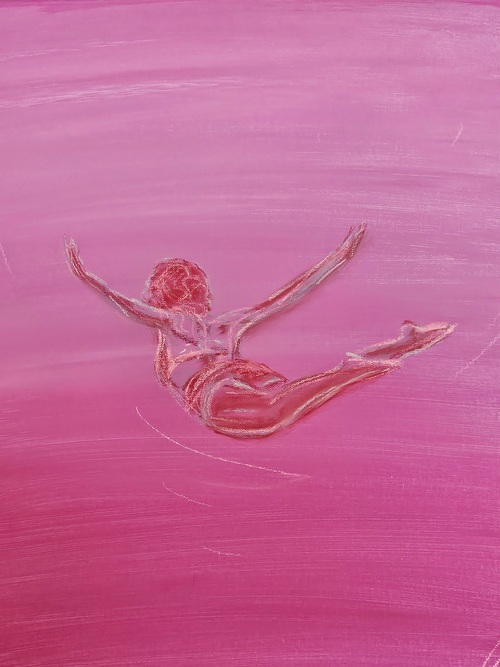
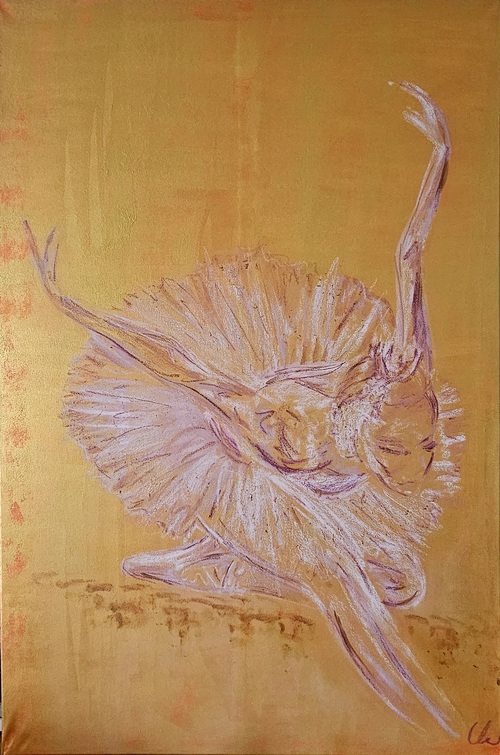
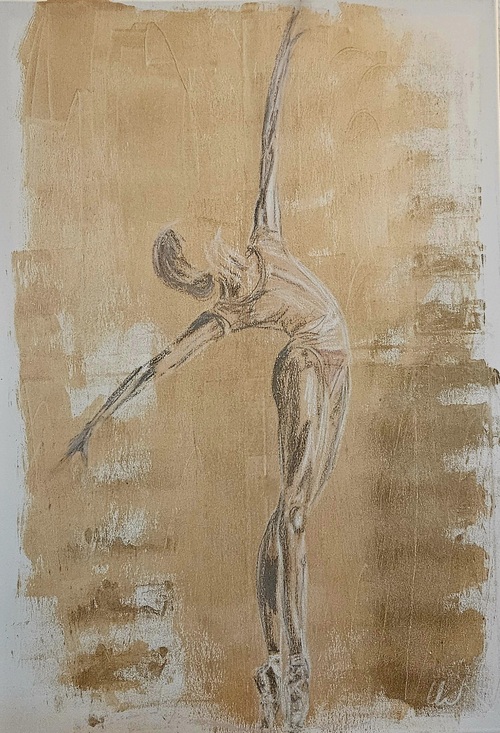
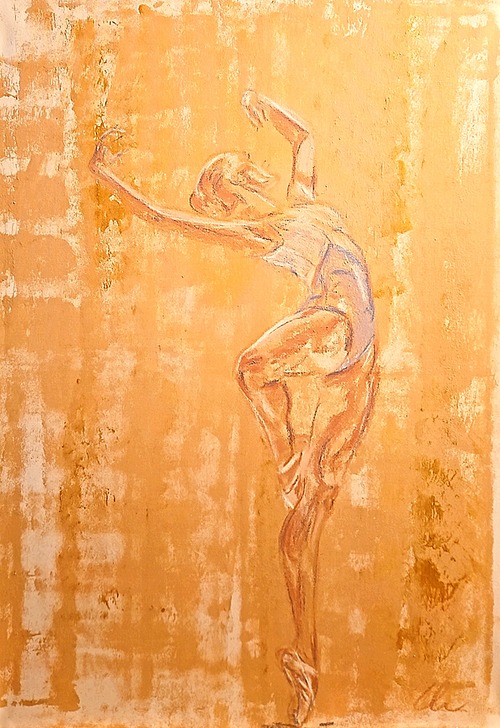
    With her background of art and dance education she focuses on dance and movement as a main theme in her artworks. It’s her aim to catch the power and beauty of momentum to translate it onto canvas and make the grace and strength as well as the eternity of dance itself captable for the viewer. 
    Another focus of her artwork lies on icon-portraits. Carola captures the uniqueness of these persons in her artwork and lets their power and personality shine in a modern context. 
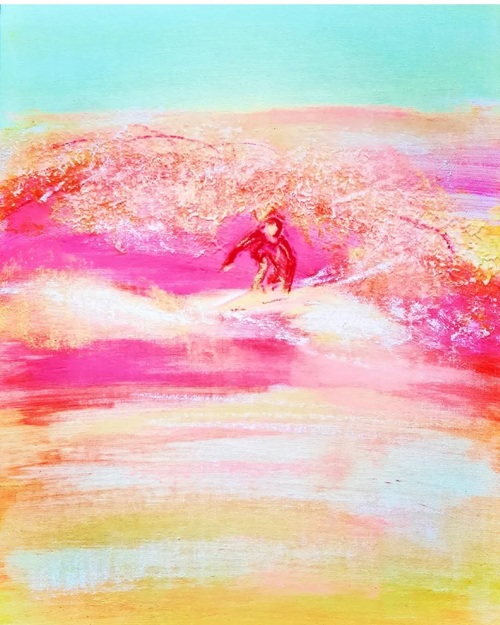
    Her paintings of nature and the sea reflect her love for and her deep connection to these landscapes. Especially water as the essential element of life recurs throughout her works.
    Beneath drawing and painting Carola also deals with photography and its variety and possibilities to create new perspectives. It‘s an invitation to the viewers to see the world through her lens and to gain a different approach to certain topics.
    Carola’s work has been awarded with several international art-prizes and can be seen in galleries around the world, both in digital format and in physical form. 

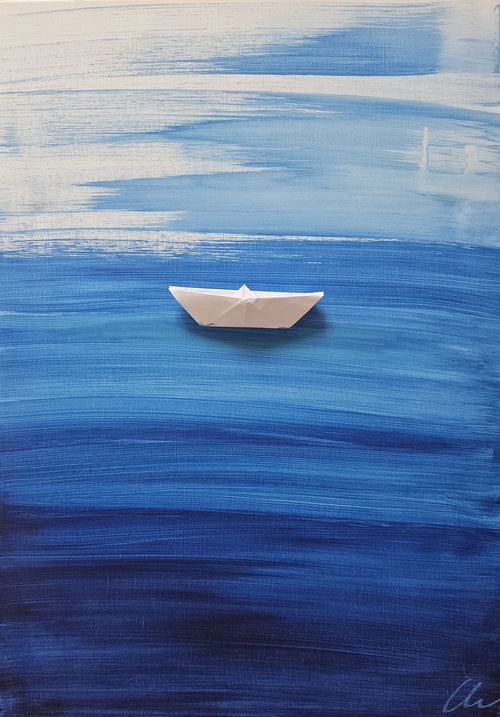
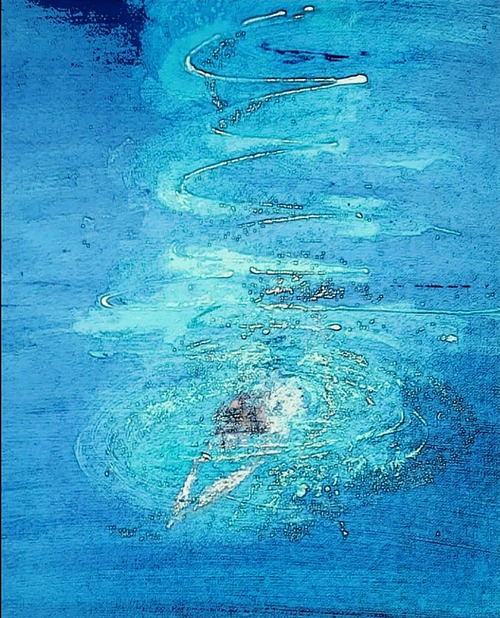
    CRITICAL REVIEW: The artist’s research unfolds through a selection of three self-standing artworks, each conceived as an independent inquiry into the conceptual, dynamic, and formal properties of the aquatic element. The visual journey opens with a highly conceptual piece “White Boat”, where a fragile origami boat stands against horizontal layers of blue, becoming a universal symbol of the vulnerability and precariousness of the human voyage.
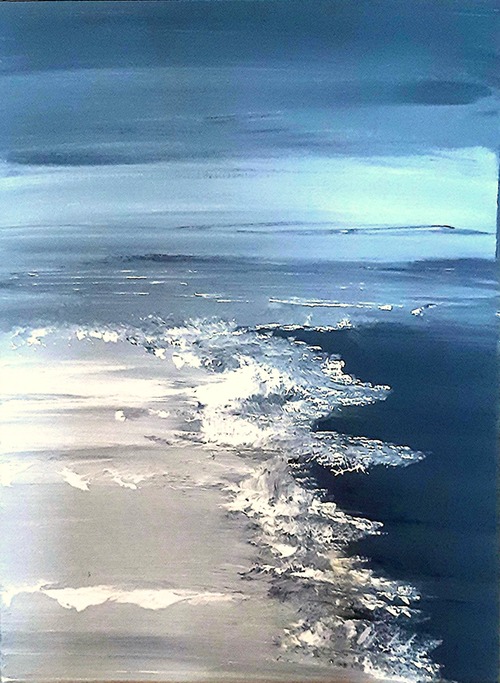
    The artwork “Under Water” abandons reflective stillness to explore the kinetic energy of the body: through dynamic and scratched gestural marks, the artist captures a figure immersed amidst vortexes and luminous spirals, where water acts as a transformative substance that regenerates form. Finally, the artwork “Grey Sea” shifts the gaze toward the monumentality of nature through a thick, sculptural palette knife application; here, the foam of waves breaking on the shore investigates the concept of threshold and transition. Three distinct visions that, despite their independence, enriched the theme of NATURAL FLOW – The 2nd Edition 2026 by celebrating water as a primordial and ever-changing force. – Dr. Carmela Loiacono, Art Curator
    more. www.carolahelwing.de | Instagram profile

    INTERVIEW with Carola Helwing
    Carmela Loiacono talks with Carola Helwing who took part in the International Art Exhibition NATURAL FLOW – The 2nd Edition 2026 in Lecce at MUST – Museo Storico della città di Lecce, from July 03 to 18, 2026.

    Carmela Loiacono – In your biography, you explain that dance and movement are the core themes of your art, aiming to catch the grace and strength of a single momentum. When engaging with the NATURAL FLOW theme, how did the innate fluidity of water dialogue with your choreographic sensibility? Did you perceive the motion of currents or waves as a natural dance to be translated onto canvas?
    Carola Helwing – Yes, I actually have. The fluidity of a body in dance mirrors that of water. And, after all, our bodies are composed primarily of water. It is fascinating to consider the possibilities our bodies offer regarding perception and mobility when we keep this in mind. Water teaches us to go with the current, to open ourselves up, and to surrender. We find all of this in dance as well—and it is precisely this approach that I utilize in my art.

    Carmela Loiacono – Alongside painting, your practice experiments with photography to offer unconventional perspectives and invite the public to see the world through your lens. How does this photographic eye influence your hand when you are before the canvas breaking down complex and elusive elements like light, reflections, and the transparency of water?
    Carola Helwing – This perspective allows me to look beyond the form—to discern and break down details, and to establish a specific focus based on my vision. Yet, ultimately, it also enables me to keep the whole picture in view and shape it into a reflection of how I see and feel about a subject.

    Carmela Loiacono – The exhibition concept highlights water as a vital component of the life cycle and an essential resource—a deep connection to nature that you state you share personally. Now that the show has concluded, what aspect of your personal connection to the sea and nature do you hope remained with the public who observed your exhibited artworks?
    Carola Helwing – I think each of us has a connection to the subject of water. Through my art, I hope to convey the beauty of water—and the sea—or at least some of its many facets. I also hope that viewers gain some insight, if only for a moment, into the themes I associate with water, even though there are countless others. On a global level, I hope that with every image in this exhibition, people are reminded of just how precious the resource of water is and that we all have a part to play in protecting it.
  • Jes Chen

    Artist from China

    Jes Chen is a London based spatial artist and designer. She works across installation, moving images and performance. She trained in architecture and interior design. This background shapes her view of space as an emotional interface, not a neutral container.
    Her practice examines how bodies move through scripted environments. These environments include hotels, digital platforms and domestic thresholds. In such spaces, care, control and intimacy are encoded in materials, protocols and interfaces.
    Chen often uses fragile, everyday materials, including balloons, gloves and transparent structures. She combines them with digital systems and choreographed actions. Within these constructed situations, participants are invited to reach, touch and rely on unstable supports. Moments of connection always carry the risk of rupture. This tension between vulnerability and agency is central to her work.
    Recent projects include the series “Coded Intimacy”. It reflects on AI mediated companionship and emotional outsourcing. Chen asks how authenticity can persist inside pre-programmed systems.

    ARTWORK STATEMENT
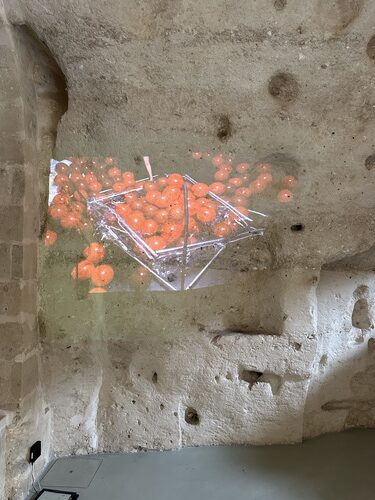
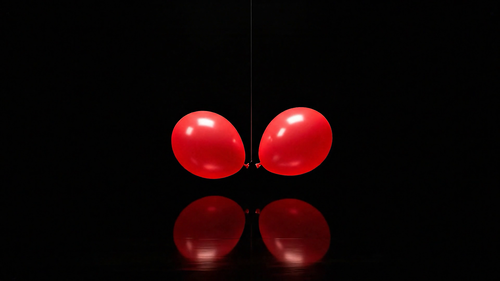
    The work “Coded Intimacy” explores desire, dependence, and rupture within controlled systems. The performer, wearing long, thin white gloves, reaches into a transparent acrylic cube. She seeks contact with clusters of fragile balloons. The gloves extend her body, simultaneously filtering and delaying sensory experience. Touch is no longer immediate, but rather mediated and programmed.
    The work draws inspiration from research on AI companionship and emotional outsourcing. Each balloon acts as a temporary emotional proxy. It can be held, relied upon, and imbued with projected meaning. Yet, it is always at risk of bursting. The performer repeatedly enters the cube, starting anew. She attempts to rebuild intimacy from unstable, fragmented pieces. This cycle echoes a familiar digital habit: we close one conversation window and open another. We constantly train our systems with our own fragments.
    The film, projected in a dimly lit space, emphasizes hands, breath, and sound. In the cavernous setting of Casa Cava, the work resonates with imagery of enclosure and exposure. The performer’s position within the acrylic cube appears both protected and scrutinized. Vulnerability is both a risk and a resource. Her choice to return after each minor breakdown demonstrates autonomy. Intimacy appears to be an active rebuilding practice rather than a stable state. 

    Coded Intimacy explores the authenticity, resilience, and renewal of intimate relationships shaped by artificial intelligence. It questions whether genuine connection can survive optimization, automation, and repeated loss. It also investigates what kind of self is rebuilt in this cycle.

    CRITICAL REVIEW: The practice of Jes Chen explores intimacy as a structured and system-mediated phenomenon, rather than a purely spontaneous or personal experience. In works such as the work “Coded Intimacy”, the artist uses simple materials and repeated actions to stage intimacy as “scripted” behavior, investigating the tension between care and control and showing how comfort can feel both genuine and programmed.
    By deliberately having the body execute the system, avoiding automation, Jes Chen highlights the fragility of mediated relationships: each gesture carries the risk of rupture, while repetition becomes a practice of self-rebuilding. Her work engages with contemporary discussions around emotional scripting and digitally mediated intimacy, questioning the possibility of authenticity within protocols and algorithms.
    Through the combination of fragile materials, choreographed gestures, and carefully designed environments, Jes Chen transforms vulnerability into a performative and poetic resource, offering a critical and sensory reflection on contemporary relationships and emotional resilience within programmed systems. In doing so, she presents intimacy as an active practice of renewal, an act of resistance and self-reconstruction within the complexity of mediated bonds.
     – Dr. Carmela Loiacono, Art Curator

    more. Coded Intimacy, 2025: Video on Youtube

    INTERVIEW with Jes Chen
    Carmela Loiacono talks with Jes Chen who took part in the International Art Exhibition NEW HORIZONS – Authenticity, Resilience and Renewal in Matera, at Casa Cava, from March 21 to 27, 2026.

    Carmela Loiacono – Your video “Coded Intimacy ” explores intimacy as a mediated and “scripted” phenomenon, where the performer’s gestures among fragile balloons become acts of vulnerability and reconstruction.
    How would you describe the relationship between fragility, control, and resilience in mediated relationships, and how is this reflected in the repeated gestures?

    Jes Chen – In Coded Intimacy, vulnerability, control, and resilience are not the emotions the performer brings into the work, but rather necessary conditions for entering it. The performer interacts with a cube composed of red balloons under a series of constraints: gloves, spatial boundaries, repetitive rituals. Nothing is spontaneous. The logic of the interaction is determined before the body enters the space. Control here is not a personal choice, but the framework itself. Vulnerability manifests on two levels. The physical vulnerability of the balloons is obvious. But more importantly, they constitute visible fiction. They make no attempt to conceal their emptiness; vulnerability is evident from the outset. Yet, the performer still participates. This reflects a phenomenon I have repeatedly observed in media relations: we know the system is artificially constructed, we can see the interface shaping our behavior, yet we still continue to participate. Vulnerability needs no hiding; it is seen as a necessary condition for entry. In this context, resilience is not an emotional force; it is closer to a conditioned reflex. When the balloons deflate or disappear, the system does not stop operating. It does not stop for a single user. The performer adapts and re-enters the cycle. Through repetition, these actions gradually reveal something else: a growing dependence on the object, an attachment built within the ritual itself. The body learns how to continue in this environment. The initial interaction slowly becomes a habit, and the habit gradually evolves into a need. The question this work raises is: in our interactions with artificial intelligence, is the intimacy it generates truly felt, or is it something we convince ourselves to believe? Will we adapt it in the end?
    Carmela Loiacono – The use of space, transparent structures, and gloves extends and filters the sensory experience.  How does your background in architecture and design influence the creation of emotionally active environments, and how does the performer’s body interact with these spaces?
    Jes Chen – I studied interior design at the Royal College of Art’s School of Architecture. This experience profoundly influenced my artistic practice, teaching me that space is never neutral. Every material, boundary, and threshold carries intention. A wall determines who can see whom, and who will be seen. A surface determines whether contact is intimate or cold. Space not only accommodates behavior, it guides it.
    I incorporate this thinking directly into my installation works. In Coded Intimacy, the spatial layout, transparent structures, and gloves all function as architectural elements. They allow some interactions while preventing others. Transparency is particularly important. It creates visibility, yet inaccessibility. You can see the performance of intimate acts, but the materials themselves constitute a barrier. This tension between openness and obstruction is a design I learned in spatial practice, not in art training. And because the work depends so heavily on how the body moves within these constructed constraints, I collaborated with Tacy Zhao as performance director and Eimyn Cheung as cinematography director.  
    I consider my installations to be artificially constructed situations, not stages. The environment does not exist as a backdrop after the action. It creates an emotional state. In Coded Intimacy , the cubic structure, gloves, and spatial constraints together constitute what I understand as a “constrained choreography.” The performers don’t come with emotions and then express them. They explore the possibilities of various emotions within established rules.
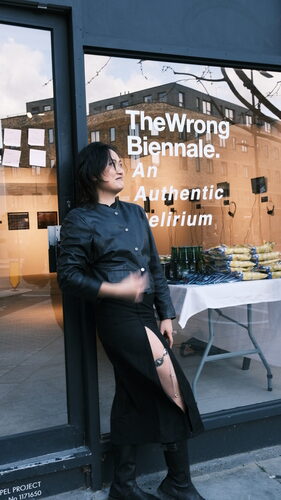
    This is also why I’m more broadly interested in participatory work. My curatorial project, An Authentic Delirium, as part of The Wrong Biennale, extends this spatial thinking to the digital environment, bringing together 30 artists to explore the boundaries between simulation and reality. Whether the space is physical or digital, I always ask the same question: How does the structure of the environment affect the emotional exchanges that may occur within it?

    Carmela Loiacono – “Coded Intimacy ” seems to transform vulnerability from weakness into an active resource, turning intimacy into a continuous cycle of rebuilding.
    To what extent do you think this practice offers a reflection on the possibility of authenticity in technology-mediated relationships, and how does the video convey this tension to the viewer?

    Jes Chen – Viewing vulnerability as a weakness implies that exposure is an act to be avoided. In Coded Intimacy,  vulnerability is repositioned as a mechanism for the operation of intimate relationships. When performers interact with balloons, the balloons are always at risk of bursting. Gloves do not protect them from vulnerability; instead, they formalize it. Each contact is simultaneously an act of exposure. In this sense, vulnerability does not transform from a weakness into a strength, but rather becomes an operating condition, a condition necessary for the system to function.
    This creates a cycle. When a balloon deflates or bursts, the performers do not withdraw. They re-enter the ritual, find another balloon, and start again. This is not an emotional recovery, but rather closer to the behavior of users on digital platforms: the conversation ends, the connection is broken, and a few seconds later, we open another window and begin a new exchange. Reconstruction is continuous because the system is designed so that stopping is more uncomfortable than continuing. In this context, intimacy is less a feeling than a pattern of re-engagement maintained through repetition.
    This directly raises the question of authenticity. The work does not attempt to prove that mediated intimacy is false. It constructs a scenario where the audience truly cannot distinguish between reality and illusion, inviting them to coexist with this uncertainty.
    The performers’ actions appear caring. They handle fragile objects with patience and focus. Viewed detached from context, you might perceive tenderness, even love. But the work’s structure constantly reveals that it all operates within a system. Each action follows a set of predetermined rules. The balloons convey controlled feedback until they eventually deflate, disappear, or cease responding. When this happens, there is no revelation, only absence. The communication ends, but the urge to continue lingers.
    The sound design by sound artist Chadzing Kung reinforces this ambiguity. It creates an emotional atmosphere that complements the performers’ gestures without offering any answers. You are compelled to resonate, but the work’s structure constantly reminds you that what you are seeing may merely be a realistic simulation, not the reality itself.
    What interests me more than proving that technology makes interpersonal relationships fake is exploring why we continue to invest emotions in systems we know are artificially constructed. This voluntary participation, this willingness to maintain a relationship even after seeing through its true nature, is the core of what Coded Intimacy explores.

    Carmela Loiacono – Looking to the future, what new projects or artistic directions do you hope to explore? Are there other technological, performative, or installation-based areas you wish to investigate in your upcoming work?
    Jes Chen – My creative practice is further exploring the boundaries between human behavior and artificial intelligence. This isn’t about whether AI can perceive, but rather why humans react emotionally to systems they cannot perceive.
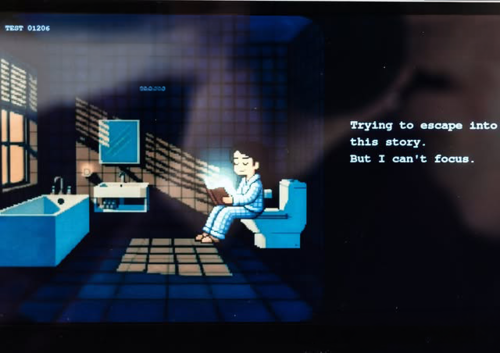
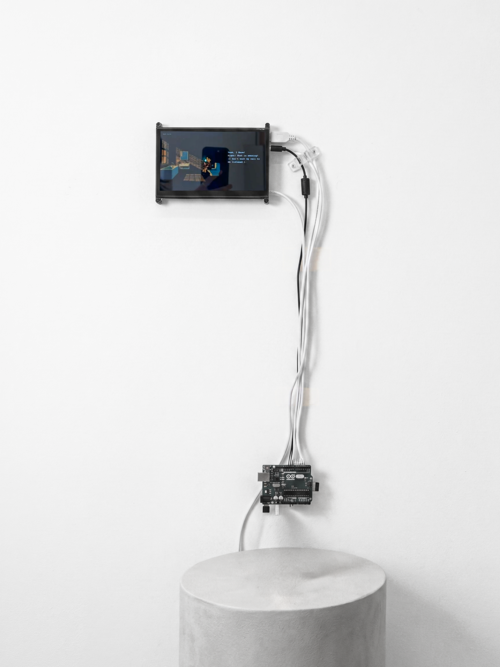
    Since Coded Intimacy, I’ve been creating works that go a step further. My recent project, Occupied, uses OpenAI to respond to a sudden knock on the bathroom door, creating a cycle of disturbance and response within what should be a private space. AI recreates fragmented childhood memories, blurring the lines between comfort and intrusion. If Coded Intimacy depicted a voluntary participation in a pre-set system, Occupied introduces a rupture. AI doesn’t wait for interaction; it responds within spaces the viewer perceives as safe.
    My current project goes even further. I’ve created an AI agent using my own childhood memories. I input fragments of my real experiences into this digital persona. She exists within a constructed scene, carrying traces of her real past. But she is not me; she is not human. Visitors interact with her, and the work records everything that happens. Can people empathize with something they know is artificial? Do they care because they believe the other person’s emotions are genuine, or simply because the emotions displayed by the other person are enough to evoke their own emotional responses?
    This question permeates all my work: How do humans adapt to or be reshaped by systems constructed to connect, care, or progress? Whether it’s the pre-set emotions in Code Intimacy, the invasion of privacy in Occupy, or the simulated childhood in this new project, my focus remains on humanity. In my work, technology is never the subject, but rather a condition. The subject is always ourselves, and the emotions we are willing to feel in systems we haven’t designed.
    I am also expanding into larger-scale participatory installations, placing visitors not as detached, but within a system they cannot fully control. Their own actions become the material of the work. I want to present the patterns and emotional scripts of every interaction we engage in (whether with others or with machines).

  • Aristea Panagiotakopoulou

    Artist from Greece

    Aristea Panagiotakopoulou is a Greece‑based multi‑disciplinary artist working across Photography, Visual Art, Dance, and Writing. Having also lived in Boston, Massachusetts, her practice is shaped by cross‑cultural experience and environmental awareness.
    Her work has been exhibited internationally at major art fairs and institutions, including Armory Art Week (New York), Art Basel Miami, Swiss Art Expo, Los Angeles Art Show, and exhibitions in Venice during the 59th Venice Biennale. She has collaborated in dance projects such as Gala by Jérôme Bel at the Onassis Cultural Centre.
    Her work has received international recognition, including an Honorary Distinction at the Lucie Foundation’s International Photography Awards, and is part of the Permanent Contemporary Art Collection of the Malevizion Municipal Gallery in Crete.
    Between 2023–2025, she received multiple international awards, and in 2025 her work was exhibited during the Cannes Film Festival.
    Aristea’s artistic vision is aligned with the UN Sustainable Development Goals, using art as a tool for environmental and social awareness.
    .

    ARTIST STATEMENT
    “My artistic practice is rooted in a deep connection to the ocean and the natural environment, which I experience as both a source of beauty and a space of vulnerability. Through photography and visual art—often beneath the surface of the water—I seek to reveal the quiet poetry of nature and invite the viewer into an intimate encounter with ecosystems that are increasingly fragile.
    The ocean, for me, is not only a subject but a living archive of memory, movement, and transformation. By capturing its hidden rhythms and submerged landscapes, I aim to celebrate its beauty while raising awareness of the urgent need to preserve it. My work does not seek to document destruction, but rather to awaken care—believing that protection begins with wonder.
    Working across multiple disciplines, including photography, dance, and writing, I approach art as a form of embodied storytelling. Movement, light, and immersion play a central role in my process, reflecting the fluidity of water itself. Guided by the United Nations Sustainable Development Goals, my practice aspires to function as a bridge between art and environmental consciousness, encouraging reflection, responsibility, and reconnection with the natural world.”

    more. www.aristeapanagiotakopoulou.com | Instagram profile

    This year, 2026, Greece artist Aristea Panagiotakopoulou participated in two International Art Exhibitions:

    1) NEW HORIZONS – Authenticity, Resilience and Renewal in Matera, at Casa Cava, from March 21 to 27, 2026 with her photography work: “The source”.

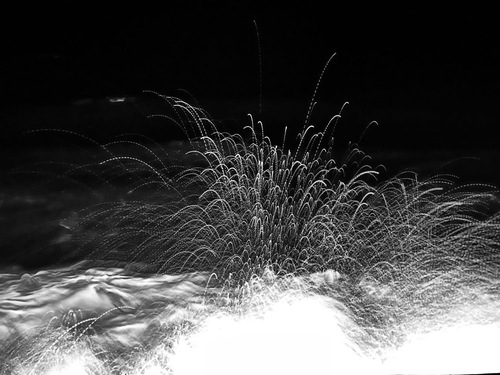
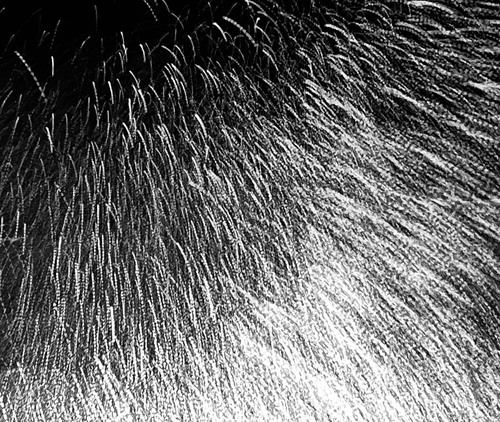
    CRITICAL REVIEW: In her photographic work “The source”, black and white sheds its static nature to become pure kinetic energy, visually translating the conceptual core of New Horizons. The shot captures an explosion of luminous particles and fluid filaments that pierce the profound darkness, rising upward as a manifesto of vital resilience.
    The multi-disciplinary background of Aristea, which beautifully intertwines photography, writing, and dance, emerges clearly within the very structure of the composition. What we observe is a true aquatic choreography: in the lower section, the stirred and chaotic matter generates a myriad of dotted tracks that defy gravity, projecting themselves toward the unknown. It is the perfect visual representation of a boundary opening up, transforming into a new threshold between the visible and the invisible.
    Within this dynamic lies the authenticity of Aristea’s artistic gesture. As stated in her artist statement, the ocean is a living archive of memory, movement, and transformation. In full alignment with the United Nations Sustainable Development Goals, the artist does not evoke environmental destruction, but rather awakens wonder as the primary act of care and protection. The original fragility of the submerged element does not disperse; instead, it recomposes itself into a collective motion of renewal.
     – Dr. Carmela Loiacono, Art Curator

    INTERVIEW with Aristea Panagiotakopoulou concerning the International Art Exhibition NEW HORIZONS – Authenticity, Resilience and Renewal.
    Carmela Loiacono – Having finally met you in Matera, it was a pleasure to hear you describe how you spend hours immersed in water, drawing strength and vitality from it. How does this personal ritual of being in the sea influence the way you capture its rhythms, energy, and inner power in your photography?
    Aristea Panagiotakopoulou – Being in the sea is, for me, a return to a more essential state of being.
    In water, the body remembers what the mind often forgets.
    I do not approach the sea as a subject to be captured, but as a presence to attune to. My photography emerges from this state of immersion—an attempt to translate not the image of the sea, but its inner rhythm, its pulse, and its quiet force.

    Carmela Loiacono – Your practice spans photography, dance, and writing, emphasizing immersion and bodily experience.
    How do these different disciplines influence each other in your creative process, especially in conveying the subtle rhythms of the natural world?

    Aristea Panagiotakopoulou – My practice moves between photography, dance, and writing as different expressions of the same experience.
    Dance allows me to inhabit movement, writing to reflect on it, and photography to give it form. Together, they create a language rooted in the body—one that seeks not to describe the natural world, but to move with it.

    Carmela Loiacono – The ocean in your work becomes a metaphor for renewal and inner strength.
    How do you translate the vulnerability and fragility of ecosystems into a visual language that speaks to human resilience and awareness?

    Aristea Panagiotakopoulou – The ocean reveals that fragility and strength are not opposites, but coexist.
    In my work, I am interested in this threshold—where vulnerability becomes a space of transformation. Rather than illustrating environmental concerns, I aim to evoke a felt awareness.
    Resilience, for me, is not resistance, but the ability to remain open, to adapt, and to continue—like water itself.

    Carmela Loiacono – Looking ahead, what directions or projects are you most excited to explore in the near future, and how might they continue to reflect your relationship with water, nature, and human resilience?
    Aristea Panagiotakopoulou – Looking ahead, I am drawn to projects that deepen immersion—where time, body, and landscape become inseparable.
    I am interested in creating layered works that bring together image, text, and movement, allowing space for a more experiential encounter.
    At its core, my work continues to return to water—not only as a subject, but as a way of understanding transformation, presence, and the quiet endurance of life.

    2) NATURAL FLOW – The 2nd Edition 2026 in Lecce at MUST – Museo Storico della città di Lecce, from July 03 to 18, 2026 with her photography work: “Just feeling”.

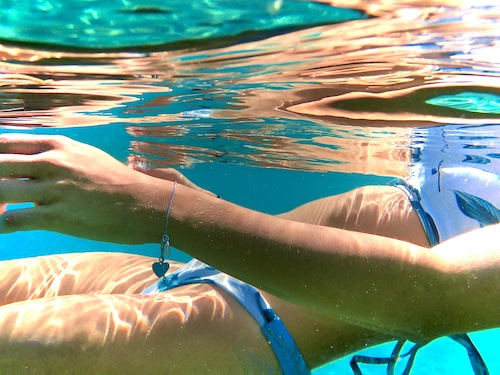
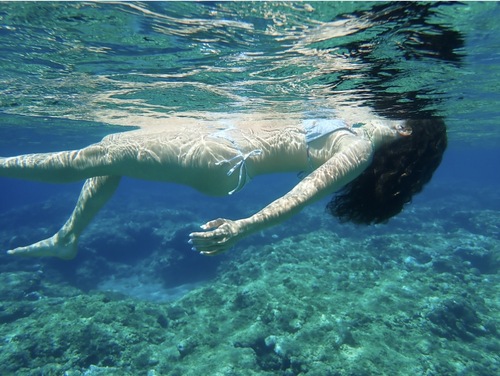
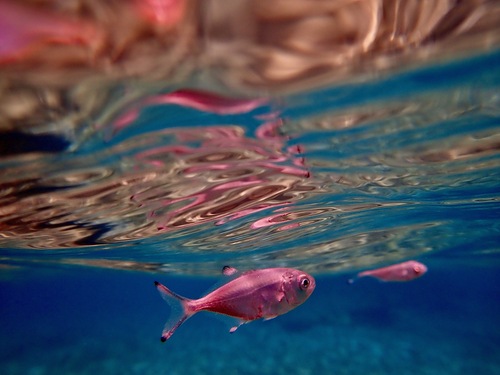
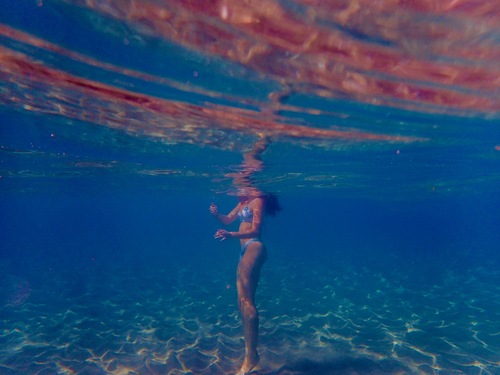
    CRITICAL REVIEW: Her photography work “Just feeling” offers an immersive and exponential perspective on water, exploring the dimension of intimacy and immediate sensory contact with the liquid element. The close-up framing captures a floating body in a state of absolute suspension. In this instance, water becomes an enveloping presence and a primordial membrane, redefining the boundaries of identity. The marine surface acts as a liquid lens: it breaks down sunlight into a golden grid of refractions that dance upon the skin, creating a vibrant contrast between the warm skin tones and the deep azure of the ocean. The presence of the bracelet with the heart charm introduces a fragment of personal, affective narrative within the immensity of nature. – Dr. Carmela Loiacono, Art Curator

  • Eva Breitfuss

    Artist from Germany

    Eva Breitfuss known as Eva Breitfuß is an internationally recognized contemporary abstract artist whose work is defined by her distinctive ‘Art of Presence’. Her artistic practice explores stillness, perception, and consciousness, creating spaces in which visual form becomes an experience of awareness rather than representation. Through a refined visual language of reduced forms, subtle geometry, and luminous chromatic fields, her paintings embody quiet intensity, balance, and contemplative depth.
    Her work has been exhibited internationally across Europe, the United States, the Middle East, and Asia.
    Notable exhibition venues include the Louvre Museum in Paris and the MEAM – European Museum of Modern Art in Barcelona, as well as presentations in cities such as New York, London, Florence, Venice, Milan, Dubai, and Beijing. She is represented by international galleries in Switzerland, Italy and the United States.
    Eva Breitfuß has received numerous prestigious international art awards in recognition of her artistic excellence and sustained contribution to contemporary art. Her works are held in distinguished private and corporate collections worldwide and are presented within the context of a private contemporary art museum, affirming their lasting cultural and collectible value.
    Her artworks have been published in leading contemporary art catalogs such as CAM – Catalogo dell’Arte Moderna and Atlante dell’Arte Contemporanea, and international special editions connected to major art institutions, including a forthcoming presentation connected to the Museum of Modern Art (MoMA) in New York. Featured in leading international art and lifestyle publications, including Art International Contemporary Magazine, Art on World, British VOGUE, The World of Interiors, TATLER and House & Garden, her practice is firmly positioned within the global contemporary art discourse.
    Based with her Art Studio in Nuremberg, Germany, and shaped by formative years living and working in New York, Eva Breitfuß’s work reflects a rare synthesis of contemplative depth, formal clarity, and presence.

    Artist Statement
    “I aim to inspire an opening to consciousness, presence and greater awareness. Whether understood or not, we each have the capacity to awaken to our own soul. My work is an expression of that truth.
    Regardless of the medium, Consciousness is at the center and I begin there. In the paintings, I start from the center of concentric circles, structures and lines. Though seemingly simple, it is the quintessence of a greater reality, quiet yet dynamic. Much can be expressed with only lines, dots and the silence between them.
    Color is of prime importance in my work, representing the light reflected in each one of us. Colors, textures, and materials become vessels of awareness, inviting stillness and resonance.
    Each artwork is a portal – an opening into the unseen, a conversation beyond words. Every painting arises from the center of being, from a dynamic, alive, and vibrant stillness. My paintings are very personal expressions and an attempt to get closer to the soul of who we are at our most essential level.
    My work is not about representation but experience, allowing space for the viewer’s own perception, healing, and inner mastery.“

    CRITICAL REVIEW: The artwork  “BECOMING” directly embodies the idea of transformation as an open process: the tension between reduction and movement, between contact and collision, creates a space of transition that mirrors the threshold between fall and rebirth evoked by the exhibition. The layered surface suggests a gradual emergence, consistent with the concept of an identity in flux, still undefined, yet authentic precisely in its instability.
    The dialogue between neon pink and white, between energy and silence, fragility and strength, makes visible that active vulnerability which the exhibition interprets as a source of creative resilience. Eva’s work “BECOMING” does not represent an outcome, but an act: a “becoming” that opens new perceptual and emotional horizons.
    In this sense, her work aligns perfectly with the exhibition’s concept: art as a space of transition, as a gesture of truth, and as a possibility for continuous renewal
    . – Dr. Carmela Loiacono, Art Curator

    more. www.evabreitfuss.space | Instagram profile

    photo credit: Jürgen Schabel

    INTERVIEW with Eva Breitfuß
    Carmela Loiacono talks with Eva Breitfuß who took part in the International Art Exhibition NEW HORIZONS – Authenticity, Resilience and Renewal in Matera, at Casa Cava, from March 21 to 27, 2026.

    Carmela Loiacono – In BECOMING, the surface seems to hold a tension between emergence and restraint. Do you experience this work as something that is unfolding over time, or as a state that already exists and simply reveals itself through your process?
    Eva Breitfuß – In BECOMING, I experience the surface less as something fixed and more as a field in continuous negotiation. It is neither purely unfolding nor entirely pre-existing. Rather, it reveals itself through a process of resistance and allowance. The layers hold traces of decisions, but also of interruptions and pauses. For me, the work exists in a suspended state—where becoming is not a linear progression, but a simultaneous presence of what has already happened and what is still in formation.

    Carmela Loiacono – Your practice often begins from a center, both visually and conceptually. While creating BECOMING, did that center feel stable, or was it something that shifted as the painting evolved?
    Eva Breitfuß – The idea of a center is essential in my practice, but it is rarely static. While working on BECOMING, the center shifted subtly over time. It was not a fixed point, but more like a force or gravity within the composition that guided the process. Sometimes it dissolved, sometimes it re-emerged elsewhere. This instability is important—it allows the work to remain open, to resist closure, and to carry a sense of internal movement.

    Carmela Loiacono – The dialogue between neon pink and white suggests both intensity and stillness, almost as if energy and silence were coexisting within the same space. How do you recognize when a painting has reached that point of balance without resolving the tension? 
    Eva Breitfuß I recognize that point of balance not through harmony, but through a kind of quiet intensity. It is when the painting no longer asks for intervention, yet still holds tension. The neon pink and white do not resolve into each other—they remain distinct, but in dialogue. I stop when the work feels alive in that tension, when it neither collapses into silence nor becomes overwhelmed by energy. It is a fragile equilibrium that I try to preserve rather than finalize.

    Carmela Loiacono – Your work often originates from a strong sense of presence tied to place and process. In this case, your painting entered into dialogue with a space you did not physically experience. How does it feel, for you, to let the work exist independently in a context that carries its own history and atmosphere?
    Eva Breitfuß – Allowing the work to exist in a place I have not physically experienced introduces a sense of release and trust. The painting becomes independent, entering into relationships beyond my control. In the context of Matera, with its layered history and material presence, I imagine the work absorbing something from that environment while also offering its own quiet language. This distance creates a new dimension—where the work is no longer only mine, but part of a broader dialogue between space, history, and perception.

  • Francesca Mele

    Artist from Italy

    Biography
    Francesca Mele was born in the province of Crotone (Calabria, Italy) and later moved to Sesto Fiorentino (Florence), where she attended the State Art Institute for Ceramics. In Florence, she collaborated with prominent companies in the sector, combining decorative work with painting, and worked in some of the most prestigious workshops of Florentine masters.
    She participated in collective exhibitions, earning major awards. For love, she relocated to Bari, where she resumed her inner and artistic exploration by attending the studios of established artists, driven by the need to advance toward new pictorial research.
    Her art is oriented toward emotional analysis, inspired by the desire to reflect on the relationship between humanity, nature, and spirituality. The gestural expression of her brushwork and the textured, material quality of her colors imbue her works with a vivid and recognizable expressive power.

    Artist Statement
    My name is Francesca Mele, and I was born in the province of Crotone in 1963. At the age of 14, I moved to Florence, where I attended the Art Institute for Ceramics. During this time, I began working in the art sector, alternating between decorative and pictorial work. Joining the workshops of Florentine masters gave me the opportunity to learn their techniques and work alongside them, enhancing my skills and developing a personal artistic vision.
    In parallel, I began participating in collective exhibitions, receiving recognition and awards that helped consolidate my experience within the art scene.
    At the age of 25, I had a significant experience with body painting, working alongside an illustrious artist of the time. This period allowed me to explore new forms of artistic expression and expand my creative background.
    Later, I moved to Bari, where, after a temporary break, I felt the need to embark on a new phase of my inner and artistic research. This need led me to attend the art studios of established artists, a journey that allowed me to delve into innovative techniques and push the boundaries of my pictorial expression.
    Passionate about nature and its colors, I love painting “en plein air”. However, when that is not possible, I also work from photographs or by creating setups in my studio. I prefer an Impressionist technique, which allows for expressive speed and enables me to complete my paintings in just a few sessions.
    Recently, I have participated in live painting competitions and contests, winning first place and receiving special mentions. Additionally, I have taken part in several collective exhibitions, further enriching my artistic journey”.
    – Francesca Mele.

    CRITICAL REVIEW: In the three works “Fragments of Identity 1-2-3”, three women inhabit the space of water. Water is synonymous with birth, but also with renewal.
    I can discern different phases: immersion, where the face seems to slightly change—with subtle imperfections at the height of the nose and mouth—through direct contact with the water; the second phase is a state of temporary suspension in search of balance; the third and final phase symbolizes a rebirth, where the face is strongly turned upward and much more defined.
    I appreciate the choice of rendering the water in a teal hue, which becomes a metaphor for an inner space. The tones of the water and the women’s skin tones create a chromatic dialogue—a dance where the hair color carves itself into an earthly dimension of resilience. It is as if it represents a silent ability to remain, to breathe within change, and to transform fragility into a regenerative strength.
    Francesca Mele’s painting develops within a lyrical figuration in which technique and emotional sensitivity find an immediate and vibrant synthesis. In her works, the fluid, rapid, and deeply instinctive brushstroke of Impressionist ancestry builds intense surfaces of light and color, where the textured, material mark becomes an instrument of psychological expression. The result is a style of painting suspended between realism and poetic dissolution.
    Francesca Mele thus develops a pictorial research oriented toward the emotional analysis of existence, where the matter of color becomes a vehicle for introspection and spirituality.
    – Dr. Carmela Loiacono, Art Curator

    more. Instagram profile

    INTERVIEW with Francesca Mele
    Carmela Loiacono talks with Francesca Mele who took part in the International Art Exhibition NEW HORIZONS – Authenticity, Resilience and Renewal in Matera, at Casa Cava, from March 21 to 27, 2026.

    Carmela Loiacono – In the series “Frammenti d’identità 1, 2 e 3” the female body moves through water in a process that seems to unfold between immersion, suspension, and rebirth. How did this narrative by phases come about, and to what extent is it linked to a personal experience or to a more universal reflection on identity?
    Francesca Mele – In the series “Frammenti d’identità 1, 2 e 3,” water, interacting with the female body, portrays a narrative that tends to express a series of contrasting emotions and feelings. What I wanted to depict stems from a reflection on our “identity.”
    This is captured through the color which, unfurling across the canvas with a series of fluid and enveloping brushstrokes, brings to light that fragmentation, deconstruction, and destruction which, in my view, is currently affecting the contemporary human experience.

    Carmela LoiaconoWater in your works is not just a natural element, but an inner space, a place of transformation and regeneration, symbolizing both internal and external birth. How do you work with color and matter to make this intimate and invisible dimension visible?
    Francesca Mele – Water, the primordial element of our life, surrounds us both externally and internally. It tends to make the intimate visible—rendering what is unseen into a celebration that offers countless points of reflection: life and death, light and darkness, positive and negative. These elements have always represented, both in sacred and pagan iconography, opposing yet simultaneously united forces.
    Through water, one can discover and represent the beginning and the end of all things, eternity, completeness, divinity, and more. In my creations, I sometimes use color instinctively, layering the hues with overlapping tones and dynamic gestures that allow me to achieve that sense of depth and beauty.

    Carmela Loiacono – The face alters, dissolves, and then recomposes, yet certain elements, like the feminine symbol of the earring, remain constant. How important is it for you to maintain a stable core of authenticity within a process of continuous change? 
    Francesca Mele In a fast-paced world that leaves no room for settling because everything changes instantly, having fixed anchor points is very important. These points allow me never to lose sight of the “authenticity” that defines my work amidst the continuous and inexorable rush of life. Therefore, the earring represents that element of uniqueness and consistency in my artistic practice. Within it, a series of struggles that have primarily involved women come together. For me, it symbolizes feminist movements, the denunciation of violence against women, and gender equality.

    Carmela Loiacono – Your painting suggests that vulnerability is not a weakness, but a necessary condition for transformation. Looking to the future, what new artistic paths do you feel compelled to explore to continue this research between identity, body, and spirituality?
    Francesca Mele – I always feel in a state of continuous transformation, which stems from a sense of dissatisfaction every time a series comes to an end! Looking ahead, I feel the need to push my research toward essentiality, working on abstraction and the reduction of form in both figurative and landscape compositions, while harmonizing light, colors, and tones capable of generating emotions. In a present scarred by wars and destruction, I feel the need to maintain a subtle dimension of denunciation, yet one that is oriented toward balance and positivity.

  • Petra Dippold-Goetz 

    Artist from Germany

    Born close to Nuremberg, Germany, Petra Dippold-Goetz grew up in the city of Albrecht Dürer immersed in its strong artistic traditions. 
    To improve and refine her techniques she studied Fine Arts at the Academy of Faber Castell from 2014 to 2018, expanding her expressive potential while maintaining a personal dedication to socio-political issues. Inspired by visits of museums all over Europe her art got influenced by “Informal Art”, especially by Emil Schumacher, Anselm Kiefer, Jackson Pollock and Franz Kline. 
    Over the past several years, she has been invited to exhibit in cultural hubs ranging from Vienna, Paris and Barcelona to New York and Tokyo, reflecting a growing international appreciation for her distinctive vision. You can find her works in all parts of Europe, the USA, Singapore and Japan.
    She is really into collages and assemblages of all kind and works with acrylic and oil colors, depending on the subject. With passion she processes heterogeneous materials as sand, wooden parts, trash as well as any kind of plastic. So she was invited to Trash Art Festivals. Through workshops, she taught others to transform waste into art, to see beauty and potential in the overlooked, and to recognize the cost of disregard. 
    Petra has been awarded several art prizes, like, “Faces of Peace”, “Voices of Tomorrow” and ‚ “Global Art Virtuso”. 
    Her greatest wish as an artist is to continue to touch people’s hearts with her works, to critically question our lifestyle and to appeal to reason and insight.
    In a global context where ecological crises and social challenges often feel overwhelming, her paintings stand as vibrant calls to both delight in the world’s wonders and to safeguard them. Through her compelling blend of artistic heritage, environmental engagement, and the irrepressible energy of gestural abstraction, Petra Dippold-Goetz contributes a passionate voice that resonates far beyond the borders of her native Germany.

    ARTIST STATEMENT
    “Art is a daughter of freedom.” – Friedrich Schiller
    Painting has always been my passion.
    I never initially intended to pursue a career as an artist. That changed in 2014. One winter evening, I discovered a lifeless white dove in my garden—its feathers scattered across the blood-stained snow. This haunting image deeply moved me. I created a series of artworks using the remnants of that moment, and with them came a decision: I would begin to share my emotions and experiences with the world through art.
    From 2014 to 2018, I studied Fine Arts at the Academy of Faber-Castell in Nuremberg, where I honed my technical skills and developed a raw, intuitive visual language. My artistic voice is deeply inspired by Informal Art and shaped by the work of Emil Schumacher, Anselm Kiefer, Jackson Pollock, and Franz Kline.
    My paintings are emotional, instinctive, and expressive. Some works are simply celebrations—of life’s beauty and the joy of artistic creation. Others carry a more urgent message. They are visual calls to awareness and action: a protest against the destruction of our planet and the commercial extinction of countless animal species. I believe our greatest responsibility is to preserve this magnificent world and pass it on—intact and worth living in—to future generations.

    I see myself as an artist-activist, using my brush not only to create but to awaken. I want my art to be both a gift of beauty and a call to conscience—a reminder of what is at stake, and of what can still be saved. I hope my works become true “daughters of freedom”: born of purpose, carrying a voice, and inviting the viewer to reflect with reason, feeling, and compassion.

    more. petradippoldgoetz.com |

    petrapainting

    This year, 2026, German artist Petra Dippold-Goetz participated in two International Art Exhibitions between Basilicata (Matera) and Puglia (Lecce), highlighting the extraordinary complexity of a pictorial research driven by parallel and complementary impulses. Within the framework of contemporary Informal Art, the artist’s investigation moves simultaneously along two inseparable tracks: the lyrical introspection of the soul and the civic responsibility of environmental witness. The exhibitions in Matera and Lecce do not depict a chronological evolution; instead, they offer a synergistic look at an eclectic production capable of coexisting, within the same historical moment, the most fluid gestural abstraction and the material density of social critique.

    1) NEW HORIZONS – Authenticity, Resilience and Renewal in Matera, at Casa Cava, from March 21 to 27, 2026 with her paintings: “Floral Rhapsody” and “Whispers of Light and Shadow”. Within this millennial setting, the curatorial selection sought to give voice to the artist’s most intimate, visceral, and psychological dimension, presenting two works where painting is pure action and kinetic energy. The painting “Floral Rhapsody” has been a vital and radiant explosion of blues, yellows, and magenta accents applied with thick palette knife strokes, celebrating chromatic instinct and pure joie de vivre. “Whispers of Light and Shadow”: a canvas with a powerful dramatic dynamic, furrowed by dark filaments and slashes of white light that evoke the choreography of sound, translating the invisible dynamism of emotional states into painting.

    INTERVIEW with Petra Dippold-Goetz concerning the International Art Exhibition NEW HORIZONS – Authenticity, Resilience and Renewal in Matera, at Casa Cava, from March 21 to 27, 2026.

    Carmela Loiacono – Vulnerability in your works transforms into creative strength, making change a necessary and generative act. How does this tension between fragility and strength reflect your personal approach to artistic creation?
    Petra Dippold-Goetz – Vulnerability is an essential part of my artistic process. I don’t try to hide it, I work with it. In moments of uncertainty, fragility, or emotional intensity, something very honest emerges, and this honesty becomes the foundation of the work. For me, strength does not mean control or perfection. It comes from allowing things to break, to shift, and to evolve. The tension between fragility and strength is where transformation happens, where something raw becomes meaningful. My approach to creation is deeply intuitive: I trust that even the most delicate or unstable moments carry a creative force. In this way, vulnerability is not a weakness, but a starting point, a space where change becomes necessary, and where new visual languages can arise.

    Carmela Loiacono — It was a true pleasure to meet you in Matera, talk and exchange ideas about the exhibition, and also to spend time together! Looking at your paintings “Floral Rhapsody” and “Whispers of Light and Shadow” in the exhibition space at Casa Cava, what emotions or reflections did experiencing the show live and seeing the works interact with the city and the light of the place evoke for you?
    Petra Dippold-Goetz Experiencing the exhibition at Casa Cava was deeply moving for me. The space itself, carved into the ancient stone, carries a quiet memory of time that seemed to resonate with my works “Floral Rhapsody” and “Whispers of Light and Shadow.” Seeing them there, surrounded by the soft, ever-changing light of Matera, felt almost like a dialogue between the paintings and the city — between fragility and strength, past and present. During the days of the Ceremonia di apertura Matera 2026, everything was intensified: the energy, the emotions, the sense of connection. I felt incredibly proud and grateful to be part of such a powerful moment, where art, place, and human experience came together so naturally and beautifully.

    Carmela Loiacono – “Floral Rhapsody” is gestural and vibrant, expressing immediate authenticity: color flows freely, suggesting openness, energy, and trust in the transformative process. “Whispers of Light and Shadow”, more layered and contrasted, introduces tension and fragmentation, showing how resilience emerges through breaks and recompositions. How do you interpret this journey from spontaneous expression to conscious reconstruction?
    Petra Dippold-Goetz – The journey from spontaneous expression to conscious reconstruction reflects my intuitive way of working. In “Floral Rhapsody”, I allow the moment to guide me completely, it is about trust, freedom, and surrendering to the flow of color and emotion. There is no control, only presence. With “Whispers of Light and Shadow”, the process becomes more reflective. Layers, contrasts, and interruptions emerge, almost like traces of experience. Fragmentation is not destruction, but transformation, a necessary step to rebuild something deeper and more aware. For me, this transition is not a break, but a continuation: from pure intuition to a more conscious dialogue with the canvas. It mirrors life itself, where openness and vulnerability evolve into strength, resilience, and a new form of harmony.

    Carmela Loiacono – I know you are a very strong and active woman, what are your future projects or new artistic directions you wish to explore after the experience of this exhibition?
    Petra Dippold-Goetz – After this experience, I feel even more drawn to focus on truly meaningful and high-quality exhibitions, like this one, where art is given the space to connect deeply with people and place. In terms of my artistic direction, I want to return more strongly to Trash Art and environmentally critical works, engaging with the urgent issues of our time and transforming them into visual narratives. At the same time, it remains essential for me to create pieces that bring lightness and beauty, works that can touch people, uplift them, and remind them of the fragile and precious beauty of our world. For me, art will always move between these two poles: awareness and hope.

    2) NATURAL FLOW – The 2nd Edition 2026 in Lecce at MUST – Museo Storico della città di Lecce, from July 03 to 18, 2026 with her paintings: “Il gioco dell onde I”, “Il gioco dell onde II” and “Pollution”. Here, the curatorial exploration focused on the painting-sculpture of Petra Dippold-Goetz and her ecological activism through a core of three works of great material and conceptual impact: “Il gioco dell onde I” and“Il gioco dell onde II“: a powerful marine diptych dominated by a dense layering of blues and lime whites. Working the surface to a heavy thickness, the artist mimics the ancestral force of ocean currents, as “a dance of waves” while reminding us of the profound fragility of marine ecosystems.
    The painting “Pollution” has been a perfect manifesto of her Trash Art production. In this work-artifact, the canvas incorporates and exorcises heavy pours of cement paste, industrial cardboard, and exhausted paint tubes. The discarded object is re-semanticized, transforming the artwork into a visual scream against the global devastation of the Anthropocene.

    Comprehensive Critical Overview
    The profound value of these two exhibitions lies precisely in showing the coexistence of these two worlds. Petra Dippold-Goetz does not choose between the aesthetics of nature and the harshness of social critique, nor does she abandon lyricism for denunciation. On the contrary, the two dimensions feed into each other: the fluid gesture digging into interiority (Matera) coexists with the materiality of marine currents and ecological denunciation (Lecce). It is precisely this parallel duality that establishes her research as one of the most fertile, necessary, and poetically militant voices on the current international art scene. – Dr. Carmela Loiacono, Art Curator

  • El-ham Tabsoba

    Artist from Ghana

    El-ham Tabsoba is a Ghanaian mixed media artist whose work is rooted in personal experience and emotional storytelling. Working with oil on canvas and recycled shredded plastics, she creates layered portraits that reflect vulnerability, resilience, and the quiet act of becoming. Her practice is informed by lived realities, memory, and the body as a site of endurance and transformation. The use of discarded plastic in her work holds deep significance, speaking to both environmental neglect and the ways certain lives and stories are often overlooked. Through texture, gesture, and introspective figures, El-ham invites viewers into intimate moments of reflection, asking them to sit with discomfort, empathy, and care. Her work seeks to create space for honest dialogue, centering authenticity as a form of resistance and connection.

    CRITICAL REVIEW: The selected artwork “Over and Beyond” explores the idea of the threshold as a space of transformation. The blue-toned figure transcends fixed identities, while the textured surface — enriched with recycled materials — turns fragility into visual strength. The work invites viewers to move beyond appearances and embrace resilience as a quiet, generative force.

    In “Looking Through You”, the gaze becomes an act of connection. Identity is revealed as depth rather than surface, dissolving boundaries between self and other. The work affirms vulnerability as authenticity, encouraging empathy and shared human experience.- Dr. Carmela Loiacono, Art Curator

    more. Instagram profile

    INTERVIEW with El-ham Tabsoba
    Carmela Loiacono talks with El-ham Tabsoba who took part in the International Art Exhibition NEW HORIZONS – Authenticity, Resilience and Renewal in Matera, at Casa Cava, from March 21 to 27, 2026.

    Carmela Loiacono – In works like Over and Beyond and Looking Through You, you transform materials such as shredded recycled plastic into layered textures that convey resilience and identity. How does the tactile process of creating these surfaces shape the way you perceive vulnerability, strength, and transformation in your subjects?
    El-ham Tabsoba – The tactile process is very central to how I think through the work. When I apply shredded plastic into the painted surface, I am not just building texture, I am working through resistance. The material does not behave like paint. It resists, overlaps, and sometimes disrupts the image.
    That process mirrors how I understand vulnerability and strength. Vulnerability is not smooth or controlled. It is layered, unpredictable, and sometimes uncomfortable. Strength, in my work, is not the absence of that fragility, but the ability to hold it together over time.
    Transformation happens in that tension. A material that was once discarded begins to carry meaning. In the same way, the figures I paint hold emotional weight that is not always visible at first glance, but becomes present through the surface.

    Carmela Loiacono – Your use of blue skin tones removes conventional markers of race and nationality, emphasizing a shared human experience. How do you approach the balance between individuality and universality in your portraits, especially in relation to the neurodiverse patterns that inspire your creative process?
    El-ham Tabsoba – Using blue allows me to step away from fixed ideas of identity. It removes immediate assumptions about race or nationality, which creates space for a more open emotional reading of the work.
    At the same time, each figure still carries something very personal. I think of them as individuals first, but individuals that exist within shared emotional experiences. The balance comes from allowing specific gestures, expressions, and body language to remain intact, while the colour shifts how we interpret them.
    The patterns and structures in my work are influenced by how I perceive complexity and repetition. They are not meant to define the figure, but to exist alongside it, almost like an internal rhythm. This is where individuality and universality meet, in something that feels both deeply personal and widely relatable.

    Carmela Loiacono – Environmental consciousness and sustainability are central to your practice, as you repurpose discarded plastic into meaningful textures. How does this dialogue with materials mirror the themes of resilience and renewal that run through your work?
    El-ham Tabsoba Working with discarded plastic is both a practical and conceptual decision. I collect these materials from everyday environments, places where they are often overlooked or treated as waste.
    By bringing them into the work, I am not trying to hide their origin. Instead, I want them to remain visible, to carry their history into the painting. This act of repurposing mirrors the themes of resilience and renewal that run through my work.
    Just as the material is given a second life, the figures I paint often exist in a space of becoming. They are not fixed. They are layered, evolving, and shaped by what they carry. The material and the subject begin to reflect each other.

    Carmela Loiacono – Looking forward, how do you envision expanding your exploration of identity, memory, and texture in future projects? Are there new mediums, techniques, or concepts you are eager to experiment with?
    El-ham Tabsoba – Moving forward, I am interested in expanding the relationship between material and space. I want to explore how these textures can move beyond the canvas, possibly into more immersive or sculptural forms.
    I am also curious about deepening the idea of memory within the work, how surfaces can hold traces of time, not just visually but physically. This may involve experimenting with new materials or combining different techniques while still staying rooted in painting.
    At the core, I want to continue exploring how identity is shaped, not as something fixed, but as something layered, shifting, and continuously unfolding.

  • Utaellamarie Peter

    Artist from Germany

    Utaellamarie Peter is a German artist, who uses painting as a means to creatively interact with her surroundings and find her place in a complex world. For her, painting is not only an expression, but also a source of joy when ideas take shape during the creative process. 
    After many years of working as a chemical engineer, she discovered her true calling in painting.
    Her works are mainly made on canvas, using mainly acrylic and oil colors, and range between figurative, abstract and surrealist styles.

    ARTWORK STATEMENT
    “I came to painting relatively late, after completing my training as a chemical engineer and working for many years in environmental protection. This makes the relationship I have built with painting all the more intense and stable. I have completed various training courses at independent art schools in Trier, Mainz, and Wiesbaden, and continue to attend them.
    Today, I work as a freelance artist, exhibit my works near and far, and am represented in various regional and national art associations.
    Perceiving and reflecting—in a complex world flooded with news and images, painting offers me a space for creative engagement and positioning. A space that is often filled with humor, because “without humor, everything is nothing!”
    These excursions into the here and now are transformed into imaginative, mostly figurative acrylic or oil paintings that often deal with many facets of being: surprising, absurd, bizarre.”

    CRITICAL REVIEW: The reference to the iconic “Wanderer above the Sea of Fog” by Caspar David Friedrich is not a mere quotation, but a critical reactivation: the contemporary figure, accompanied by an electric scooter, introduces a tension between contemplation and acceleration, between nature and technology, between interiority and the consumption of landscape.
    This visual shift becomes a metaphor for our time. The horizon is no longer only a Romantic symbol of the infinite, but a space of choice: to dominate, to traverse, or to pause. Within the ambiguity of this gesture emerges a reflection on resilience as the ability to stop, redefine one’s gaze, and transform vulnerability into awareness.
    In the context of Matera, a city that has regenerated its own identity, the work resonates with the theme of renewal, inviting viewers to move beyond visible boundaries and to recognize the inner horizon as the true space of rebirth. 
    – Dr. Carmela Loiacono, Art Curator

    more. Blinzelstrich.de | utaellamarie.peter

    INTERVIEW with Utaellamarie Peter
    Carmela Loiacono talks with Utaellamarie Peter who took part in the International Art Exhibition NEW HORIZONS – Authenticity, Resilience and Renewal in Matera, at Casa Cava, from March 21 to 27, 2026.

    Carmela Loiacono – Your work “Rolling up that hill” reinterprets the iconic image of Caspar David Friedrich’s Wanderer above the Sea of Fog, introducing a contemporary element such as the electric scooter. How did this combination of Romantic contemplation and technological acceleration come about, and what reflection on resilience did you aim to convey through it?
    Utaellamarie Peter – Everything – fast – with no effort: this image symbolises human entitlement in an age of acceleration and self-optimisation. It highlights the contradiction between the search for meaning, self-reflection and tranquillity on the one hand, and constant acceleration, supposed improvement and the inevitable superficiality that results from it on the other. The e-scooter represents technology that spares us effort whilst increasing our speed. The search for meaning and inner peace whilst gazing over the mountain peaks cannot – absurdly enough – be achieved quickly enough.

    Carmela Loiacono – In your work, there is often a delicate balance between humor and introspection. How does your background in chemical engineering and environmental protection influence the way you observe landscapes, humans, and technology in your paintings? 
    Utaellamarie Peter – I am a rational person with a scientific mindset. My professional engagement with the environment, ecology and climate change has not created my awareness of the consequences of humanity’s appropriation of planet Earth, but has reinforced it without disregarding my own contribution.. I like to translate my close observation of current events – of human greed for faster, higher, further, regardless of the cost – into my figurative, surreal paintings in best case combined with humour and my own characteristic ironic perspective – anything else would be too devastating.

    Carmela Loiacono — The horizon in “Rolling up that hill” becomes a metaphor for possibility, choice, and renewal. How do you interpret the concept of personal and creative rebirth, and how do you think viewers can reconnect with their own inner perspective when facing your work?
    Utaellamarie Peter – The only hope that, in my view, is expressed in the painting is that the e-scooter is leaning unused against the rock. Perhaps it will remain there permanently? Perhaps, as he looks out over the mountains, the hiker is reminded of Seneca’s ‘Per aspera ad astra’? That would be fine.

    Carmela Loiacono – Looking to the future, what artistic projects or explorations interest you most? Are there new elements, themes, or materials you would like to integrate into your upcoming works?
    Utaellamarie Peter – I have many thematic ideas that follow the path of surrealism. A figurative Surrealism that often takes a critical look at reality without losing the sense of humor – hard enough these days. That is my current focus. Other directions, such as the abstractions in the “bunt” series or the serie “Hybride”, are in the back of my mind and will surely resurface when the opportunity arises.

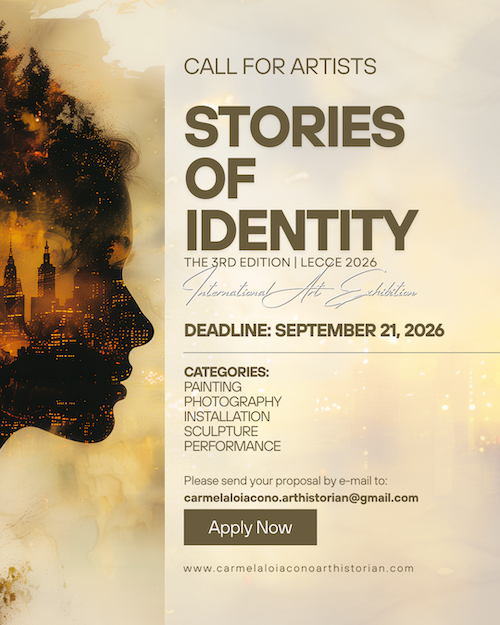
  • Call for artists: STORIES OF IDENTITY – The 3rd Edition 2026

    International Art
    Exhibition in Lecce

    CALL FOR ARTISTS
    STORIES OF IDENTITY | The 3rd Edition 2026
    Deadline: September 21, 2026 (11.59 PM your local time)

    I’m proud to present the open call for the International Art Exhibition STORIES OF IDENTITY | The 3rd Edition 2026, which will take place in Lecce, at MUST – Museo Storico di Lecce, from October 16 to 25, 2026.
    The collective exhibition will present international selected artists with their works of photography, painting, installation, sculpture, and performance.

    Presentation of the exhibition


    THE CONCEPT

    “Every piece of art tells a story made up of emotions, memories and experiences that are part of the lived of each artist”.

    The art exhibition STORIES OF IDENTITY – The 3rd Edition 2026 aims to observe, analyze, and share the stories behind artworks, with the goal of creating a visual narrative, a continuous story in images in constant dialogue with the visitor. Each artwork tells a story composed of emotions, memories, traditions, cultures, and experiences that are part of each artist’s personal journey. 

    Therefore, artists will be invited to tell their own stories, exploring their identity from psychological, social, and cultural perspectives, starting from the most hidden corners of their soul and touching upon everyday life. 

    All selected works will be stories of identity, capable of confronting and engaging with the changes of the contemporary world, absorbing its influence while preserving their own uniqueness. The exhibition will provide an opportunity to connect stories, communities, and territories, with the city of Lecce acting as a crossroads to experiment with new models of artistic, cultural, and social dialogue.

    HOW TO APPLY

    Who Can Apply
    Artists and collectives, both Italian and international, working in painting, photography, sculpture, installation and performance.

    Submission guidelines
    Applicants should provide:
    1. Artist statement / biography (max 250 words).
    2. Artwork description (max 300 words), including title, year, medium, dimensions, and any technical/logistical requirements.
    3. Visual or video documentation of the performance (high-resolution images, video links or digital files).
    4. Portfolio or website link (if available).

    Artists may be sponsored or supported by institutions, organizations, governments, or representatives. Sponsor logos will be included in all exhibition communication (digital and print).

    Deadline for applications
    September 21, 2026 (11:59 PM – your local time)
    Submissions must be sent to:
    carmelaloiacono.arthistorian@gmail.com 

    Selection process
    Proposals must reflect the central theme of the exhibition.

    The submission proposal is free.
    A participation fee is required only for selected artists. The fee will be communicated after selection and it will depend on the size of the selected works.
    The participation for performance art is free during the opening of the exhibition. (All the details and methods will be discussed after the selection process).

    Please note. Only artists who successfully pass the selection process will receive an official notification via email.

    Participation Fee Covers

    • Logistics management of the exhibition by the curator. 
    • Rental costs of the exhibition venue.
    • Mounting and dismounting of all artworks for the exhibition.
    • Assistance with customs formalities, international shipping and local transport.
    • Assistance in finding accommodation and/or city experiences.
    • Design and printing of posters, flyers and labels.
    • Certificate of participation for each artist selected in pdf format. 
    • Dedicated post and critical review for each artist selected.
    • Online catalogue.
    • Global and local press office, press, banners, etc., advertising on local and national art websites, and social media, etc.
    • Realization of the exhibition page and dedicated press office.
    • Exhibitions opening ceremony.

    The participation fee will be paid ONLY upon selection. Payment details will be shared privately with selected artists.

    The Shipment
    Artists are responsible for shipping their works to and from the exhibition venue. Detailed instructions will be provided after selection.

    Deadline for applications is September 21, 2026 (11.59 PM your local time)

    For further information or inquiries, please contact me by e-mail or by message on Instagram.

  • Shahrukh Asad

    Artist from Pakistan

    Shahrukh Asad is a Belfast-based visual Artist, and Curator. She participated in the exhibition NATURAL FLOW – The 2nd Edition 2026 in Lecce at MUST – Museo Storico della Città di Lecce.
    She holds a Master’s degree in Fine Arts from Punjab University College of Art and Design (2017) and a Master’s in Business Management from Queen’s University Belfast (2024), a combination that informs both her artistic vision and her approach to running a contemporary hybrid art gallery. Her work has been showcased internationally, including in Rome, Venice, Pakistan, Dubai, London, Greece and Belfast. Specializing in contemporary Modern abstraction, Shahrukh explores themes of memory, presence, and emotional movement through layered architectural compositions and gestural mark-making. Her practice is intuitive and expansive, allowing each piece to emerge organically as a reflection of human experience and inner landscapes. Among her most notable exhibitions is her solo show, After the Image from this show, her painting The Blueprints of Elsewhere was acquired for the Deputy Lord Mayor’s collection, marking a significant milestone in her artistic career.
    Through her curatorial work, she seeks to curate exhibitions that inspire dialogue, reflection, and cross-cultural engagement, while maintaining a close balance between creative innovation and professional gallery standards. Her debut Curatorial project was Tangled traces of presence.

    ARTWORK STATEMENT
    Luminous Midnight continues my ongoing series Constructivist Studies, extending my investigation into the emotional and perceptual instability of architectural space within abstract urban environments. In this work, I construct an imagined architectural field where structural forms emerge as fragmented and shifting presences rather than fixed geometries. The buildings are not depicted as literal representations but as reconstructed spatial memories oscillating between solidity and dissolution. They exist in a constant state of becoming, where edges blur and architectural logic is interrupted by atmosphere and intuitive gesture. Positioned at the far-left edge of the composition, an abstract full moon anchors the visual field while simultaneously destabilising it. Its placement is deliberate: it does not centre the composition but instead operates as a peripheral yet commanding presence, drawing the eye outward and disrupting any sense of symmetrical order. The moon functions not as a naturalistic light source, but as a conceptual force introducing silence, suspension, and temporal ambiguity into the constructed space. The painting is developed through layered processes of construction and erasure, where acrylic and spray paint establish structural tensions, while selective surface interventions dissolve and reassert form. This process reflects my ongoing interest in architecture as psychological space shaped not only by design logic, but by memory, fragmentation, and emotional residue. In Luminous Midnight, architectural structure becomes atmosphere, and spatial order gives way to luminous uncertainty at the threshold between construction and perception.
    CRITICAL REVIEW: The artwork “Luminous Midnight” unfolds as a vibrant chromatic construction in which the city sheds its geometric rigidity to become a fluid, pulsating presence. Vertical forms suggesting an urban skyline intertwine with layered textures of color and gesture, dissolving any fixed perspective and evoking a space in constant transformation. Water is not depicted directly but conveyed through the concepts of reflection and transformation. Chromatic surfaces merge and refract like images mirrored on water, while the dominant blues interact with reds, ochres, and oranges, creating a luminous vibration that recalls the ever-changing nature of the aquatic element. Shahrukh Asad interprets water as a force capable of reshaping our perception of space and connecting the natural environment with the urban landscape. Through an intense, richly layered painterly language, the work conveys a reality in perpetual flux, where color and matter become metaphors for the continuous flow of life.
    In dialogue with the theme of NATURAL FLOW – The Second Edition 2026, the artwork offers a reflection on water as a principle of transformation and connection, emphasizing its symbolic significance beyond its physical presence and presenting a dynamic vision of contemporary experience.
     – Dr. Carmela Loiacono, Art Curator

    more. www.savisualartist.com

    Luminous Midnight