Autore: Carmela Loiacono

  • Zyneck

    Artist from France

    Jean-Bernard Couzinet, alias Zyneck, is a French artist, who was born in Bordeaux and now he lives in Le Bouscat, France. 
    He has been drawing since childhood; his first drawing was exhibited at nursery school. He has made it his profession.
    In fact, he created and ran a free expression workshop in the university psychiatric services in Bordeaux: ‘l’Arbre Rose’ (The Pink Tree).
    Zyneck has a PhD in arts and communication.
    For over 30 years, he has organised numerous exhibitions (more than 300) with this group of vulnerable people. Our exhibitions are open to many guests from all over the world.
    In the 2025 he has solo exhibitions in France and abroad (South Korea, Spain, Greece, India).
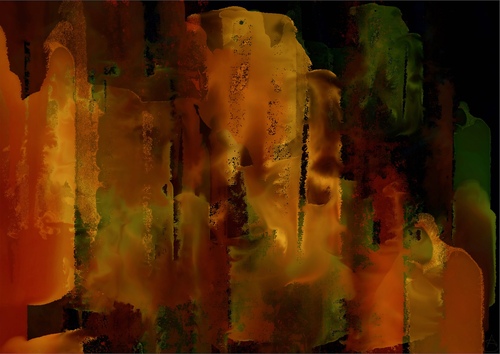
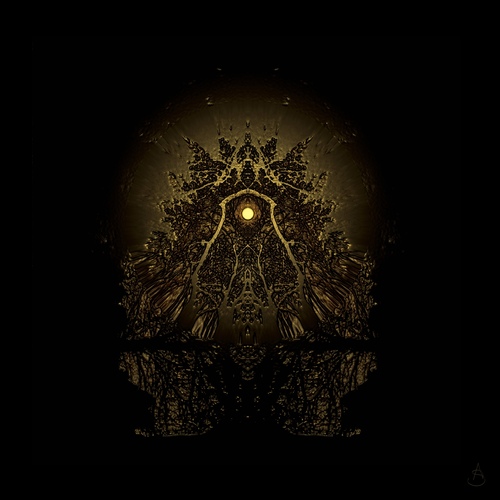
    Zyneck creates works with pastels, on sand and on the computer. In exhibitions, he often presents videos on the process of creating the works on display. 
    Zyneck has been visiting the Arcachon Basin (Nouvelle Aquitaine region, France) since childhood. He’s used to large ocean beaches with fine sand.
    Drawing on the large canvas that is the beach is a wonderful challenge. When he find a pebble, seaweed or something else in an inspiring setting while out walking, he starts drawing, both in France and abroad. Very quickly, after two or three drawings, he feels a sense of well-being, like meditation, to the sound of the waves and the wind.
    This connection with nature is essential for finding oneself. The drawing is intended to be simple and quick, like a sketch with a fleeting purpose. Zyneck photographs it from several angles, then make a selection and modify the colours on the computer until he’s satisfied.
    He has prints made on aluminium and exhibited them in selected venues.

    “I prefer to present these original, refined, reworked pieces: “Sand Art,” printed on aluminum. It is a practice that is both meditative and spontaneous, inspired by the place of creation, which can bring out elements from the unconscious… We only ever talk about ourselves.
    I also have roots in Northern Italy that are unfortunately unexplored… but which appeal to me.”


    more. www.youtube.com | www.galerie-com.com/artiste/zyneck | groupelibertes.over-blog.com

    INTERVIEW with Zyneck
    Carmela Loiacono talks with Zyneck who takes part in the International Art Exhibition STORIES OF IDENTITY – The 2nd Edition in Matera, at cultural hypogeum Lega Navale Italiana Matera-Magna Grecia.

    Carmela Loiacono – Please introduce yourself and talk about the selected works: “Blue Indonesienne” and “Tenues de Soirée” presented during the exhibition STORIES OF IDENTITY – The 2nd Edition in Matera. 
    Zyneck – Nothing in my childhood predestined me for art. But my
    curiosity, my encounters and friends, and works of art (exhibitions, books, museums) led me to it naturally.
    Since then, I have lived art every day.
    The dreamlike, symbolic, unexpected world is my field of creation, expression, and freedom.
    Professionally and personally, I happily immerse myself in it.
    I hold a doctorate in art and communication.
    After experimenting with different techniques, I have been developing Sand Art, works made from sand, for more than twenty years.
    I am a member of the French Association of Sand Artists.
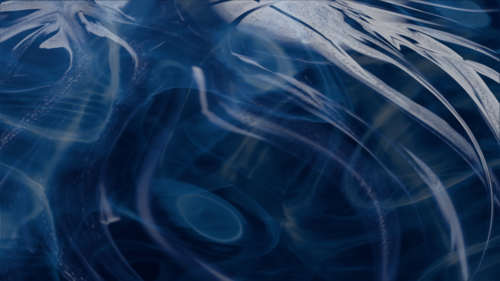
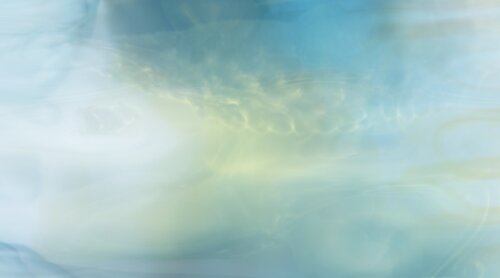
    Discovering an Indonesian beach, I see a round pebble emerge… it inspires me to quickly sketch a character. I take photos, change the colors on the computer… it becomes “Indonesian Blue Head” (printed on acrylic, 60X80). Similarly, while walking along the shores of the Bassin d’Arcachon, I see streaks formed in the sand by the receding water. Two women in “evening dress” impose themselves (60X80 aluminum plate).
    So I look for elements in nature that, in a given context, invite me to create, to make the invisible visible.
    It is a meditative act and one of self-discovery.
    I exhibit this ephemeral dialogue with nature by immortalizing it on Dibond aluminum or acrylic.
    Some may see it as a poetic and political work of respect for Nature, which is already Art in itself.

    Carmela Loiacono – How would you describe your creative process? What or who influenced or is influencing your work?
    Zyneck – My usual creative process for Sand Art draws on my own experiences—we only ever talk about ourselves—and my curiosity as a researcher. I contextualize the subject, explore it from different angles, and push it to its limits until it becomes as stripped down and readable as possible (videos illustrate the process for other themed exhibitions; see Zyneck YouTube).
    Sand Art is an original work with a distinct style. It belongs to the realm of contemporary art and is intended to be free and independent.
    When it comes to influence, I have no preconceptions. All art forms are reflections of different eras and cultures and embody tradition and/or modernity.
    My influences have evolved over time, with my travels.
    I would mention Vlaminck, colorist, fauvist, Georges Mathieu, expressive gesture, Chagall, dreamlike and poetic, Cocteau, refined drawings, along with Picasso, Dali, Matisse…
    Primitive arts for sculptors, and engraved and mysterious signs on stones, petroglyphs, Indian kolams painted on the ground with colored flour or sand, Asian calligraphy for mastery of line…

    Carmela Loiacono – What do you think about shared art on social media? Could it be an alternative way of communicating contemporary art?
    ZyneckArt has always evolved in terms of its techniques, themes, and periods. There are fashions, “classics,” precursors, schools, dissidents, and quarrels.
    Artists, through their sensitivity and character, innovate and disrupt… this is art reborn.
    Today, we are in the midst of a digital revolution. AI is invading all sectors. Robotized, hybrid works are emerging. Works of art and museums are digitized, they can be seen all over the world, and this can spark interest.
    Art also circulates on social media, algorithms target and guide us…let’s keep our free will.
    Is there really an exchange or just information between the people involved?
    Do specialists have a say?
    Isn’t there a trivialization of creation?
    Nothing can replace the emotion felt when viewing an authentic work of art.
    We see singers emerge, become popular, and disappear just as quickly. We live in a consumerist and disposable society, reflecting the times we live in.
    Faced with a constant flood of information, too much information kills information and leads to
    addiction… Let’s keep a level head and stay on topic.
    There are positives and negatives everywhere.
    Art, painting in particular, has been criticized, dismissed as old-fashioned, rejected, but it has resisted and new painters are appearing, relying on social media for visibility. This must already be being studied?
    Similarly, in the media, the print press has been
    turned upside down but is adapting, digitizing, archiving, and holding its own.
    Its professionals and specialists know how to take the necessary step back, write, and cover topics in depth.
    There is room for the immediacy demanded by those in a hurry and the analysis, expertise, and even philosophy of professionals.
    We are using different and complementary tools and approaches to question and open up the debate.
    It is up to each of us to continually articulate tradition and modernity, openness, plurality, and diversity…

    Carmela Loiacono – What are your future goals and/or projects?
    Zyneck – The artist creates for himself, but also to be seen, known, and recognized. He expresses his resilience symbolically. He presents his creations from exhibition to exhibition, from project to project, and progresses. So, I love meeting and sharing with artists and
    foreign collaborators, stepping outside my comfort zone, exploring and discovering the unexpected. I love being surprised by a new place, a different theme, artists of all kinds.
    After my exhibitions in Matera and Oria, where I exhibited my sand art plates, I began reworking my future pieces without knowing where it would take me.
    As part of my diverse activities, in December I will once again be participating in an exhibition with Latin American and French artists evoking the resistant Pachamama.
    In April, I will organize the annual exhibition of my studio and guests…
    a studio that this year will be even more open to outside artists
    and diversity.
    My new solo exhibitions are taking shape after wonderful encounters, such as this year in Italy and yesterday in South Korea, Spain, and Greece. It is an investment and a commitment.
    Resolutely optimistic and open, other projects will come along. My contacts are multiplying and can open doors to new exchanges and projects.

    Carmela Loiacono – We had the pleasure to meet in person in Matera, during the opening of the exhibition, did you enjoy cooperating with me? Did you like to stay in Matera?
    Zyneck – Meeting Carmela was a wonderful experience. We talked at length before the exhibition in Matera, in an unusual venue where contemporary art has a different place than in galleries.
    Organizing exhibitions is a heavy burden for a young woman. You have to innovate, question yourself, and doubt yourself in order to gradually gain experience in the field in a complex and difficult art world.
    I strongly encourage Carmela. It’s a daily job to increase her visibility, create encounters, make contacts with the local press and tourist information, be present on the internet, be active on social media, etc. I’m speaking from my experience as an amateur. I am ready to exhibit again with Carmela in her new projects.
    At one point, the question arose of exhibiting in Bari. Why not? It is a large city with other means of communication and surely various unusual venues to explore for future exhibitions.
    Why not? To be continued!

  • Leo Hainzl

    Artist from Austria  

    Leo Hainzl was born in Austria in 1968 (mother originally from Slovenia), working in Styria and on projects in other places. Between 1987 and 1993 stays abroad in Italy, Iceland and Israel. From 1994 to 1999 study of painting and graphics at the University of Applied Arts Vienna. After graduating in autumn 1999, the first solo exhibition “Interregional Aspects and Visual References” was in the Kunsthaus Muerz Gallery. 
    Since 2000 participations at numerous group exhibitions in galleries and museums in Austria, Germany, Slovenia, Italy, Switzerland, United Kingdom, Portugal, South Korea and the USA. Paintings can be found in the art collections of the City of Vienna, the Universalmuseum Joanneum (Graz / Austria), in the Faro Cabo Mayor Art Center (Santander / Spain) and the Czong Institute for Contemporary Arts / CICA Museum (Gimpo-si / South Korea). 
    In 2011, the previous formal and thematic production was mentioned in the General Artists Encoclypedia (De Gruyter Publishing House, Munich). From 2011 to 2013 course in art and cultural studies at the University of Applied Arts Vienna. At the same time in 2012/13 integral studies of two semesters at the Faculty for Interdisciplinary Research and Education (IFF) with a final certificate on the project topic “Titian’s body depictions between life, pain and death”. 
    In 2024, Leo Hainzl took part in the group exhibition “Postcards from the Edge – 26th Edition” at the Berry Campbell Gallery (NYC) and in “Big Names, Small Art” at the Crocker Art Museum (Sacramento / California) with outstanding artists from all over the world. 2025 is another important year for him: After participating in “Postcards from the Edge – 27th Edition” in New York City (January), he was invited by Art Circle Slovenia for an artist in residence project as part of the European Capital of Culture 2025 Nova Gorica / Gorizia (March).

    ARTIST STATEMENT
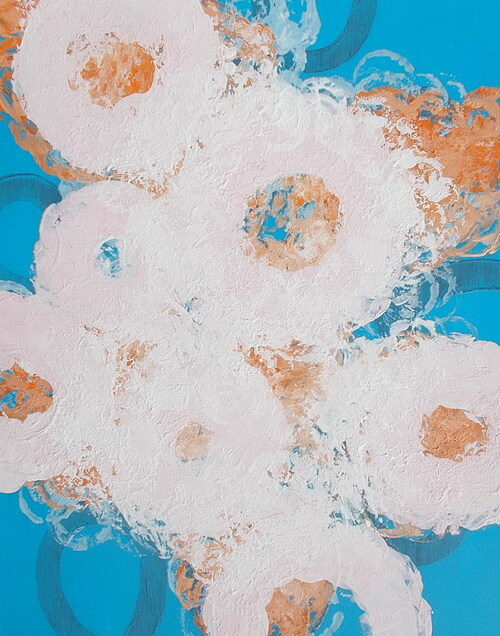
    Contemporary painting should address current issues and present itself in a referential visual language. For the group exhibition “Creaction,” curated by Dr. Carmela Loiacono, I would like to draw attention to subtle cracks in our daily lives with a work created especially for this project. Visual art is intended to deal with tensions and fractures in society. In psychoanalysis, Eros and Thanatos refer to the power of life and the death drive. “Colane” consists of a medium blue background with five loops and lighter traces above them, which are overlaid by orange zones with pale pink circles. 

    more. artfacts.net/artist/leo-hainzl-1968-at | leo_hainzl

    INTERVIEW with Leo Hainzl
    Carmela Loiacono talks with Leo Hainzl who takes part in the International Art Exhibition CREACTION in Matera, at cultural hypogeum Lega Navale Italiana Matera-Magna Grecia.

    Carmela Loiacono – Please introduce yourself and talk about the selected artwork: “Colane” presented during the exhibition CREACTION in Matera.
    Leo Hainzl – My name is Leo Hainzl, born 1968 in Austria. I received my artistic training at the University of Applied Arts in Vienna from 1994 to 1999. Since 2000, I have participated in numerous group exhibitions in Asia, Europe, and the USA. Over the past 25 years, my approach to life and work has changed. I am particularly interested in the media of painting, drawing and hybrid methods. A selection of images deals with the following topics: short-lived content in a changing society of values, the question of human meaning in a changing reality through upbringing, education and competition. In my series of works, an abstract implementation is synonymous with individual and social development tendencies. Visual art is intended to deal with tensions and fractures in society. In psychoanalysis, Eros and Thanatos refer to the power of life and the death drive. “Colane” consists of a medium blue background with five loops and lighter traces above them, which are overlaid by orange zones with pale pink circles.

    Carmela Loiacono – How would you describe your creative process? What or who influenced or is influencing your work?
    Leo Hainzl – Since 2021, my work has mostly begun after researching international calls for thematic exhibitions. In the studio, I first develop motifs experimentally, focusing on improving quality. I usually rework details until I’m satisfied. The artists of Italian Mannerism (16th century) created astonishing paintings. I also write texts myself, which provide a content basis for my analogue and digital works. 

    Carmela Loiacono – What do you think about shared art on social media? Could it be an alternative way of communicating contemporary art?
    Leo Hainzl – Every day, I’m confronted with many interesting posts from artists. Since I work in the field myself, I usually respond positively to the content. Personally, I’ve decided to only publish a photo with a short statement for selected exhibitions sometimes. In my case, it evokes more personal interaction with others.

    Carmela Loiacono – What are your future goals and/or projects?
    Leo Hainzl  – I would like to continue participating in exhibition projects with artists worldwide. The global presence of my work is important in the general competition with others. This requires a lot of time and concentration to implement. For me there is no work-life balance. I can only pursue one project after another by making sacrifices.

  • Amanda Stuart

    Artist from United Kingdom

    Amanda Stuart is a multidisciplinary artist from the United Kingdom, working across composition, sound, video, digital art and photography.
    A spark of inspiration might come from nature, a work of art, a place, a snippet of sound, the marvels of science, or a deeply felt emotion. From these beginnings, she strives to realise dramatic, fantastical landscapes of sculptured sound and image.
    She explores the beauty, significance, and fragility of the natural world. Rooted in exploration and experimentation, she creates immersive, interwoven experiences, where sound and image converge—inviting listeners and viewers into layered worlds of resonance, wonder and reflection.
    Amanda holds a Master of Music in Creative Music Technology (Distinction) from the Royal Welsh College of Music & Drama. Her work has received international recognition, including the IAWM Pauline Oliveros International Prize for Electroacoustic Media (2015) for Song of the Trees, and an Honorary Mention (2014) for Not Missing You, praised by the Boston Classical Review as “as beautiful to look at as it is to hear.” Sanctum and Oceana were shortlisted for the Saatchi Gallery – London Art Collective ARTEVOL 2025 Exhibition: Voices from the Undefined.

    Recent presentations include:
    • ART@ONE EXHIBITION – “THE ART OF DIGITAL” Cambridgeshire UK (2025)
    • NATURAL FLOW:, International Art Exhibition, Cultural Hypogeum Lega Navale Italiana, Matera, Italy (2025);
    • INTERMEDIACIONES XI, Video Art and Experimental Video Showcase, Medellín, Colombia (2024)
    • CITIES AND MEMORY – MIGRATION SOUNDS, Pitt Rivers Museum, Oxford (2024)
    • Semi-Finalist – Pebbles Underground Film & Video Art Festival, Toronto (2024);
    • MA/IN 2023 International Festival for Experimental Film and Video in Matera, Italy 2023, in partnership with ARTESCIENZA 2023 FESTIVAL, Rome July 2023

    more. www.amandastuart.com | video Oceana

    INTERVIEW with Amanda Stuart
    Carmela Loiacono talks with Amanda Stuart who takes part in the International Art Exhibition NATURAL FLOW – Exploring water’s essence in Matera, at cultural hypogeum Lega Navale Italiana Matera-Magna Grecia.

    Carmela Loiacono – Please talk about the selected video art work “Oceana” you exhibited during the exhibition NATURAL FLOW – Exploring water’s essence. 
    Amanda Stuart – Special thanks to Carmela for selecting my video art piece “Oceana” for the exhibition NATURAL FLOW, International Art Exhibition, Cultural Hypogeum Lega Navale Italiana, Matera, Italy (2025).
    Oceana is a dramatic descent into the deep, where the underwater soundworld calls and the ocean breathes. It begins in the depths of the water, submerged with pulsing sonar like sounds, building to rushing water and long haunting calls. (Original audio of the Orca and Ross Seals is heard at 1:15). More harmonious calls are heard before moving into a distant almost birdlike section. Strange noises of wailing and deep granular sounds move through the ocean. A storm builds and the turmoil leads to a dramatic climax which suddenly releases. Back down into the deepest part of the ocean, we are immersed in powerful rushing moaning sounds that dominate the seascape. Slowly rising up through the layers of the ocean, we are left gently floating into the wild blue yonder.
    I was delighted to be chosen to take part in the Polar Sounds project – a collaboration between Cities and Memory, the Helmholtz Institute for Functional Marine Biodiversity (HIFMB) and the Alfred Wegener Institute, Helmholtz Centre for Polar and Marine Research (AWI) who made the original sound recording of the Killer Whales and Ross Seals in the Antarctic. The aims of the project was to highlight the soundscapes of the Antartica and the importance of sound communication between the animals and how it is affected by climate change.
    The Oceana soundscape was created by transforming a 2 minute sample of Orca and Ross Seal calls into 61 different sounds and the visuals created by layering and transforming fourteen of my paintings.

    Carmela Loiacono – How would you describe your creative process? What or who influenced or is influencing your work?
    Amanda Stuart – My process is one of surrender—listening as much as seeing. I follow the rhythm of the brush as I would the rise and fall of a melody, allowing colour to move like sound through space. Shapes drift into being the way notes gather into harmony, each one finding its place in an unfolding composition. Layers of colour swell and fade like soundscapes— fluid, unplanned—until a flicker of recognition passes through me, a moment when something alive begins to hum beneath the surface. From there, each brushstroke, each note, each texture of sound either belongs or it does not; the work itself decides.
    My practice explores the intersection of beauty and drama, crafting immersive visual and sonic experiences that guide audiences through journeys of emotion and intensity—from subtle gestures to powerful, climactic moments.
    In both my visual and sonic works, I blend delicate gestures with moments of striking intensity, weaving translucent colours with dense textures to create layered, dreamlike worlds of resonance and reflection. Whether through the stillness of a painted surface or the dynamic interplay of sound and moving image, I want to invite sustained contemplation and sensory immersion.
    Drawing inspiration from nature, science, places, and deeply felt emotions, I shape layered sonic and visual landscapes—ranging from the most delicate gestures to powerful climaxes. Often imagining my works within performance spaces, I allow the setting to guide form and narrative, building a sonic and visual palette that evolves organically.
    Experimentation with new technologies and transformative techniques is central to my process, yet accessibility remains key. My aim is to create organic cohesive works that invite audiences on believable yet unexpected journeys.

    Carmela Loiacono – What do you think about shared art on social media? Could it be an alternative way of communicating contemporary art?
    Amanda Stuart – I think social media is a powerful way of sharing and communicating contemporary art. It allows art to reach wider audiences instantly, creating connections across distances and sparking conversations that might not happen otherwise. At the same time I feel experiencing art in a dedicated space offers something unique—the chance to slow down, spend time with each piece, feel its scale, and let it resonate with your body and soul. Ideally, both approaches can complement each other: social media opening doors and sparking curiosity, and physical spaces deepening the encounter.

    Carmela Loiacono – What are your future goals and/or projects?
    Amanda Stuart – My future goals are to remain brave and open in creating work from whatever ideas and emotions arise, to experiment with large-scale installations, and to continue sharing my art with wider audiences.

  • Nic Galloro

    Artist from USA

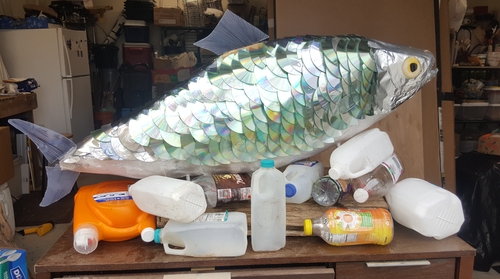
    As a life-long environmentalist, Nic Galloro has been acutely aware of the quantity of waste produced by society.  Within that refuse, he recognizes the design qualities intended for practical function, but taken our context, they become sculptural elements decoded differently by human perception.  A narrative dialogue emerges from these juxtapositions. When a presence is achieved, the piece is finished.  

    As a youth, he believed in recycling. There was money to be made by finding empty soda bottles. He participated in the very first Earth Day on April 22, 1970. He was drawn to informational platforms concerning the subject of pollution. Because he lives by the shores of the Susquehanna River and Chesapeake Bay in the state of Maryland, USA, he physically sees the plastics in the water. The most startling vision was seeing floating wood and plastic debris behind the trapped waters of the Conowingo Dam a few miles away.  When the flood gates were opened to release the excess water, a parade of plastic floated by. He thinks it was this vision that inspired him to create art, reflecting the experience. His aim is to hear viewers remark on the appearance of excessive plastics and hopefully raise awareness.
    more. nicgallorogallery | strawberrylanestudio

    Nic Galloro participated in two International Art Exhibitions:
    1) NATURAL FLOW – Exploring water’s essence in Matera, at cultural hypogeum Lega Navale Italiana Matera-Magna Grecia, from March 01 to 22, 2025 with his sculptures: “Filling Up” and “Reap What’s Sown”.

    2) NATURAL FLOW – The 2nd Edition 2026 in Lecce at MUST – Museo Storico della Città di Lecce, from July 03 to 18, 2026 with his sculpture: “Pull Tab Fish .625 “.

    INTERVIEW with Nic Galloro concerning the International Art Exhibition NATURAL FLOW – Exploring water’s essence in Matera, at cultural hypogeum Lega Navale Italiana Matera-Magna Grecia.

    Carmela Loiacono – Please introduce yourself and talk about the selected sculptures: “Filling Up” and “Reap What’s Sown” you exhibited during the exhibition NATURAL FLOW – Exploring water’s essence. 
    Nic Galloro – My name is Dominic Galloro.  I go by Nic Galloro as an artist name.  I am a sculptor but also a life-long environmentalist. I am intrigued with the idea of using reclaimed materials to make artwork.  Within that refuse, I recognize the design qualities intended for an industrial, practical function and can be manipulated; taken our context, they become sculptural elements. A narrative dialogue emerges from these arrangements. 
    Two particular artworks: Reap What Sewn and Filling Up express the sentiment that I wish to convey in my art. They both take the form of wall-mounted fish.  Reap… is a comment on how manufactured human waste can find its way into living organisms.  The title is a biblical reference about cause and effect. The other work shows the stomach of a fish completely full of the disposed waste.  It is an exaggeration, but I wanted to emphasize the sense of excess waste in the environment.  Both works were presented in Natural Flow, an exhibition of works with a similar theme in March 2025.  Dr. Carmela Loiacono was kind enough to extend an invitation to exhibit these works at the Cultural Hypogeum Lega Navale Matera, Italia. She showed an in-depth understanding of the work and was most helpful with the logistics to make it all happen – a true pleasure.

    Carmela Loiacono – How would you describe your creative process? What or who influenced or is influencing your work?
    Nic Galloro – For me, the creative process is used to make visual statements.  Art objects appeal to a different part of the brain. There is a lasting vision that may have a longer life than words.
    Influence for me comes from the work of Robert Rauschenberg because he used non-traditional elements in his art. Christo Javachef taught me not to accept obstacles and limitations (I had the pleasure of working on his Surrounded Islands project). In Baltimore, MD is a museum dedicated to Visionary Art. It is a vast collection of artwork created by people with no formal training. The commonality is having a deep desire to create art. 
    I share that sentiment.

    Carmela Loiacono – What do you think about shared art on social media? Could it be an alternative way of communicating contemporary art?
    Nic Galloro – Yes, social media is a good way to expose artwork to a wide audience. The world has shrunk with the advent of technology.

    Carmela Loiacono – What are your future goals and/or projects?
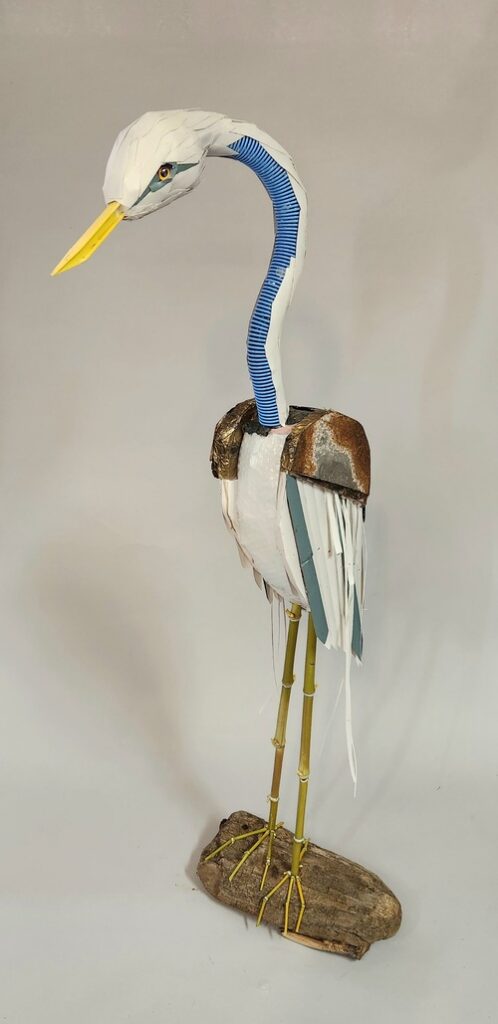
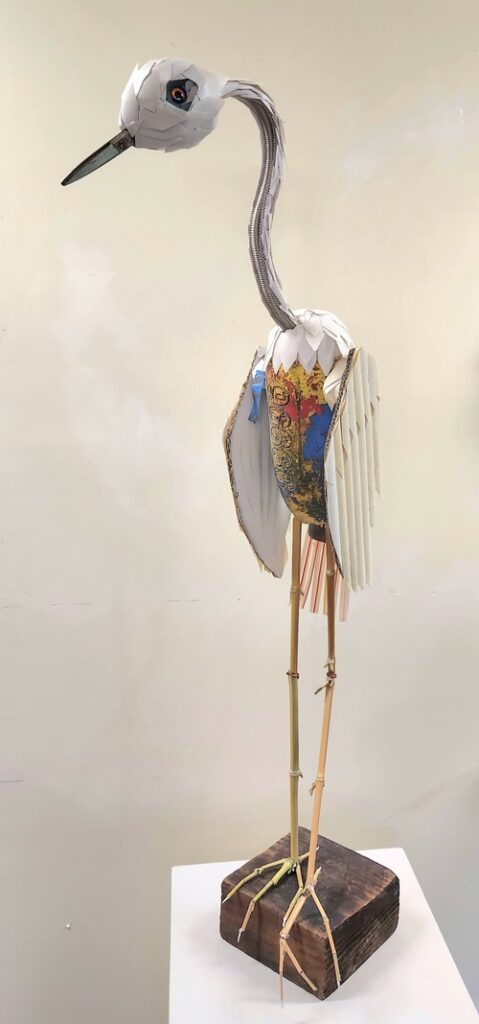
    Nic Galloro – Currently I am refining a proposal for a three meter tall heron to be installed on the Seine river near Paris. Though only a sketch was required, I decided to build it regardless. It was challenging and exciting working in a larger size than I am accustomed to and using materials foreign to my experience.

    Carmela Loiacono – We had the pleasure to meet in person in Matera, during the opening of the exhibition, did you enjoy cooperating with me? Did you like to stay in Matera? 
    Nic Galloro – The date of the exhibition was fortunate because we had intended to visit the city before I became aware of the show. Accommodations were arranged directly across the street from the museum so attending the opening was easy.  After the event we spent a few enjoyable days in the ancient city.

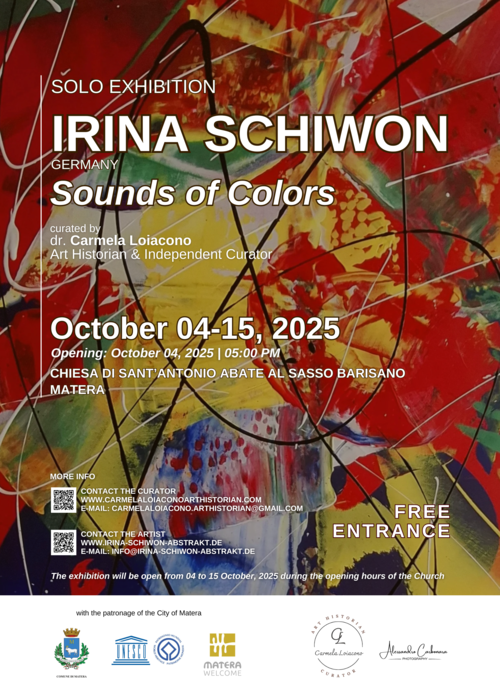
  • Irina Schiwon: Sounds of Colors. Gallery

    Solo exhibition in Matera, October 04-15, 2025
    Chiesa di Sant’Antonio Abate al Sasso Barisano

  • Irina Schiwon

    Artist from Germany 

    Irina Schiwon was born in Altaj, Siberia (Russia) in 1958. After graduation in Computer Science in St. Petersburg, she moved to Germany in 1984, where she has lived for 40 years and considers her second home.  In fact, it was in Germany that she began creating her first works based on the models of Kandinsky, Miro and the  masters of Bauhaus. 
    She worked for many years abroad, where she was also inspired by Poljakov and Max Ernst, and held her first exhibitions and created her first commissioned works for private clinics and cultural pubs.
    Since 2010, she has exhibited in solo exhibitions in Moscow and Berlin. In 2015, she opened her own studio in Berlin and continued to present her paintings in various exhibitions in Magdeburg, Dresden, Cuxhaven, Innsbruck and Berlin. 
    From 2023 to 2025, she has exhibited her works in solo exhibitions in Tuscany, Castellina in Chianti and Magdeburg, Germany, and in collective exhibitions in Venice, Matera and Bologna. She produces further commissioned works for organizations, companies and in collaboration with the interior designers “Picture & Frieze”.

    Artist statement
    “Abstraction is not chaos. Each of my paintings has its own signature. I let myself be guided by emotions and bring my feelings onto the canvas. In doing so, every basic idea is my focus, I do not make sketches and I think in the original. The color is an expression of my passion.

    Every stroke is emotion, if I am not satisfied, the abstract allows me to wipe it off, cover it up, change it or even destroy it. In the abstract, color gives me the freedom to work through, edit, change or adapt until it finally fits my basic idea.”


    For more information visit: www.irina-schiwon-abstrakt.de
    Facebook: Irina Schiwon Instagram: @irinaschiwon

    Solo exhibition in Matera

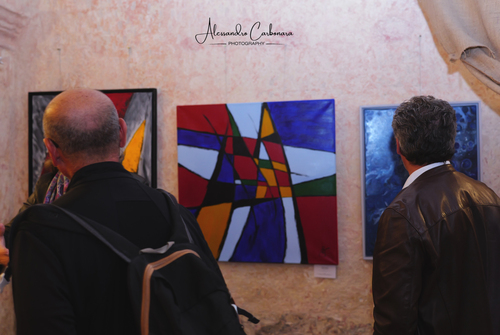
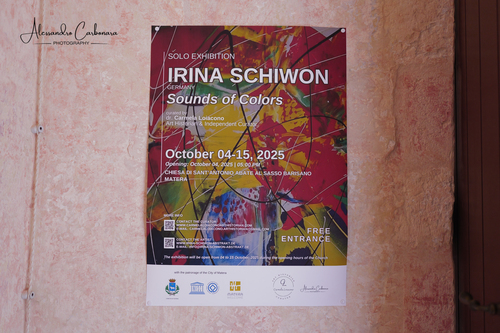
    The solo exhibition Irina Schiwon: Sounds of Colors has been an amazing success!
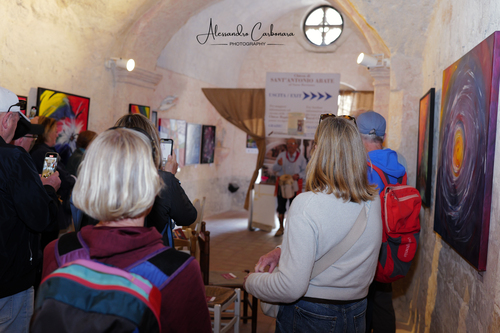
    Opened from 04 to 15 October 2025, at Chiesa di Sant’Antonio Abate al Basso Barisano, located at Via Sant’Antonio Abate in Matera, the solo exhibition of the German artist Irina Schiwon has been curated by art historian Dr. Carmela Loiacono with the patronage of the City of Matera.

    Click the following links to know more about Irina Schiwon

    Presentation of the solo exhibition and the artist Irina Schiwon


    Presentation of the exhibition

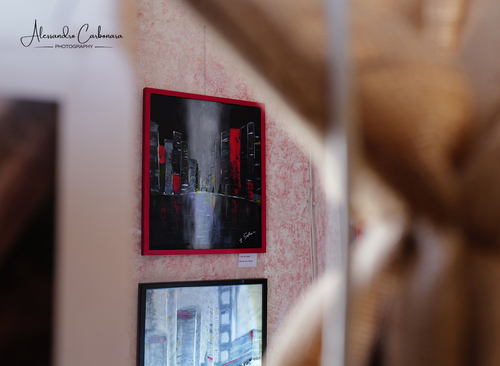
    The solo exhibition “Irina Schiwon: Sounds of Colors” presents a selection of 24 abstract paintings, whose theme focuses on the musicality of the colors. 
    All the artworks are inspired by her experiences, external influences and her travels abroad, in Italy, France and other countries, creating a unique and fascinating exhibition itinerary, where colors become a metaphor for life, strength, resilience and hope for the future. 
    The exhibition has been a unique opportunity to immerse yourself in the essence of vibrant colors, bold and captivating brushstrokes, and the evocative sound of positive energy that stimulates the mind and emotions.

    For more information visit: www.irina-schiwon-abstrakt.de
    Facebook: Irina Schiwon Instagram: @irinaschiwon

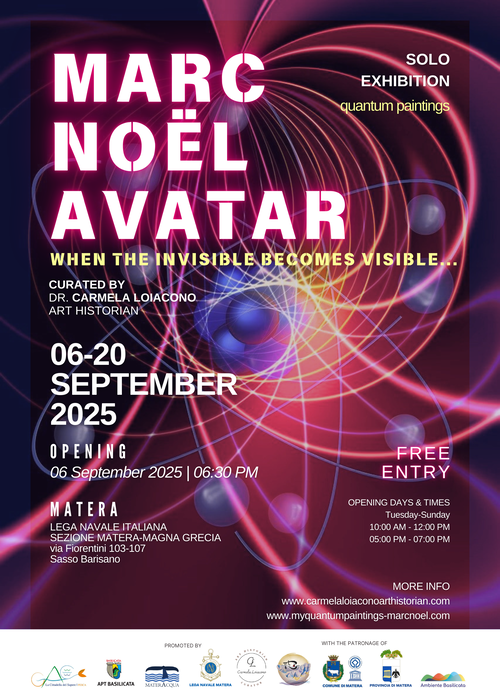
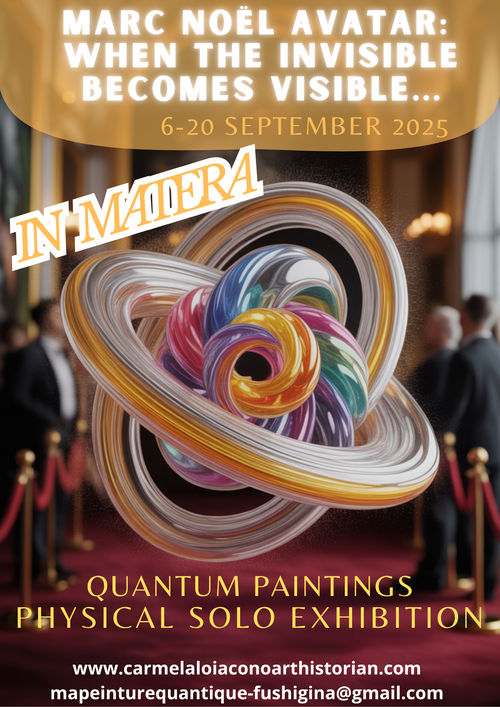
  • Marc Noël Avatar: When the invisible becomes visible… Gallery

    Solo exhibition in Matera, September 06-20, 2025
    Cultural hypogeum Lega Navale Italiana Sezione di Matera-Magna Grecia

  • Marc Noël Avatar

    Artist from Belgium 

    Marc Noël Avatar was born in Belgium and is an internationally recognized artist. His artistic career is atypical and does not stem from classical training. From an early age, he had a passion for pencil drawing. However, it was at the age of 26, following a serious car accident that left him in a coma and forced him into seven years of rehabilitation, that his artistic vision truly evolved.
    The rehabilitation period was difficult, but thanks to his perseverance and the professionalism of an exceptional therapist specializing in supporting children with motor disorders, Marc Noël Avatar began to master every gesture and every action, and discovered a growing fascination with the creative process.

    Later, the art of Shodo, a Japanese gestural calligraphy, entered his life. He met talented professionals who taught him the power of this discipline, in which each brushstroke is imbued with a vital energy, a breath called “chi.” Today, every brushstroke he creates is charged with this essence. Shodo has profoundly influenced his creations, and he has also developed his own techniques by observing other Japanese artists. 
    His approach is unique, fueled by constant self-taught learning. His art, which he calls quantum painting, is inspired by the principles of quantum physics in science, where the observer influences the result.
    His works are a reflection of his intention, created in daylight with acrylic paints, featuring a variety of bright and powerful colors, and designed to make the invisible tangible, leaving the viewer with the power to feel, interpret, become, and inviting them to engage beyond mere viewing.
    His desire is to create a hypnotic magic, where each observation of a work reveals a new perception, influenced by each person’s personal evolution. Those who own his works testify to a continuous experience, discovering new dimensions every day.
    Therefore, Marc Noël Avatar seeks to make the invisible not only visible, but also palpable, establishing a deep and evolutionary connection with his art.

    Artist statement

    As an Avatar artist, my objective is to bring paintings to the world, which have to be « felt ». That is the first step.
    The second step is to invite your brain to discover through your eyes what is painted on the canvas.
    My artwork is always an invitation «to feel outside of the box»!

    more. myquantumpaintings-marcnoel.com | mapeinturequantique-fushigina.com
    Facebook: Marc Noël Avatar | Youtube @mapeinturequantique.fushigina

    Solo exhibition in Matera

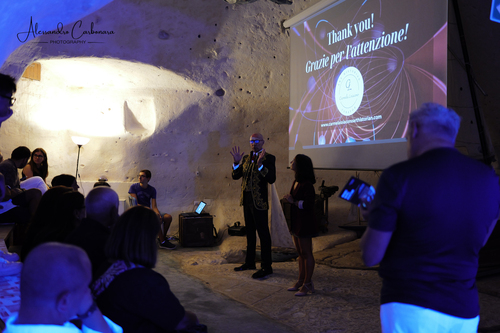
    The solo exhibition “Marc Noël Avatar: When the Invisible Becomes Visible…” was a great success!
    The solo exhibition of the Belgian artist Marc Noël Avatar has been opened from September 6, 2025 to 20, 2025 at the Cultural Hypogeum of Lega Navale Italiana Sezione di Matera–Magna Grecia, located at Via Fiorentini 103–107, in the Sassi of Matera.

    The solo exhibition has been curated by art historian Dr. Carmela Loiacono, promoted by Lega Navale Italiana Sezione di Matera–Magna Grecia and MaterAcqua, with the patronage of the Municipality of Matera, the Province of Matera, and Ambiente Basilicata.

    Click the following links to know more about Marc Noël Avatar:

    Presentation of the solo exhibition


    The idea for the solo exhibition arose from the close collaboration between art historian Carmela Loiacono and artist Marc Noël Avatar, who together invested a great deal of time, dedication, and passion in creating a unique and inimitable experience: an invitation to discover something completely new and different, not a conventional art exhibition, but rather an exhibition of quantum paintings. 
    Marc Noël Avatar’s quantum paintings can be appreciated from three distinct perspectives: in daylight, under UV light, and in complete darkness, where, surprisingly, they remain visible and come to life even in the absence of light. 
    The exhibition becomes a discovery, where visitors are invited to perceive these different facets. Each work is imbued with a unique and special energy.

    For more information about Marc Noël Avatar visitmyquantumpaintings-marcnoel.com | mapeinturequantique-fushigina.com
    Facebook: Marc Noël Avatar | Youtube @mapeinturequantique.fushigina

  • Alain Churlaud

    Artist from France

    Alain Churlaud is a French painter whose work juggles with the themes of water, mountains, countryside and concepts. His approach is to get into the feeling of the things before the making of a painting. In other words; first of all, there is astonishment at the surrounding simplicity, an emotion that is received. A story that is being built. A clash of colors, a play of lines, a structure that challenges him then builds, conceptualizes itself.
    Painting is freedom for him, starting from an idea, Alain does deconstruction-reconstruction work. Reconstruction can move as much towards simplification and purification as towards complexity and overload.
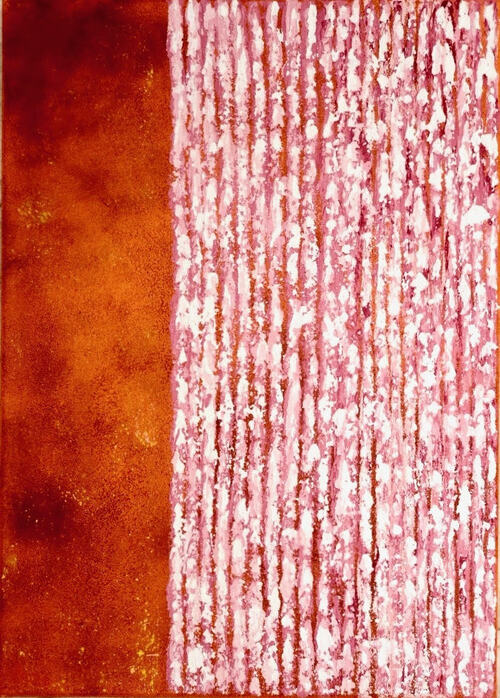
    He let himself work in abstract, minimalism, outsider art or figurative manner. Inspired by nature, Alain uses distinctive techniques such as the use of spatula, brush, roller, sand and sawdust to create a unique natural texture and specific shapes. To give more strength to his painting, he only uses pigments to create his colors. Cadmium Orange Red is a must-have that you can find in most of his work. The binder can be matte, satin or glossy according to his inspiration.
    His work has an international impact, in France and in Europe in large towns such as Rome, Venice and Barcelona and accepted in well known French sites such as Singulart and Artsper.


    more. blogs.churlaud.com/

    INTERVIEW with Alain Churlaud
    Carmela Loiacono talks with Alain Churlaud who takes part in the International Art Exhibition STORIES OF IDENTITY – The 2nd Edition in Matera, at cultural hypogeum Lega Navale Italiana Matera-Magna Grecia.

    Carmela Loiacono – Please introduce yourself.
    Alain Churlaud – I’m a French painter. Mywork juggles with the themes of water, mountains, countryside and concepts. My approach is to get into the feeling of the things before the making of a painting. In other words; first of all, there is astonishment at the surrounding simplicity, an emotion that is received. A story that is being built. A clash of colors, a play of lines, a structure that challenges me then builds, conceptualizes itself.
    Painting is freedom for me, starting from an idea, I do deconstruction- reconstruction work. Reconstruction can move as much towards simplification and purification as towards complexity and overload.
    I let myself work in abstract, minimalism, outsider art or figurative manner. Inspired by nature, I use distinctive techniques such as the use of spatula, brush, roller, sand and sawdust to create a unique natural texture and specific shapes.
    To give more strength to my painting, I only use pigments to create my colors. Cadmium Orange Red is a must-have that you can find in most of my work. The binder can be matte, satin or glossy according to his inspiration.

    Carmela Loiacono – Talk about the selected works: “Composition in Orange” and “Composition in Red” presented during the exhibition STORIES OF IDENTITY – The 2nd Edition in Matera. 
    Alain Churlaud – When you asked me to present my work for your exhibition. I founded it so great to have the opportunity to work with this theme « Stories of identities ». A way to show what makes my painting identity. And most of all presenting 2 new paintings was exiting. I wanted for that occasion to create something strong, full of natural materials. A lot of saw dust and some sand. The sand would have been just spread on the canvas. As you may know I’m so found of nature, I was to tend toward structures like moss or lichen you sometimes see on rocks. Sawdust had to be covered by beautiful bright colors as yellow orange cadmium, red orange cadmium to give strength and energy. 

    Carmela Loiacono – How would you describe your creative process? What or who influenced or is influencing your work?
    Alain Churlaud – The main lines, structures, materials and colors are set when I start painting. In the making, events happen and take the direction. For example, the sawdust is not made of the same shape. So it doesn’t follow exactly what I expected to do when I lay it on the canvas. In the go, the mixing I did with binder is not always as liquid as the other time. I let it do its own thing once on the canvas. Sometimes, drops of color fell on the painting and it wasn’t expected. We’re making the painting together, it’s a collaborative work. I’m mainly influenced by Nicolas de Staël, Braque, Soulage and Kandinsky. I also listen to lot of music, I paint surrounded by most of all ambient music and new classical. I’m really fond of Ian Hawgood, Wil Bolton, Enrico Coniglio, Stefano Guzzetti and Valgeir Sigurðsson to give few names (the list can be very long ;-)). 

    Carmela Loiacono – What do you think about shared art on social media? Could it be an alternative way of communicating contemporary art?
    Alain ChurlaudSocial media is a way to reach and to be reach. For me, it’s a way to be better known as a person and artist. There one can see that you do not have a single center of interest but many, you don’t work the same way each time. You are multiple in your work as you are in your personal life. So everyone can find in my work the different shapes of what I am and do. It’s a great way to connect our emotions and perceptions of life.

    Carmela Loiacono – What are your future goals and/or projects?
    Alain Churlaud – I started a project with Enrico Coniglio that will be seen during 2026. If you follow me on Instagram, you’ll have news about it very soon. My paintings and his music together for a trip from my place (Niort, France) to his place (Venice, Italy). I’ll paint, he’ll play. We’ll be live together.
    New paintings for 2025 2nd semester, a handful about water (the sea, the pool, the lake, …) and another about flowers (my sketches are waiting for me).

  • Vladimir Vankov

    Artist from Bulgaria 

    A Freelance artist with interests in sculpture, art glass, art jewellery, and fine arts.
    Born on July 10, 1964, in Varna.
    Graduated high school in his hometown – Varna.
    Graduate of St. Kliment Ohridski Sofia University, Major: Informatics, Specialty Computer Graphics, in 1991.
    Earned the title Master of the Co-operative of Masters of Arts and Crafts for artistic jewelry in 2011.
    A Master of the National Chamber of Crafts, in Media Technology and Media Design in 2009.
    Founder of DESIGN Ltd, Manager, Designer and Production Engineer thereof, from 1994 to 2013. DESIGN Ltd was a company that specialised in art and advertising glass and ceramics products, featuring in its portfolio the décor of a major part of the glass, porcelain, ceramics, and enamel products plants and ateliers in Bulgaria, as well as of a number of private workshops. The company also created art glass products exported to the Netherlands and France.
    Founder of IRIS Ltd, Manager, Designer and Production Engineer thereof since 1996. The company specializes in artistic and advertising print, as well as in organizing and participating in culture related events.

    Artist statement
    Through language that is as abstract and figurative as it is minimalistic, I address moral and ethical issues that, as time goes by, inevitably trouble each one of us. I compile a narrative about the life of the character by putting the viewer in their place; it is not always a comfortable one, and quite windy at that.


    more. www.vladimirvankov.com

    INTERVIEW with Vladimir Vankov
    Carmela Loiacono talks with Vladimir Vankov who takes part in the International Art Exhibition STORIES OF IDENTITY – The 2nd Edition in Matera, at cultural hypogeum Lega Navale Italiana Matera-Magna Grecia.

    Carmela Loiacono – Please introduce yourself and talk about the selected works: “Paternity”, “Maternity” and “Internal Conflict” during the exhibition STORIES OF IDENTITY – The 2nd Edition. 
    Vladimir Vankov – My name is Vladimir Vankov, and I am an independent visual artist working primarily in sculpture, but also in painting, glass art, and artistic jewelry. I was born on July 10, 1964, in Varna, Bulgaria. I have an university degree in mathematic sciences and a long background as a founder, manager, technologist, and designer of companies working in artistic glass, porcelain, and industrial printing. Over 40 years of artistic practice, I have participated in numerous exhibitions, both solo and group. My works are held in private collections in Bulgaria, the United Kingdom, Austria, Belgium, Denmark, Germany, Russia, Ukraine, Japan, the USA, and Canada.
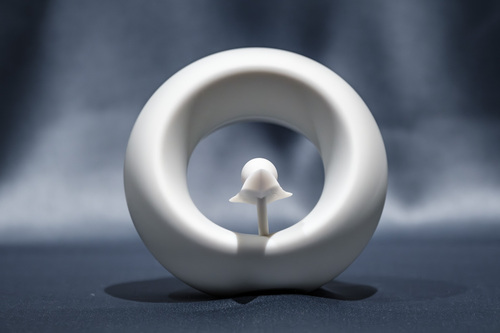
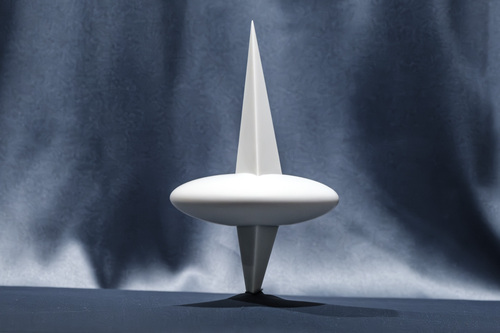
    I was delighted that my works “Paternity,” “Maternity,” and “Internal Conflict” were selected for the curatorial project “Stories of identity II.” They are part of the narrative in my cycle “Where to now?” Perhaps not the most visually spectacular pieces (like the levitating figures “Alone” and “Where to now?”), but they are maybe the most intimately human. “Paternity” was the first artwork I created using this abstract visual language. Naturally, it was dedicated to my children. I was incredibly happy when I managed (in my opinion) to transform such an abstract category, such a profound feeling, into a plastic form—encompassing its past, present, and future. “Maternity” was the logical continuation, and the two pieces marked the beginning of Where to now?” cycle. It’s a story about human life and the moments that define it: the searchings, the hesitation, the suffering, the joy, the decisions, and the responsibilities. My aim was to present these moments in a way that puts the viewer in the protagonist’s shoes. The idea was for the viewer not to think about the material, color, texture, or background—just to see a sculptural form that speaks. That was also why I chose this size, as it’s the optimal size to be taken in with a single glance. As for “Internal Conflict,” the idea for it came to me at the beginning of the war in Ukraine. It took me some time to realize that war is not so much a conflict between two forces as it is an internal conflict of humanity itself. The parallel with the internal conflict of the human soul came naturally. The sculptural solution was a real challenge: a defined, unified whole that tears apart while remaining whole—on the verge of disintegration, but with the possibility of becoming whole again.

    Carmela Loiacono – How would you describe your creative process? What or who influenced or is influencing your work?
    Vladimir Vankov – Every artist’s creative process is different. At my age, after experiencing many personal and social upheavals and re-evaluations of societal value systems, as well as learning many lessons from life, a natural approach has developed that allows me to examine the philosophical and ethical problems and mental states that concern every person. First, through my own lens, I analyze a problem in depth—rationally, emotionally, and morally. I clarify my position and concept for myself, and only then do I begin to search for its plastic expression. This is an iterative process that continues until I achieve a result that is as expressive and stripped of all unnecessary details as possible. In doing so, I let the form evolve according to its own internal forces; I don’t compromise it to fit the requirements of a specific technology or material. Only at the end do I choose the appropriate material and technique for execution. I also pay serious attention to the presentation of the finished work, believing that its adequate presentation by creating its own environment (a stage) is essential for the audience to fully perceive it. Working with a highly abstract visual language, I prefer to add a text with my own vision, which is an integral part of the work and sometimes the most difficult part. My task is to ask questions—not always pleasant or easy ones—when the audience encounters my art, and I leave the answers to the responsibility of each individual viewer. It is a real satisfaction to see that no visitor remains indifferent. That is where I find meaning in my work and motivation to continue.
    This is where my inspiration comes from: seeing people entangled in their daily worries and their unresolved internal, interpersonal, and social problems, without expecting to be put in front of a mirror and asked the questions they avoid or have not yet reached. Then, I see the change in their gaze. It’s incredible. And deeply obligating. As for the artists who inspire me, there are many in one way or another, but I believe that the main inspiration must come from within and be hard-won.

    Carmela Loiacono – What do you think about shared art on social media? Could it be an alternative way of communicating contemporary art?
    Vladimir Vankov – I don’t have a simple answer regarding the online sharing of modern visual art, especially on social media. Of course, given the speed and immediacy with which published information reaches its target audience, these platforms should not be underestimated, especially considering the minimal effort required from the viewer. On the other hand, these channels cannot provide the experience of a live encounter with the artwork, of sharing the feeling and breathing with it. The effort a viewer makes to visit a gallery and immerse themselves in the specially created atmosphere guarantees a much more fulfilling connection with the artwork. It is on its “stage,” which is something unattainable when viewing it on a screen at the current level of technology (with the exception, to some extent, of some interactive 3D platforms), especially on a smartphone screen. The sense of real dimensions and the interaction with the environment and other exhibited works are also lost. The artwork is in an uncontrolled light and color environment. From my own experience, I can say that the live experience is in the vast majority of cases significantly different from the expectation built from prior visual information. In short, at the risk of sounding a little retrograde, I believe that publishing visual art online is an inseparable part of modern life, but it should be done with taste and moderation. The photo or video material and its presentation should be thoughtful to preserve the idea as much as possible and avoid the simplified, fast-food-style perception. At best, it should be an invitation to a live meeting. And that requires a special kind of professionalism.

    Carmela Loiacono – What are your future goals and/or projects?
    Vladimir Vankov – My main goal is to continue working. I have a number of works started that I need to finish, as well as some that are at the idea and sketch stage. But even more important is to provide the ways for them to reach a wider audience. In particular, this means organizing exhibitions, with my current focus being on Europe. Of course, this also implies an organized online presence.
    To be specific, these are works in the philosophy and style of my cycle “Where to now?”, as well as large-format works in metal, stone, and glass. I am also working on two monumental metal compositions for an urban environment. But most of all, I am working on the philosophical dimension of my ideas—exploring what each of them can contribute to a better world inhabited by more consciously humane people. I do not impose my views, but I offer them, along with the questions they raise. Each person makes their own choices—and takes responsibility for them.