Autore: Carmela Loiacono

  • NATURAL FLOW – The 2nd Edition 2026 | Review

    Critical Review

    NATURAL FLOW – THE 2nd EDITION 2026
    International Art Exhibition
    Lecce, MUST – Museo Storico della Città di Lecce


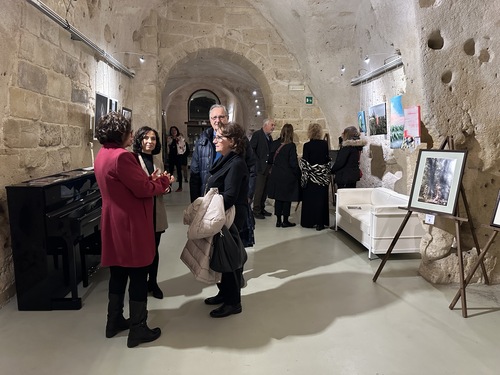
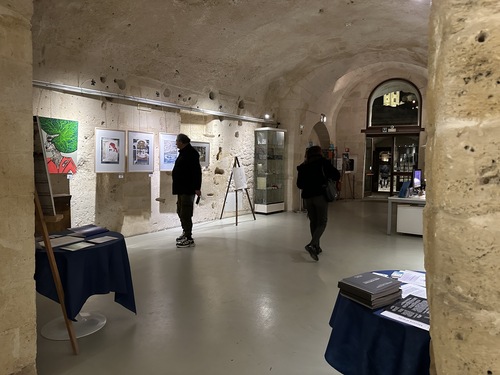
    The international exhibition NATURAL FLOW – THE 2nd EDITION 2026 held in Lecce at MUST OFF Gallery of MUST – Museo Storico della Città di Lecce has been inaugurated on July 3 and it has been very well received by visitors until July 18, 2026.

    The exhibition featured artworks by 24 artists from all over the world, creating an engaging experience through painting, photography, sculpture, and installations in the beautiful city of Lecce.

    Curated by art historian dr. Carmela Loiacono, The exhibition found its ideal setting in the city of Lecce, historically a crossroads of the Mediterranean and a bridge between cultures, which today promotes a global artistic dialogue centered precisely on the theme of the flow of a fluid world. 
    The exhibition received significant public interest, drawing a wide and enthusiastic audience throughout its run at the MUST – Museo Storico della Città di Lecce, highlighting the strong cultural impact of the project.

    PRESS RELEASE published on:
    Itinerari nell’Arte | Exibart | Corriere Salentino
    Il Giornale del Salento | LecceCronaca
    Juliet Art Magazine

    Concept & info


    Water is one of the fundamental elements of nature and it’s the most widespread compound on Earth. 

    The thematic core of the entire exhibition has been the water, understood both as a primary natural resource and as a powerful symbolic presence. From an essential biological asset to an emblem of purification, fluidity, and spiritual regeneration, water is explored through the sensibility and techniques of authors from diverse geographical and cultural backgrounds.

    The works selected for this second edition offered the public a variety of interpretations, divided into four broad conceptual areas:
    1) Environmental issues and sustainability, focusing on critical perspectives related to its conservation.
    2) Personal or conceptual reflections on the fluid nature of this element.
    3) Natural landscapes, featuring evocative representations of seas, rivers, and lakes.
    4) Symbolic and spiritual dimensions, drawing from art history and myth.

    The main aim of the exhibition has been to celebrate the culture of water, highlighting its inextricable link with contemporary artistic expression and its role in shaping the human experience.

    Photo reportage NATURAL FLOW – The 2nd Edition 2026

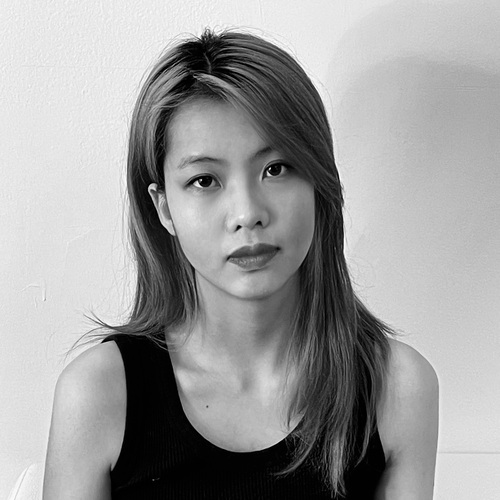
  • Anna Zhang

    Artist from China

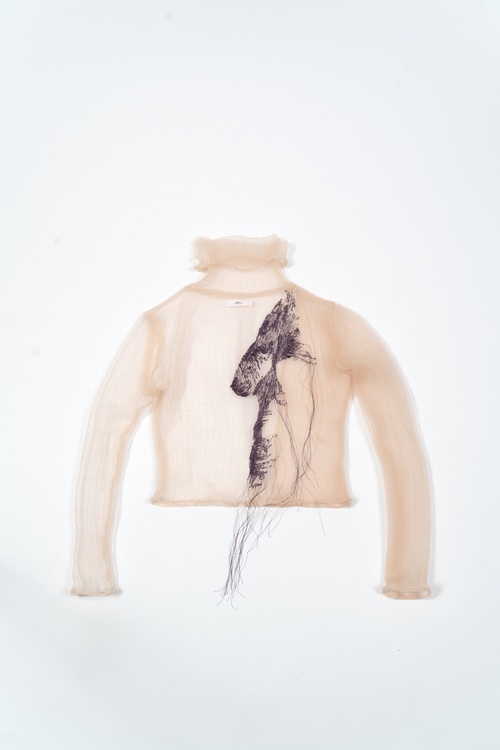
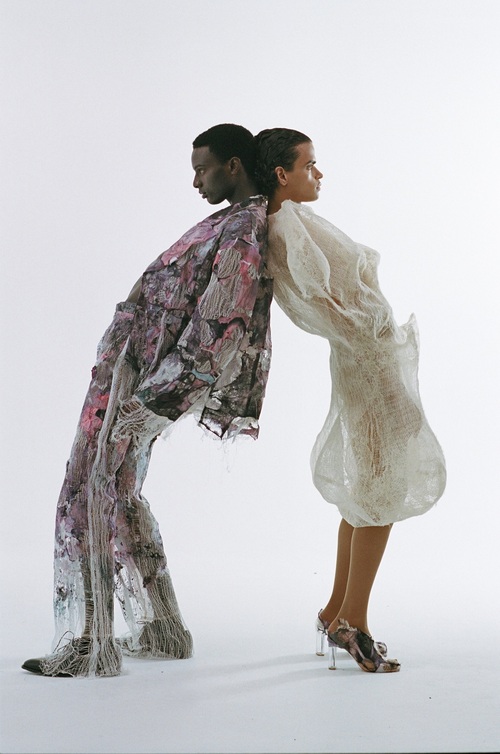
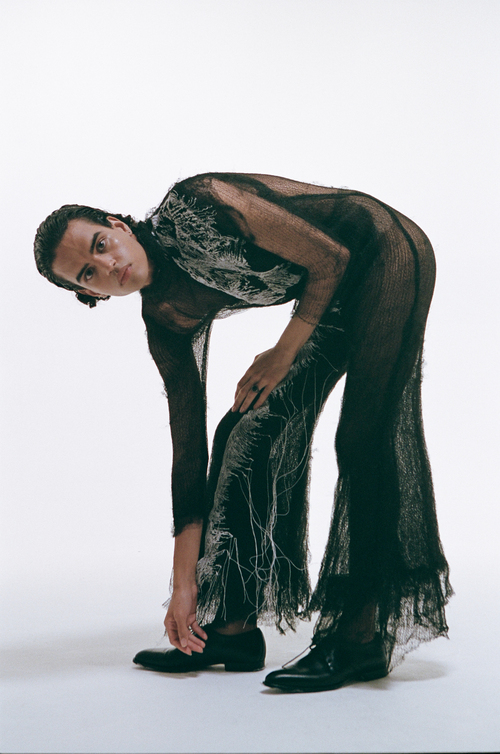
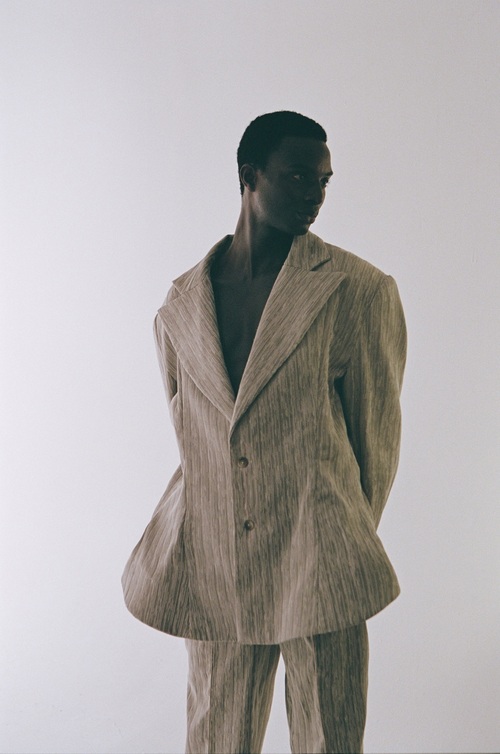
    Anna Zhang is a New York–based fashion designer, graphic designer, and visual artist, and the Founder and Creative Director of ANNA.Z, an independent multidisciplinary studio bridging fashion, visual art, and moving image. Her work spans textile experimentation, digital imagery, and installation-based narratives, with a focus on emotional resonance and material language across physical and digital media.
    Anna holds a Master’s degree in Fashion Design from Parsons School of Design and currently works as a Designer at CALVIN KLEIN DRESS and DONNA KARAN DRESS New York, alongside her independent practice. Her creative projects under ANNA.Z have been presented during New York Fashion Week, where she has showcased conceptual installations integrating graphics, cinematic visuals, and sculptural garments. Her video works have also been exhibited in SoHo, New York, reflecting her ongoing exploration of spatial and film-based storytelling.
    She has received multiple international recognitions, including the American Good Design Award, MUSE Design Award, and French Fashion Award.
    Working across fashion, graphic design, and film-based media, Zhang investigates contemporary form, narrative structure, and the intersection of technology and craft.

    ARTWORK STATEMENT
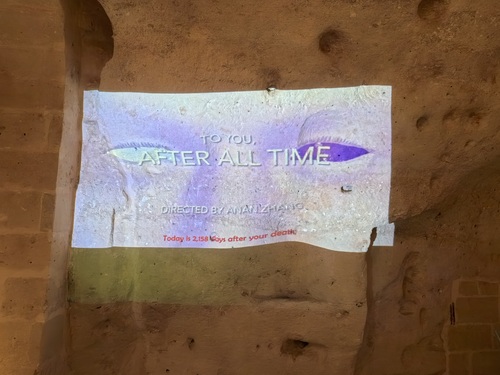
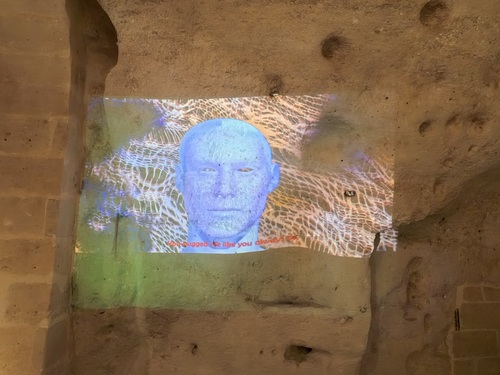
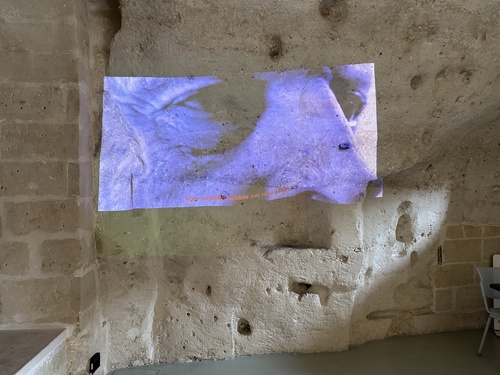
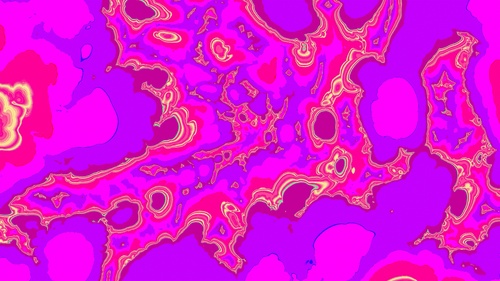
    TO YOU, AFTER ALL TIME is an immersive film reflecting on memory after the loss of a loved one. Through recurring visual cycles of melting and growth, the work traces an emotional process between forgetting and remembering, loss and healing. The animation translates grief into an evolving visual language, where transformation becomes a form of remembrance.

    CRITICAL REVIEW: The short animated film TO YOU, AFTER ALL TIME explores grief as an open, non-linear process in which memory and loss coexist in a state of continuous transformation. Through visual cycles of melting and regeneration, the animation translates pain into a fluid material, rejecting any sense of definitive closure.
    Transformation thus becomes both the language and the structure of the work: shifting forms embody the way memory operates over time, reshaping the identity of those who remain. Grief is not overcome, but absorbed, becoming part of an emotional balance in constant evolution.
    In this poetic suspension, the short animated film TO YOU, AFTER ALL TIME affirms vulnerability as a creative force and opens an individual experience onto a universal dimension, in which change emerges as a necessary gesture of resilience and renewal.
     – Dr. Carmela Loiacono, Art Curator

    more. annazofficial.cargo.site | CV – ARTIST

    INTERVIEW with Anna Zhang
    Carmela Loiacono talks with Anna Zhang who took part in the International Art Exhibition NEW HORIZONS – Authenticity, Resilience and Renewal in Matera, at Casa Cava, from March 21 to 27, 2026.

    Carmela Loiacono – In TO YOU, AFTER ALL TIME, the continuous cycle of melting and regrowth visualizes the process of grief. How did you find a balance between representing a deeply personal loss and creating a universal language that can speak to anyone? 
    Anna Zhang – I chose not to tell a specific story, but to translate the feeling of grief into a visual system—its repetition, instability, and transformation. By using abstract processes like melting and regrowth, the work leaves space for viewers to project their own experiences. That distance allows something deeply personal to become universally relatable.

    Carmela Loiacono – The animation transforms pain into fluid visual matter. Can you share how your choices in movement, color, and rhythm helped shape such an intimate experience?
    Anna Zhang – I treated the animation as a living system. Forms continuously change but never fully return, reflecting how grief evolves. The color palette is restrained and gradual, while the rhythm moves between stillness and slow transformation—almost like breathing—making the experience feel intimate rather than overwhelming.

    Carmela Loiacono – Memory in your work emerges as an ever-evolving element. Looking back on the creative process of this video, how has the work transformed your own personal understanding of loss and remembrance?
    Anna Zhang – It shifted my view of grief from something to resolve into something to live with. Memory became less fixed and more fluid—constantly reshaped over time. The process helped me accept that loss doesn’t disappear, it transforms and stays with us in different ways.

    Carmela Loiacono – What future directions or projects do you envision for your video and animation practice, and how do you plan to continue exploring emotional transformation through new visual languages?
    Anna Zhang – I’m interested in expanding into installations and interactive systems, where viewers can physically engage with these transformations. I’m also exploring AI and simulation as tools to build new visual languages—less about representing emotion, and more about letting people experience it through change and time.

  • Rubén Avendaño

    Artist from Mexico

    Rubén Avendaño is a Mexican-born, Los Angeles based cinematographer and photographer whose work has been shaped over more than two decades behind the camera. His path has moved through television and into still photography, earning two Emmy nominations along the way and taking him as far as the White House, where he filmed alongside President Joe Biden.
    But the work does not begin there. It begins earlier.
    It traces back to a boy who learned to look closely, who found a way through uncertainty by paying attention to light, to gesture, to the small shifts that often go unnoticed. That instinct never left. It simply evolved.
    Today, his photographs are less about capturing and more about recognizing. They hold a sense of presence, moments that feel discovered rather than constructed. There is no rush to explain them. They exist as they are, fragments of experience shaped by patience and a willingness to stay with what reveals itself.
    His work moves between memory and observation, carrying an undercurrent of resilience without announcing it. What remains is an openness, a belief that even in difficult terrain something luminous can surface. Not as escape, but as a way of seeing differently.

    Artist statement
    “I come to photography from a place of attention rather than certainty. I’m less interested in constructing meaning than in recognizing it when it happens. My work begins with awareness, slowing down enough to notice light, gesture, and the emotional temperature of a moment before language steps in.
    For many years I’ve worked in television as a camera operator, traveling and documenting people in unscripted environments.That experience shaped how I see. It taught me that truth rarely announces itself. It reveals itself in the pause between gestures, in the language of what isn’t said. Photography, for me, is an extension of that way of looking. I don’t chase images. I listen for them.
    As someone shaped by Mexican roots, I carry a deep sensitivity to presence and impermanence. I come from a culture grounded in memory, ritual, and respect for what came before us. That lineage guides how I approach my work. I’m drawn to shadows, to transitions, to moments that seem suspended between past and future. Those spaces feel charged with something deeper, something that calls for attention and care. They feel familiar to me.
    I’m not interested in spectacle or explanation. I’m interested in honesty, frames that hold silence as much as subject, images that allow the viewer to bring their own memory and meaning without being instructed how to feel.
    At its best, photography feels less like authorship and more like witnessing. When I’m present, fear and expectation fall away. The work becomes simple. I stand where something real is happening and let it reveal itself. What remains is not a statement about who I am, but a record of having been there and having paid attention.”

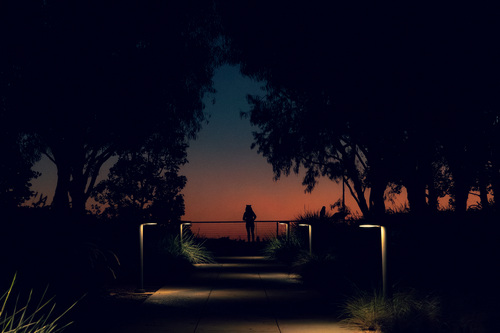
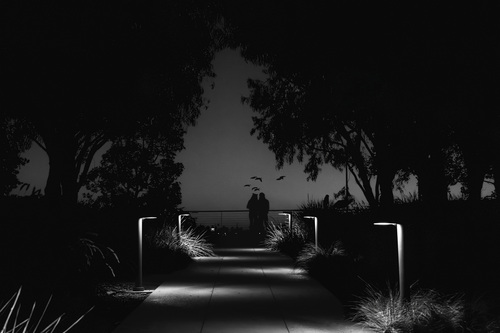
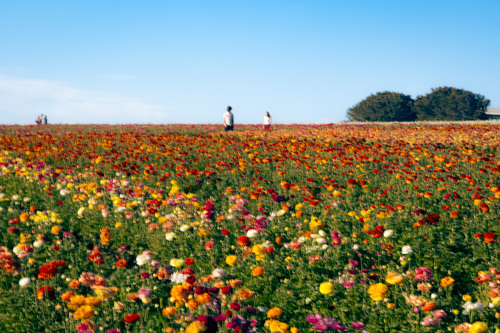
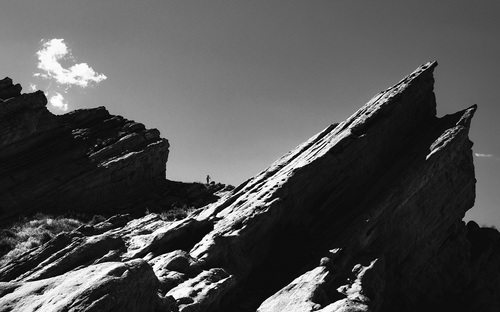
    CRITICAL REVIEW: In keeping with the theme New Horizons – Authenticity, Resilience, and Renewal, the two works, Playa Vista #1 and Playa Vista #2, represent a journey toward new inner horizons. The solitary figure standing at the end of the illuminated pathway embodies the individual in a moment of transformation, suspended between what is being left behind and what remains to be discovered. The dialogue between the color version and the black-and-white interpretation suggests two states of human experience—memory and rebirth, vulnerability and awareness—while the pathway becomes a metaphor for a journey of resilience and authenticity. These works invite viewers to perceive limits not as barriers, but as thresholds, affirming the possibility of redefining oneself and opening up to new perspectives. – Dr. Carmela Loiacono, Art Curator

    more. www.rubenavendano.art | Instagram @cameraruben

    INTERVIEW with Rubén Avendaño
    Carmela Loiacono talks with Rubén Avendaño who took part in the International Art Exhibition NEW HORIZONS – Authenticity, Resilience and Renewal in Matera, at Casa Cava, from March 21 to 27, 2026.

    Carmela Loiacono – You often speak about attention rather than intention.  While making “Playa Vista”, was there a moment when you simply knew it was time  to stop and stay with what was unfolding?  What do you notice in yourself in that instant?
    Rubén Avendaño – At Playa Vista, I saw a couple with their dog, sharing the last light of the day. Then, for a brief moment, she stepped into her own space and turned toward the horizon. Her silhouette revealed itself, held gently by the trees, while the sun softened into a tone that felt almost intentional, though it wasn’t mine. It all aligned without effort.
    In that instant, something in me becomes still and receptive. There is no urge to direct or interfere, only to witness and respond. I feel a sense of recognition, like I am being let in on something that was already happening long before I arrived. What remains is gratitude, for the light, for the timing, and for the chance to hold a fragment of that experience and carry it forward. 

    Carmela LoiaconoThe shift from color to black and white feels less like an effect and more like a quiet transition in perception.  Did that shift belong to the moment itself, or did it reveal itself later, with distance? 
    Rubén Avendaño – The shift to black and white didn’t feel like a choice I made in the moment. It came later, with a bit of distance. But when I looked back, it felt like it had always belonged that way. Sometimes color carries too much information, and with time you begin to see what was underneath it. The black and white revealed something more essential, something that was already there but harder to recognize at first.

    Carmela Loiacono – Your images seem to hold space rather than define it.  How do you recognize when a photograph has said enough, and it’s time to leave the rest open?
    Rubén Avendaño – For me, a photograph feels complete when it stops asking for anything. There’s a point where adding more begins to take away from it. I try to listen for that. It’s subtle, but it’s there. When the image holds its own weight without explanation, I know it’s time to step back and leave the rest open.

    Carmela Loiacono – Your work is deeply rooted in presence — in being there, attentive to what emerges.  When the work travels without you, do you feel that presence remains, or does it transform into something else?
    Rubén Avendaño – Presence changes once the work leaves me. When I’m there, it’s very physical, very immediate. But once the photograph travels, it becomes something quieter. I don’t think the presence disappears, but it transforms. It belongs to the viewer now, to their own pace and their own way of seeing. What I felt in the moment becomes just one layer among many.

    Carmela Loiacono – As your practice continues to evolve, what are you currently moving toward?
    Is there something you feel you are beginning to see, or understand, that you weren’t ready for before?
    Rubén Avendaño – Lately, I feel like I’m moving toward less. Less certainty, less control. I’m becoming more interested in what I don’t immediately understand. There’s a kind of patience I didn’t have before, a willingness to stay with things longer without needing to resolve them. I think I’m starting to see that not everything needs to be translated. Some things are meant to remain just as they are.

  • Marc Raynaud

    Artist from France

    It was by working and drawing in more than forty countries that Marc Raynaud learned to discern differences and play with contrasts.
    French of origin, it was in Canada that he began his career painting the great outdoors and the energy of Rock’n roll. Then it was Asia which, for many years, nourished his sensitivity and the subtlety of his brush. Then in Africa, Marc’s drawings became more raw, simple and direct.
    Today it is the light of southern Italy that guides his hand.
    Stimulated by two exceptional teachers from the Ateliers des Beaux-arts in Paris, Marc has been expressing himself through his collages for around ten years and developing an original style and a personal technique, halfway between the figurative and the abstract. His paintings look like paintings but are not, they are only pasted paper.
    In a world where photography and its instantaneous power reign, this slower path is for him an opportunity to contemplate what surrounds him and to build bridges between classic and modernity.
    From his two workshops located opposite Capri and near the Atlantic, on the banks of the Adour, Marc has produced fifteen travel diaries from Africa to Asia, via Polynesia, and from Biarritz to the Gulf of Naples, with texts in harmony with his images.
    Marc’s collages have already been exhibited in London, Milan, Paris, Rome, Suze la Rousse, Saint Laurent de Gosse, Urt and Venice.

    CRITICAL REVIEW: In “Dialogue with the Invisible, Amalfitana Coast“, Mediterranean light becomes a threshold between the tangible and the unseen. The landscape is transformed into an inner space, where myth and memory surface beyond representation. Through collage, you evoke a poetic act of resilience: the ability to perceive what lies beyond appearances and to open oneself to renewed awareness.
    “Matin calme aux Marquises” reflects the quiet power of transformation through encounter. Fragments of place and experience are assembled into a contemplative landscape, where travel becomes an inner journey. The work embodies renewal as a process of recomposition, suggesting that resilience emerges through openness to the unknown and the integration of lived experience.
    “Concert à Venise” captures the intensity of an unexpected moment in which sound, space, and emotion converge. This work transforms memory into a visual rhythm, where reality and imagination merge. The collage becomes an expression of authenticity, affirming that transformation often arises from moments of wonder that disrupt the ordinary.
    “Femme étrusque songeuse” evokes introspection and continuity between past and present. The figure appears suspended in thought, embodying identity as a living dialogue with memory and origin. Through delicate layering, the work reflects the strength of vulnerability and the possibility of renewal rooted in self-awareness.
    – Dr. Carmela Loiacono, Art Curator

    more. www.marcraynaud.com | Instagram profile

    INTERVIEW with Marc Raynaud
    Carmela Loiacono talks with Marc Raynaud who took part in the International Art Exhibition NEW HORIZONS – Authenticity, Resilience and Renewal in Matera, at Casa Cava, from March 21 to 27, 2026.

    Carmela Loiacono – Your works, including “Concert à Venise”, “Dialogue avec l’invisible, Amalfitana Coast”, “Femme étrusque songeuse” and “Matin calme aux Marquises”, reveal a dialogue between memory, myth, and landscape. How do you transform fragments of experience and place into a poetic act of resilience through your collages? 
    Marc Raynaud – The Invisible is everywhere. « Don’t forget to draw what you do not see », used to tell my former teacher at The  Fine Arts School in Paris.  
    Memory is what is the most visible, what we have seen. The Invisible is the Future, what is lying behind us, in our back as the African say. Our Past is in front of us. Under the rocks of my Art Studio in front of Capri, the mermaids became stone statues when Ulysses stopped by with his navigators. I guess other people also see these invisible queens.
    The spot is called « Punta Licosa » (Mermaid Point) in San Marco di Castellabate where yo can visit my Art Studio.

    Carmela Loiacono – Collage, for you, is a slower, contemplative process in a world dominated by photography. How does this meditative approach influence your perception of authenticity and the renewal of the inner self? 
    Marc Raynaud – I practice Collage silently in the morning before anything moves in the house. So immediately I am back into childhood and can think about the charming schoolteachers I had when I was four or six (and not sixty four). I am still in love with them like all my little classmates.
    I can see all the little boys in the classroom and name them all on the class picture of the year. I may even pray for them for no reason and without them knowing. Or may be they now.
    Who knows?
    I slowly take off in my souvenirs and mix them with new dreams and songs that I have not sung for decades. Doing so I meditate and follow with humility my cutter and the sheet of paper who drive me towards the emerging piece of Art that progressively appears. I am grateful to the glue, the tool and the paper that allow this to happen.

    Carmela Loiacono – Across your travels from Africa and Asia to Polynesia and southern Italy your works capture both external landscapes and inner journeys. How does the act of recomposing reality through collage allow you to explore renewal and personal transformation?
    Marc Raynaud – Recomposing Reality is fun. Another Art teacher of mine, who was crazy enough, used to tell us that who are allowed to lie when drawing or painting  because nobody else sees what we see anyway.
    When practicing Collage, silence and patience allow me to discern among all the lies I have been taught when I was a child and until now.
    Getting aware of them allow me to feel lighter and even freer today. Freedom, the great privilege of the artist!
    The same miracle happens when I realize  all that was forbidden when I was a young boy. Overcoming these forbidden barriers allowed me to discover new landscapes and worlds.
    Without these former barriers I would not have the same personality and pleasure today. Thank you Mum!

    Carmela Loiacono – Looking forward, are there new directions, projects, or places that inspire you to further develop your collage practice and continue exploring the interplay between memory, light, and identity?
    Marc Raynaud – Recently I have made a serie of abstract collages that may look like dating from the 30’ or 50’. Playing and creating in the time when I was born and before was an unexpected and very joyful journey. The result was a broader view of my art.
    Even if my Muse did not like this serie of abstract collages too much at the beginning, I showed them to visitors who came to my Art studio near Capri.
    And some of them who knew me immediately said « Now we know you and understand you even better ! ».

  • Bassem H. Boustany

    Artist from Lebanon

    Bassem H. Boustany is an architect and photographer whose engagement with photography began in his teenage years, inspired by close personal influences. His architectural education played a formative role in shaping his visual language, fostering a sustained exploration of light, form, and spatial relationships.
    His first exhibition marked a defining moment in his photographic journey, affirming his long-term commitment to the medium. His practice focuses primarily on landscape and street photography, where he seeks to reveal beauty within the ordinary and to capture fleeting moments amid urban and natural complexity.
    Over the years, he has participated in several exhibitions in Lebanon, Rome, New York, and London, experiences that have further deepened his involvement in the photographic arts and expanded the international scope of his work.
    Influenced by Impressionist painters as well as renowned photographers, his approach combines technical rigor with artistic sensitivity and an enduring sense of curiosity. Alongside his exhibition practice, he has authored several photography books exploring themes of memory, urban rhythm, abstraction, and emotional perception, including Street Chronicles: Taipei Through the Viewfinder, Vibrant Urbanism in Riyadh, and Emotions: A Journey Through Light and Motion. His forthcoming book, Drift, continues this exploration through a more introspective and abstract visual narrative.
    He continues to develop new projects across exhibitions and publications, while encouraging emerging photographers to cultivate their own visual identities through observation, patience, and personal vision.

    CRITICAL REVIEW: The diptych “Threshold of the Unseen” explores the fragility of the boundaries between inner consciousness and external identity. The work, conceived as a diptych, is very interesting: a blurred figure holds a feather, a symbol of transience and fragility; and in the second panel, the figure moves toward a luminous threshold, uncertain whether it is entering or exiting.
    This duality between presence and transition, stasis and movement, perfectly embodies the ideas of a threshold between the visible and the invisible, of crisis and inner rebirth that are characteristic of NEW HORIZONS Exhibition.
    It represents the passage from the known to the unknown, from fragility to the opening of new horizons, a conceptual core central to the exhibition.
    Furthermore, “The Invention of Memory”, Bassem reflects on how memory is not a simple recollection, but an imaginative construction. He doesn’t describe an event; rather, the work evokes an emotional imprint or a residue of presence, a concept that goes beyond purely objective vision. “The Invention of Memory” explores how perception and identity emerge beyond immediate vision, aligning with the idea of self-redefinition and inner resilience through memory.
    – Dr. Carmela Loiacono, Art Curator

    more. bassemhboustany.com | Instagram Profile

    INTERVIEW with Bassem H. Boustany
    Carmela Loiacono talks with Bassem H. Boustany who took part in the International Art Exhibition NEW HORIZONS – Authenticity, Resilience and Renewal in Matera, at Casa Cava, from March 21 to 27, 2026.

    Carmela Loiacono – During the inauguration, it was a true honor to meet you and experience your presence firsthand. Your diptych “Threshold of the Unseen” shows, in the first panel (Held), a blurred figure gently holding a feather, a symbol of fragility and memory, and in the second panel (Passed), the figure moves toward a luminous threshold. Do you see these moments as an arrival, a departure, or something that exists in between?
    How do you capture, in your photographic process, the tension between presence and transition, between stillness and movement, and between fragility and the opening toward new horizons?

    Bassem H. Boustany – I don’t see these two moments as a clear arrival or departure. For me, they exist in between, in that brief instant where something is about to shift but has not yet resolved.
    The first image, Held, is more introspective, almost suspended. The second, Passed, suggests movement, but without certainty. It is not clear whether the figure is entering or leaving. That ambiguity is important to me.
    In my process, I use movement intentionally to reduce clarity. By doing so, the image moves away from description and becomes more open. The subject is no longer fixed, it becomes a presence rather than a figure.
    This is where the tension appears. Not between opposites, but within the same moment. Stillness carries movement, and fragility carries a form of strength. I try not to resolve that tension, only to remain close to it.

    Carmela Loiacono – Furthermore, “The Invention of Memory” evokes memory not as recollection, but as a creative construction. When photographing, how do you distinguish between what is “remembered” and what is emerging, imagined, or invented in that very moment?
    Bassem H. Boustany – For me, memory is not something we retrieve, it is something we reconstruct.
    When I photograph, I am not documenting a moment as it is. The use of movement and blur transforms what I see into something that already feels distant, almost like a memory forming in real time.
    So I don’t really distinguish between what is remembered and what is imagined. The image exists somewhere in between. It is both a trace of something real and a projection of something internal. What interests me is precisely that instability, when the image is not fully defined and remains open to interpretation.

    Carmela Loiacono – You wrote a beautiful reflection on the exhibition on your website, which I particularly appreciated. How does it feel to see your images engage with the architecture, light, and atmosphere of Matera, a city you could personally explore, and how has that experience influenced your sense of memory, presence, and awareness?
    Bassem H. Boustany – Being in Matera was a very particular experience. It is a place where time feels layered rather than sequential. You don’t feel that the past is behind you. It is still present, embedded in the stone, in the spaces, and in the way the city unfolds.
    Seeing my work in that environment felt natural. The ideas of transition and threshold were already part of the city itself. The architecture, the light, and even the silence carry that same sense of continuity and transformation.
    It made me realize that the work was not only placed in Matera, but in some way aligned with it. The images did not need to adapt, they were already in dialogue with the space.

    Carmela Loiacono – Reflecting on your work “Street Chronicles: Taipei Through the Viewfinder”, in which you explored fleeting moments of urban life and the poetry of the everyday, how do you see this approach evolving in your future projects?
    Are there new themes, spaces, or ways of capturing memory and transition that you are beginning to explore?

    Bassem H. Boustany – This project started in 2017, during a period when I was spending time in Taipei for work. It was a moment of observation, where I was capturing fragments of the city and its daily life.
    I cannot say that today I have a fixed style. I am still exploring different approaches, whether urban photography, movement-based work, or black and white landscapes.
    Black and white, for me, is not a nostalgic choice. It is a way to simplify and to focus on structure, light, and contrast. It removes distraction and allows the image to speak in a more direct and essential way. It is also closely related to my background as an architect, where form, rhythm, and composition are fundamental.
    I try not to limit myself to a specific theme or style. I prefer to let the lens respond freely to what is in front of me, capturing moments as they come, without forcing a predefined intention. What connects the work is not a subject, but a way of seeing.
    At the same time, I continue to develop my fine art approach. For me, art is not about conveying information, but about formation. It is a continuous process of learning, refining, and questioning. Every day brings new influences and new ways of seeing.
    With my book Vibrant Urbanism in Riyadh, I explored the city through movement and abstraction, using techniques such as intentional camera movement and multiple exposures. The intention was not to document the city, but to express its energy, its rhythm, and the emotions felt within it.
    Currently, I am working on a new project titled DRIFT, which continues this exploration. The work moves further away from representation and closer to sensation, where the image becomes less about place and more about perception.
    In that sense, the themes I am beginning to explore are less tied to specific locations and more to states of transition, where the image exists between clarity and disappearance, between presence and absence. I am also interested in spaces that are not necessarily defined physically, but felt emotionally, where memory is not fixed, but continuously shifting.
    I am no longer trying to capture a moment. I am trying to remain within it, at the point where it begins to dissolve.
  • Chenglin Li

    Artist from USA/China

    Chenglin Li is a computational artist and designer whose practice explores how artificial intelligence reshapes perception, authorship, and contemporary identity. Working at t he intersection of generative systems and visual culture, she investigates algorithms not simply as tools, but as active agents t hat influence imagination, aesthetics, and t he way we understand ourselves.
    Her work reflects on transformation in t he digital age. As AI increasingly structures information and creative production, Li questions how artists can remain authentic while navigating systems that subtly shape thought and visual language. Through rule-based processes and machine interpretation, she creates evolving visual environments that examine the tension between human intention and computational autonomy.
    Li received her undergraduate degree from New York University and a master ’s degree from t he University of California, Berkeley. She also spent two years working in traditional industries, gaining insight into real-world technological infrastructures — an experience t hat informs her critical and reflective approach to computational creativity.
    Her projects have received international recognition, including awards from the iF Design Award, IDA, GRAND PRIX DU DESIGN PARIS, EPDA, C2A, MUSE Design Awards, and t he New York Product Design Awards. Her work has been exhibited internationally, including at t he Carrousel du Louvre in Paris.
    Through her practice, Li seeks to redefine artistic identity in an era shaped by intelligent systems, affirming awareness, responsibility, and authenticity as forms of creative resilience. 

    CRITICAL REVIEW: The “Algorithmic Genome” critically engages with the question of identity in the age of artificial intelligence, challenging the very notion of authorship. Built upon generative principles such as rhythm, mutation, and entropy, the work produces continuously evolving forms, highlighting the tension between human control and algorithmic autonomy.
    Rather than judging technology, the piece reveals its influence on our imagination, suggesting that the real risk lies not in the replacement of the artist, but in the unconscious assimilation of computational logics.
    Within the context of Matera, named Mediterranean Capital of Culture and Dialogue 2026, a city layered between memory and rebirth, “Algorithmic Genome” becomes a reflection on resilience: identity emerges as a dynamic process, where authenticity arises through awareness and the ability to redefine the human role in the face of change.
     – Dr. Carmela Loiacono, Art Curator

    more. Video link | Portfolio

    INTERVIEW with Chenglin Li
    Carmela Loiacono talks with Chenglin Li who took part in the International Art Exhibition NEW HORIZONS – Authenticity, Resilience and Renewal in Matera, at Casa Cava, from March 21 to 27, 2026.

    Carmela Loiacono – In “Algorithmic Genome”, identity is constructed through generative principles such as rhythm, mutation, and entropy, creating a system that continuously evolves. How do you perceive this shifting balance between human intention and algorithmic autonomy, and where do you locate yourself within this process?
    Chenglin Li – In Algorithmic Genome, I do not perceive the relationship between human intention and algorithmic autonomy as a fixed boundary, but rather as a living threshold—fluid, unstable, and never entirely resolved. The system is initiated through a set of conditions, rules, sensitivities, latent rhythms, yet once activated, it unfolds into behaviours that exceed precise anticipation.
    My role is not to prescribe form, but to cultivate the conditions from which form may emerge. I establish an initial logic, then remain within the process as both observer and participant, attentive to its deviations, its mutations, its quiet assertions of independence. Authorship, in this sense, is neither relinquished nor imposed; it is negotiated. I situate myself within a field of attunement, where intention and emergence coexist in a sustained, productive tension.

    Carmela LoiaconoYour work suggests that the real risk is not the replacement of the artist, but the unconscious assimilation of computational logic. 
    How can artists remain aware and authentic while working within systems that subtly shape perception, imagination, and aesthetic language?

    Chenglin Li – The risk, as I understand it, lies not in replacement, but in absorption—in the gradual internalisation of computational logic as an unexamined aesthetic instinct. These systems do not merely generate images; they recalibrate perception itself: how we see, anticipate, and recognise form.
    To remain authentic is to resist this silent drift towards automated thought. It demands a sustained awareness of the systems we engage with; their architectures, their limitations, and their embedded biases. Authenticity arises through friction: through the acts of editing, interrupting, and interrogating outputs, rather than passively accepting them as resolved.
    In this regard, awareness is not external to practice; it constitutes the practice. It is an ongoing reflection on how perception is constructed, and a deliberate effort to reassert authorship within that construction.

    Carmela Loiacono – By using AI as a “cognitive engine” to generate the structure of the artwork, you create a tension between collaboration and influence. Do you see this relationship as a form of co-authorship, or rather as a space of resistance where the artist must actively reclaim agency?
    Chenglin Li – I would not describe this relationship as co-authorship in the traditional sense, as the system does not possess intention; it produces variation rather than meaning. What it offers is a field of possibilities: a proliferation of forms that require selection, framing, and interpretation.
    Rather than a space of resistance, I understand this as a process of calibration. The artist must remain actively engaged, guiding, filtering, and reshaping what emerges, so that the work does not collapse into mere output. Agency is not reclaimed through opposition, but sustained through attention.
    It is within this continuous act of calibration, between control and surrender, precision and openness, that the work attains its coherence.

    Carmela Loiacono – Within the context of NEW HORIZONS, your work reflects on transformation as an inevitable condition. Looking ahead, how do you envision the future of artistic identity in an AI-driven world, and what role can artists play in redefining what it means to remain human?
    Chenglin Li – In an AI-driven landscape, artistic identity may gradually detach from medium and instead become rooted in modes of thinking, in how one constructs systems, orchestrates processes, and frames experience. As tools become increasingly ubiquitous, distinction will no longer reside in their use, but in how perception itself is shaped.
    Within this context, the artist assumes the role of a navigator of complexity, capable of revealing the latent structures embedded within technological systems, exposing their assumptions, and proposing alternative modes of engagement.
    To remain human is not to resist technology, but to remain present within it, to preserve intentionality, sensitivity, and critical awareness. It is to continue shaping meaning within an environment that increasingly automates form, and to insist that behind every system there persists the possibility of reflection, of choice, of consciousness.

  • Christopher B Fowler

    Artist from USA

    Christopher B Fowler is an American photographer whose work explores the abstract qualities of reality through images of natural landscapes and built environments. His artistic path began in drawing and filmmaking before evolving into photography as his primary medium.
    Influenced by Edward Steichen and Thomas Eakins, he developed a strong focus on light, contrast, and visual structure. His images emphasize line, form, texture, and pattern, often approaching abstraction.
    Drawing from everyday scenes, he reveals a perceptual dimension that transcends the subject.
    After an early engagement with writing and poetry, he fully committed to photography in the late 1980s.
    Since then, he has exhibited his work in galleries in the United States and internationally.
    His creative process is intuitive, guided by moments of visual discovery rather than preconception.
    Working primarily with film, he applies minimal post-production to preserve the original experience.
    He ultimately leaves interpretation open, inviting viewers to engage personally with each image.

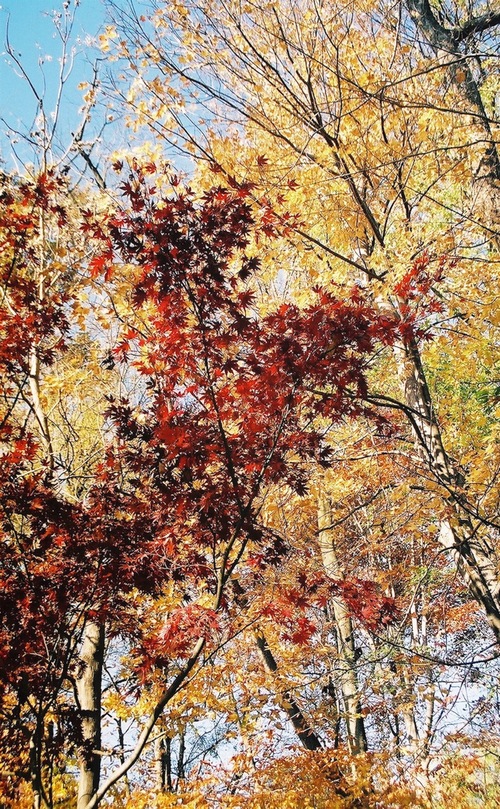
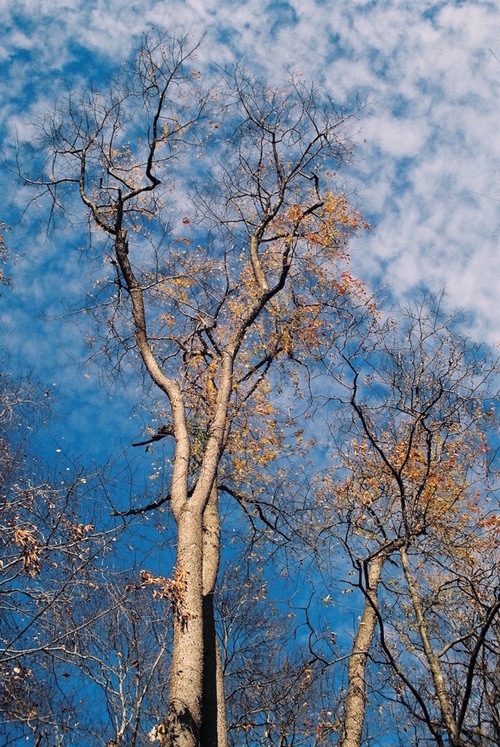
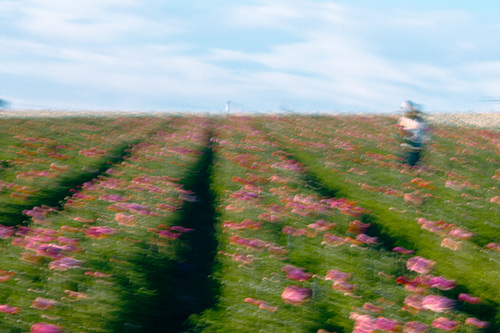
    CRITICAL REVIEW: The “Tree series” reflects the themes of resilience, verticality, persistence, and silent growth, as the tree is a universal metaphor for resistance, rootedness, and regeneration. 
    The images “Redbud”, “Along the Towpath VI”, “A Splash of Red” and “Feel the Wind Blow II” isolate the subject, making it an essential, almost human presence. The tree becomes a body that resists, that goes through seasons and wounds without losing its identity. In his photographs the tree is not landscape but presence. Rooted in the earth and reaching upwards, it becomes a metaphor for silent resilience: the kind that does not shout, but persists.Here, the limit is not a boundary, but a point of strength from which to start again.
    – Dr. Carmela Loiacono, Art Curator

    more. www.christopherbfowler-photographer.com | Artist Statement

    INTERVIEW with Christopher B Fowler
    Carmela Loiacono talks with Christopher B. Fowler who took part in the International Art Exhibition NEW HORIZONS – Authenticity, Resilience and Renewal in Matera, at Casa Cava, from March 21 to 27, 2026.

    Carmela Loiacono – In the works “A Splash of Red”, “Feel the Wind Blow II”, “Along the Towpath VI”, and “Redbud”, the tree does not appear as a simple element of the landscape, but as an autonomous, almost human presence, capable of resisting and transforming over time.
    How did this vision of the tree as a symbol of silent resilience and persistent identity emerge, and what does this subject represent in your artistic journey?
    Christopher B Fowler – On my website (www.christopherbfowler-photographer.com) I have three quotes that have particularly resonated with me: 
    The first is from Dylan Thomas who said that art is about telling the truth.  The second is from Georgia O’Keeffe who said that what appeals to us about mountains and rocks and trees is not that they’re mountains and rocks and trees but rather the lines, planes, textures, etc., they present to us.  And the third is from Joseph Campbell who said it’s the task of the artist to reveal the radiance behind the physical reality.  
    The short answer, as per the Georgia O’Keeffe quote, is that trees have the characteristics that people are–and I am–drawn to.
    There have always been trees around me.  My father was a schoolteacher and I grew up on the campus of the school, which sat on 300 acres of land much of which was wooded.  There was even a modest arboretum.  I was climbing trees even as a small child.  (Memorably, I fell from the top of a full-sized fir tree at the age of four, or or five at the most–memorably particularly for my mother, who saw the whole thing from the kitchen window–though I remained uninjured). The school had long lunch hours on Tuesdays and Thursdays and I would often spend the time before classes resumed walking around the arboretum and sitting in the shade of the trees. 
    One of my Dad’s assignments every year was organizing and running a film festival and, one year, he screened a short film by the filmmaker Donald Fox (“Omega”) that included the image of a tall tree, shot from below, arching with the wind—an image I’ve never forgotten and one which undergirds my sense of trees’ resilience. 
    Trees as metaphors also came into my consciousness at some point thereafter—something attached to the earth but reaching up towards the sky, while at the same time, reaching, equally, down into the darkness of the earth.  They may not finally be anthropomorphic models of us, but they are certainly evocative of the same drives and desires that we have.
    Carmela Loiacono – You have described your creative process as one in which images often “find” you. How does this moment of recognition unfold, and how do you translate a perceived experience into a photograph that preserves that same intensity? 
    Christopher B Fowler – I’m afraid It truly has been that I’m just caught by something I see and then photograph it.  I’ve since come to recognize, at least provisionally, that it is likely the interplay of the abstract elements, as per Georgia O’Keeffe above, that gets my attention. I should add there have also been times when I was composing a shot I thought I’d wanted, when, out of the corner of my eye or the edge of the viewfinder, I spotted something additional, the inclusion of which was, then, what truly made the picture.
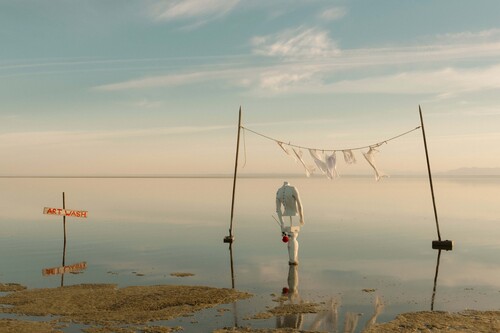
    Carmela Loiacono – Your photographs seem to reveal something beyond the visible, transforming everyday elements into meaningful experiences. How do you work to make this deeper, almost invisible dimension perceptible within the image?
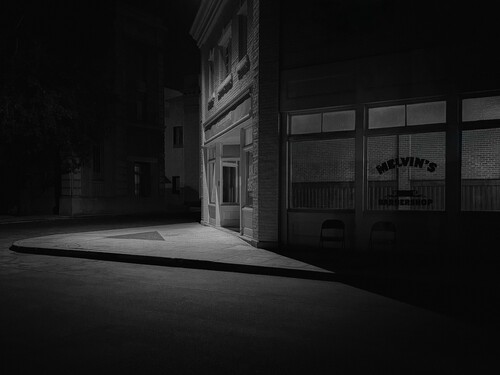
    Christopher B Fowler – The distinction between ”depiction” and ”art”, as I see it, is that the latter involves not just conveying the image of the subject but the experience of it. 
    I’ve heard it said of the painter Constable that he thought, if he painted things carefully enough, he would reveal the hand of God. 
    Certainly one other aspect of when I’m looking through the lens I feel a sense of connection to… something (the radiance behind the day to day reality, as per Joseph Campbell quote above?). It’s part of the experience to be conveyed to the viewer. 
    As regards my creative process, the task is to become clear, in what I’m seeing, as to what exactly it is that is catching my attention, then compose the image to include what is supporting it and disinclude, or at least minimize, what is distracting or detracting from it.

    Carmela Loiacono – Looking ahead, what new horizons do you feel drawn to explore in your photographic practice? Will you continue developing this research on nature as presence, or are you envisioning new visual and conceptual directions?
    Christopher B Fowler – At the moment, I’m not feeling led to go off in any new directions stylistically.  What is evolving are the subjects I’m discovering I can apply it to—and the range of subjects I move between now seems, itself, pretty broad, as the attached images show. 
    I remember talking to an abstract-art painter who said she periodically went back and forth between figurative and abstract work.  Moving back and forth amongst the various subjects that I’m drawn to, as well as to new ones that catch my eye, is probably the more likely trajectory I’ll be following.
    But we’ll see…

  • Ekaterina Zaznova

    Artist from USA/Russia 

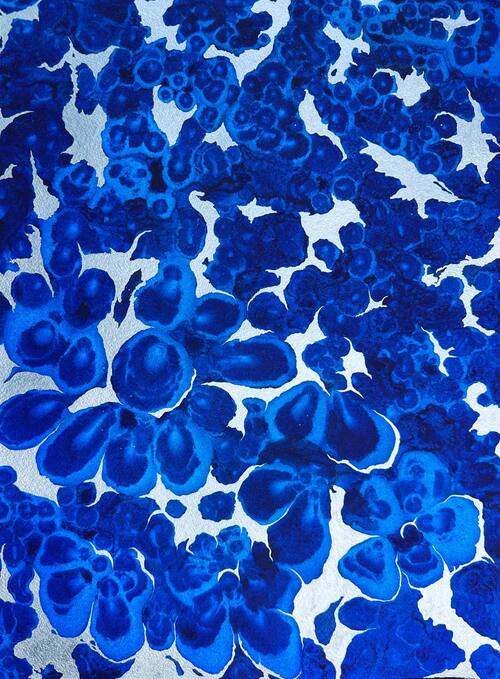
    Ekaterina Zaznova is an internationally recognized contemporary watercolor artist, researcher, and educator based in New Jersey, USA. She is the creator of the original “Watercolor & Alcohol” technique, in which alcohol functions as a constructive medium grounded in fluid dynamics. Zaznova is the founder of the international platforms Pro Akvarel and About Watercolour, uniting over 10,000 artists worldwide. She is the author of the book “Watercolor. Identity. Recognition.”, distributed in 49 countries. Her works are held in private collections across the USA, Europe, and Asia and have been exhibited internationally, including at Artseeker Gallery in New York.
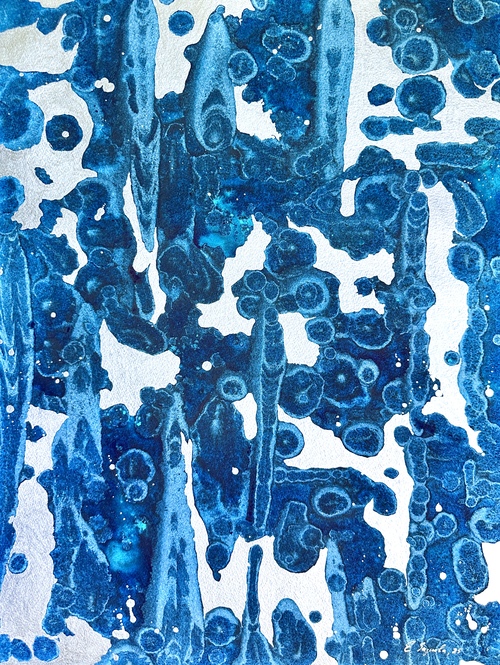
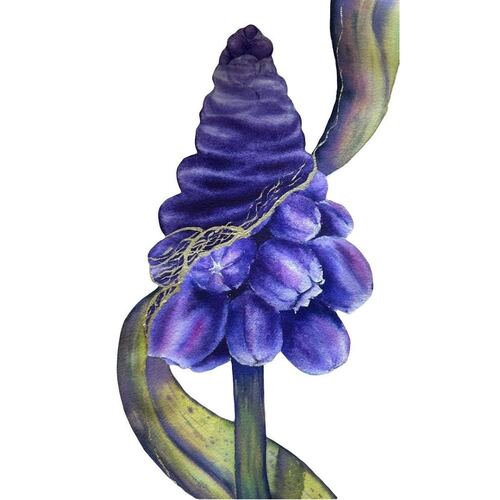
    CRITICAL REVIEW: The artwork “Through the Fear” poetically conveyed the core theme of NEW HORIZONS – Authenticity, Resilience, and Renewal. The three purple tulips embody universal fears that, rather than obstructing, reveal themselves as thresholds to be crossed, a necessary passage between fragility and transformation. The aqua chains allude to self-imposed inner limitations, while the golden keys emerging from the indigo center suggest that possibility is generated precisely through confronting darkness.

    The work becomes as a visual meditation on resilience and authenticity: facing vulnerability is framed not only as an intimate act, but as a gesture of renewal. In line with the spirit of the exhibition, the piece affirms that every limit can open into a new horizon, where fear becomes a catalyst for growth and awareness. – Dr. Carmela Loiacono, Art Curator

    more. Ekaterina Zaznova | @zaznova_ekaterina

    INTERVIEW with Ekaterina Zaznova
    Carmela Loiacono talks with Ekaterina Zaznova who took part in the International Art Exhibition NEW HORIZONS – Authenticity, Resilience and Renewal in Matera, at Casa Cava, from March 21 to 27, 2026.

    Carmela Loiacono – Your watercolor “Through the Fear” uses floral forms to symbolize distinct fears and inner obstacles. How did the process of translating these emotions into tangible botanical imagery help you explore your own personal resilience?
    Ekaterina Zaznova – My watercolor “Through the Fear” is a deeply personal work for me, as it reflects three fundamental fears that almost everyone encounters in life: the fear of the unknown, the fear of judgment, and the fear of failure.
    As a creative person, I am very familiar with these fears myself. I came to art not immediately, but after making a radical life change in my early 30s.
    Through this process, I realized that my fears were not obstacles, but in fact became the most powerful points of my growth. Translating these emotions into botanical forms allowed me to gently observe and transform them, turning something invisible into something tangible and meaningful.

    Carmela Loiacono – The delicate chains and golden keys in your composition act as both constraints and opportunities. How do these elements reflect your understanding of vulnerability as a transformative and empowering force?
    Ekaterina Zaznova – There is a phrase that has always guided me in life: “There are always at least six ways out of even the most difficult situation.” 
    The keys in my work symbolize these possible exits from fear. However, even when we have access to these “keys,” we are not always internally strong enough to use them – and that is where vulnerability exists.
    At the same time, I believe that true strength is born именно through vulnerability and the act of overcoming it. In this sense, the chains and keys represent both limitation and potential – a moment of choice where transformation becomes possible.

    Carmela Loiacono – Watercolor is a medium known for its unpredictability and fluidity. How does the inherent nature of this medium influence the balance between control and surrender in your artistic practice?
    Ekaterina Zaznova – Watercolor is a unique and complex medium, often considered one of the most challenging in visual art due to its unpredictability.
    For me, the balance between control and surrender depends on the intention of the work. There are moments when precision and structure are required, and others when I intentionally allow the medium to flow freely.
    This dialogue between control and release is essential – it brings a sense of lightness, movement, and authenticity to the piece. In a way, working with watercolor becomes a reflection of life itself: learning when to guide and when to let go. 

    Carmela Loiacono – As you continue your artistic journey, how do you envision evolving the “Flower Talismans” series or exploring new directions in your work that engage with authenticity, courage, and renewal?
    Ekaterina Zaznova – The “Flower Talismans” series is a very significant part of my artistic journey. It marked the beginning of my exploration into my own identity and inner world, as well as the development of my authorial technique combining watercolor and alcohol.
    This series is deeply connected to themes of self-discovery, courage, and transformation. Moving forward, I see it evolving into more complex narratives – expanding both visually and conceptually.
    At the same time, I am interested in exploring new directions that continue to engage with authenticity and emotional depth, while pushing the boundaries of the medium and my own artistic language.

  • NEW HORIZONS -Authenticity, Resilience and Renewal

    Critical Review

    NEW HORIZONS – Authenticity, Resilience and Renewal
    March 21 – 27, 2026
    Casa Cava, Matera

    The international exhibition NEW HORIZONS – Authenticity, Resilience and Renewal, held at Casa Cava in Matera, has been inaugurated within the context of Matera as the Mediterranean Capital of Culture and Dialogue 2026. It brought together 21 artists from different countries to explore themes deeply rooted in contemporary human experience. Through a variety of media, including painting, photography, and video, the exhibition investigated the capacity for transformation, resilience, and the redefinition of identity beyond visible boundaries. Curated by art historian dr. Carmela Loiacono, the exhibition functioned as a space for reflection and connection, where art became a language capable of expressing both fragility and renewal.

    Watch the video interview on Cronache Social.

    Concept


    “Every limit is a threshold. Every fragility can become strength.”

    The curatorial path highlighted the plurality of artistic visions, establishing a dialogue between different cultural perspectives and expressive modes. Set within the evocative environment of Casa Cava, the exhibition created a dialogue between contemporary artistic practices and Matera’s historical memory, enhancing the emotional and sensory impact of the works. The exhibition space contributed to making the experience immersive, engaging visitors not only visually but also perceptually and emotionally. In conclusion, NEW HORIZONS – Authenticity, Resilience and Renewal represented an artistic experience that went beyond mere aesthetic enjoyment, serving as a space for deep reflection on the contemporary human condition. The exhibition translated complex themes such as identity, vulnerability, and change into a visual language that was both accessible and layered, engaging the viewer on multiple levels.

    The variety of works and expressive languages constructed a dynamic and stimulating path, in which each artist offered a unique perspective while maintaining overall thematic coherence. In this sense, the exhibition did not merely represent the concept of “new horizons,” but made it tangibly experiential, inviting visitors to reflect on their personal journey and the possibility of transforming limitations into opportunities.

    The exhibition NEW HORIZONS – Authenticity, Resilience and Renewal stood out for its ability to create an authentic dialogue between artworks, space, and audience. It emerged as a solid and meaningful curatorial project, confirming the role of art as a tool for understanding, resilience, and openness toward the future.

    Photo reportage
    NEW HORIZONS – Authenticity, Resilience and Renewal

  • ArtIdentity™ Method

    My Method, Designed for Every Artist

    Positive growth.

    I would like to introduce to all the Artists my ArtIdentity™ Method.
    Every artist has a unique voice.
    Yet too often, it remains hidden, overshadowed by the noise of the world or by self-doubt.

    The ArtIdentity™ Method was born from my experiences, my understanding of the art world, and the professional skills I have developed over the years. It is a journey I created with you in mind: to support each artist in their uniqueness, guiding them strategically toward recognition and visibility. It’s not just an exhibition, nor a generic consultation: it’s a personalized path designed to bring out what makes your art truly unique.

    Discovery. We start together: I listen to your story, your language, your dreams. Truly understanding who you are is the first step to letting your art shine.

    Exhibition. Together we create a show — individual or collective — that authentically tells your story. Critical texts, sincere narratives, online visibility: every decision is strategically made to highlight the best of you and your art.

    Continuity. I support you in maintaining your presence, building relationships with galleries, collectors, and audiences, and fostering a sustainable artistic career. Every step is carefully designed to provide concrete, personalized, and lasting guidance.

    The ArtIdentity™ Method is the bridge I created through my experience and expertise to transform your creative essence into a real, recognized, and memorable presence. Every artist who participates in my exhibitions receives a unique path, tailored and strategically effective, to bring their true voice to light.

    Search