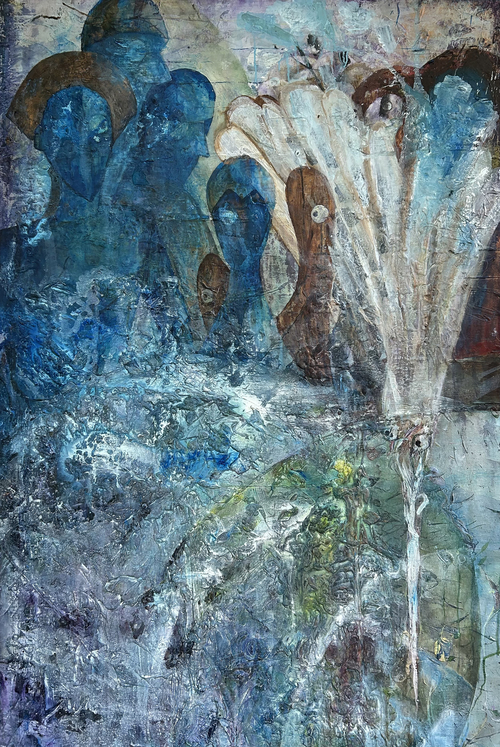
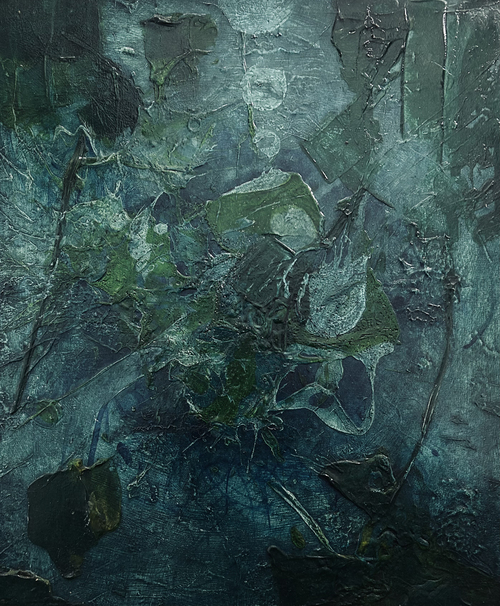
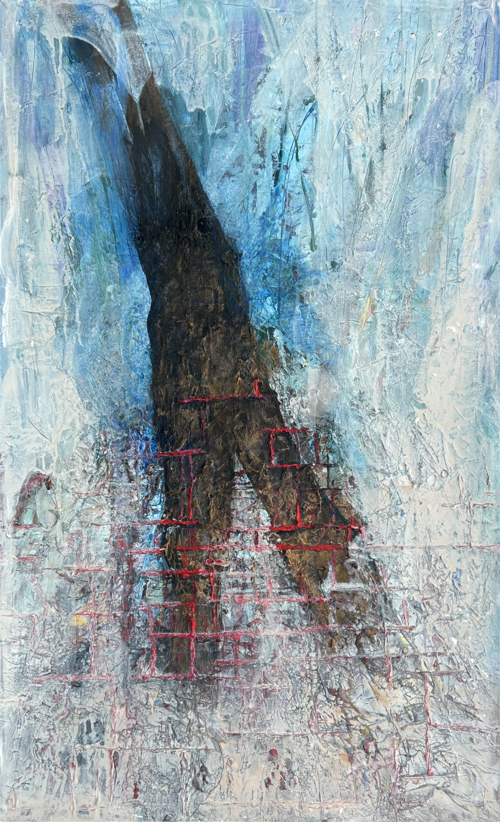
Artist from Poland
Marek Wernikowski, born in 1972 in Warsaw, Poland, is a painter, Landscape Architect, Senior Art Director, Graphic designer, Motion designer, Web designer.
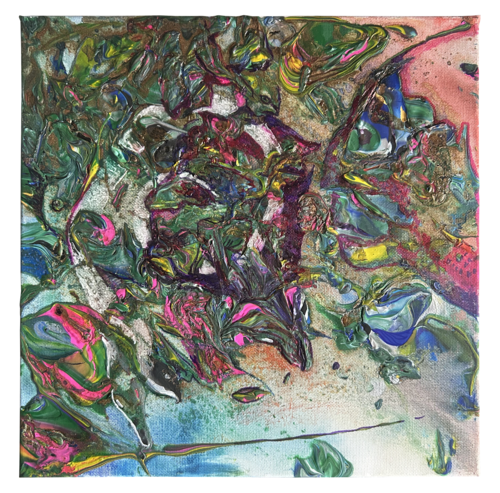
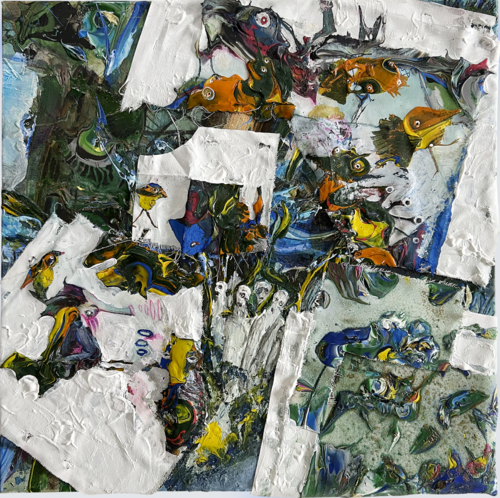
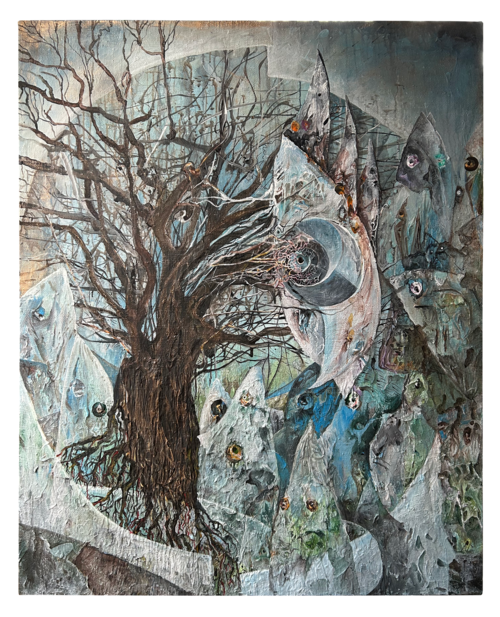
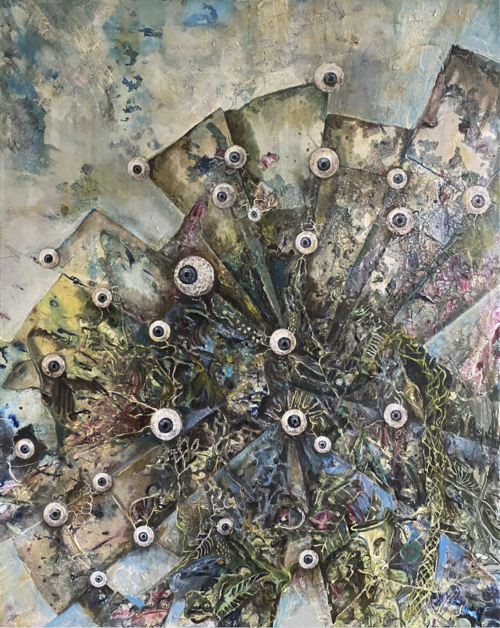
In his artistic practice, he combines painting, graphic arts, design, and digital media. His work focuses on the relationships between technology, the climate crisis, and biodiversity loss within the context of the Anthropocene. Through painting, he explores processes of species extinction, ecosystem transformation, and the evolving relationship between humans and nature. His works employ the visual languages of abstraction, symbolism, and organic forms.
As part of his creative process, he consciously incorporates recycled linen canvases and other environmentally conscious materials.
He holds an artistic education background as well as an engineering degree in Landscape Architecture obtained in Warsaw. His knowledge of design and environmental sciences informs his approach to ecology, landscape, and biological forms.
He collaborates with the international art platforms Artsper and Artsy. His works have been presented at institutions and exhibition venues including Museo d’Arte e Scienza, Museo Luigi Bellini, Museo Navale e Planetario, Medina Gallery, and Monat Gallery. He has also participated in international art fairs, including Luxembourg Art Fair and Amsterdam Art Fair.
Artist Statement
“My artistic practice explores the condition of the contemporary world within the context of the Anthropocene, with a particular focus on biodiversity loss, ecosystem fragmentation, and environmental degradation resulting from human activity. Drawing on processes of ecological transformation described in IPBES and United Nations reports, I reflect on the growing instability of natural systems and the irreversible consequences of humanity’s impact on the planet.
Through abstract and symbolic forms, I investigate the tensions between visibility and disappearance, observation and participation. Nature is not presented as a stable backdrop but as a fragile and dynamic structure in which human presence is both embedded and responsible for ongoing transformation.
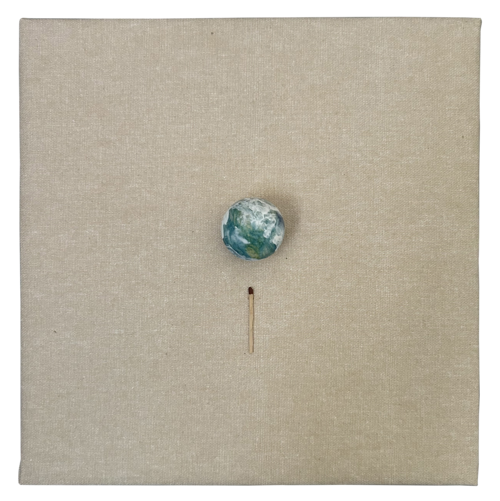
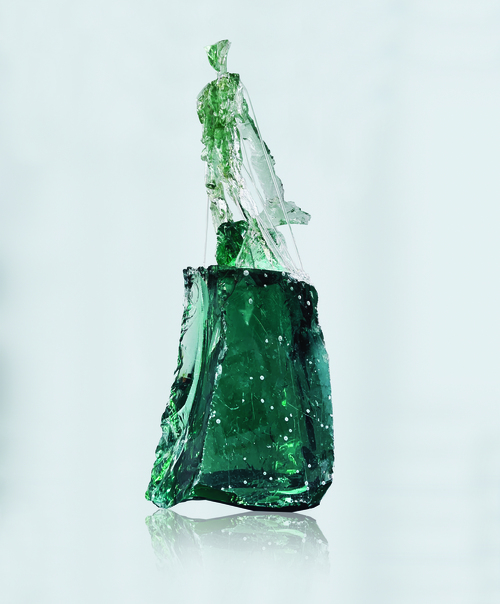
My works operate across different scales and visual languages, ranging from micro-symbolic objects to complex ecological landscapes. Together, they form a multilayered narrative about loss, perception, and responsibility in the face of environmental crisis.”
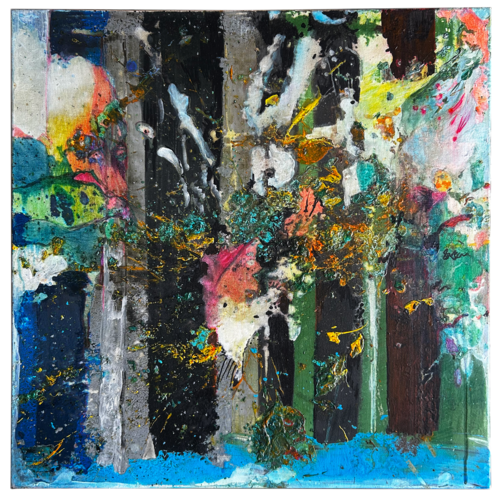
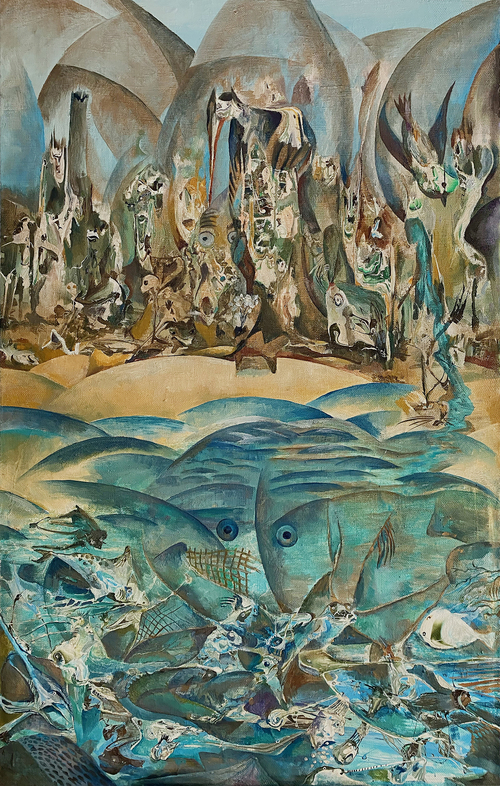
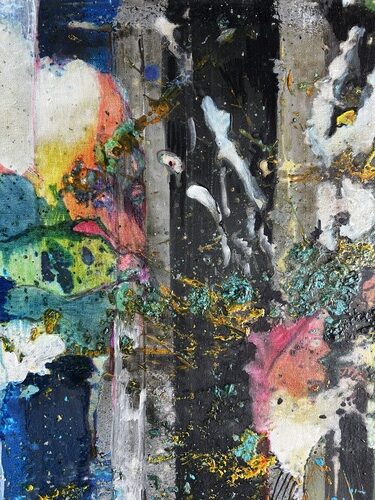
CRITICAL REVIEW: In the work “Ekotonia”, his energetic and gestural abstraction, characterized by dynamic drips and splashes, captures the elusive and ever-changing nature of water, perfectly embodying the concept of “flow.”
The interplay of golden, turquoise, and white splashes on dark planes echoes the Impressionist fascination with watery surfaces, translating the refraction of light into a contemporary visual language.
Furthermore, the deep blue background creates a powerful aquatic reference point. The tension between the fluid areas and the dark vertical structures effectively portrays the fragility of endangered aquatic ecosystems.
I can also glimpse fish splashing out of the water, as if creating an explosive and tormented escape.
– Dr. Carmela Loiacono, Art Curator
more. marekwernikowski | Instagram profile
INTERVIEW with Marek Wernikowski
Carmela Loiacono talks with Marek Wernikowski who took part in the International Art Exhibition NATURAL FLOW – The 2nd Edition 2026 in Lecce at MUST – Museo Storico della città di Lecce, from July 03 to 18, 2026.
Carmela Loiacono – In your artwork Ekotonia, it highlights a powerful contrast: on one hand, the interplay of golden, turquoise, and white splashes echoes the Impressionist fascination with light on watery surfaces; on the other, a dramatic tension portrays the fragility of endangered aquatic ecosystems. How do you balance the pure visual allure of painting with the urgency of documenting the environmental degradation caused by the Anthropocene?
Marek Wernikowski – The visual language I employ is a form of rebellion. For me, the canvas and paint become a medium of protest and an expression of dissent. Most of my works are created according to a simple formula: subject, chaos, transformation. I am not interested, however, in documenting reality literally. Rather, I seek to process it emotionally and through painting. I try to focus on details that remain open to interpretation over time.
Titles such as Ekotonia, Irretrievably, Deconstruction, The Deep, Fragmentarium, and Undefined Horizon constitute my painterly record of the present. It is a dystopian record, more or less transformed, in which reality is not presented directly but is instead broken apart, transformed, and reassembled.
The beauty of a painting is not, for me, the opposite of catastrophe. It is precisely this contrast that constitutes an essential part of my work. Texture, colour, light, rhythm, and gesture may attract the viewer, but behind this visual allure lies a sense of unease. I want the viewer to enter the painting first through emotion and aesthetics, and only afterwards begin to perceive its darker dimension.
My art is intended to appeal to the viewer’s emotions, to provoke, to evoke aversion, rejection, a lack of acceptance, and sometimes even disgust, ultimately leading to reflection.
Whether it succeeds in doing so, I do not know.
Carmela Loiacono – Your practice deeply investigates biodiversity loss and ecosystem fragmentation. In Ekotonia, the gestural abstraction of drips and splashes embodies the concept of “flow,” yet it also reveals glimpses of fish splashing out of the water in what is described as an “explosive and tormented escape.” Looking back at the exhibition, how do you interpret this movement? Do you see it as a symbol of nature’s vital resilience and rebellion, or as the visual marker of an irreversible loss?
Marek Wernikowski – Without a doubt, we experience nature’s rebellion on a daily basis. Climate change and the rise in average global temperatures are facts directly linked to increasingly violent weather events and anomalies. Even more concerning is the alarming speed at which this is happening.
Aquatic environments are extremely vulnerable and among those undergoing degradation at the fastest rate. Freshwater ecosystems such as rivers, wetlands, and lakes, as well as marine ecosystems, are currently facing levels of pollution unprecedented in the history of our civilisation.
That is why the movement in Ekotonia is not unambiguous for me. It can be read as an expression of vitality, energy, and an attempt to escape, but at the same time it is movement forced upon nature by the circumstances in which it finds itself. This is not a tranquil flow. It is a disturbed, violent flow, charged with tension and uncertainty.
The fish leaping from the water may therefore symbolise both the instinct for survival and the loss of the place in which they should be able to exist. Perhaps this ambiguity is precisely what matters most. Nature continues to respond, but we do not know how long it will remain capable of regenerating itself. Its resilience is limited, and its capacity for survival is not infinite.
Carmela Loiacono – Your biography combines a degree in Landscape Architecture with a conscious use of eco-friendly materials, such as recycled linen canvases. Within the context of a collective exhibition like NATURAL FLOW – The 2nd Edition 2026, centered on water as an essential resource, how does your background in environmental sciences influenced the physical choice of your materials and the translation of scientific data (such as IPBES and UN reports) into abstract, symbolic forms on canvas?
Marek Wernikowski -Through exhibitions such as NATURAL FLOW, we can, even if only to a minimal extent, raise contemporary audiences’ awareness of what surrounds us and of the challenges we face as a society. My background in landscape architecture has taught me to view the environment not merely as a subject, but also as a system of interdependent relationships. This also influences the way I think about the material from which a painting is made.
Choosing recycled linen canvases is, for me, part of this attitude. The material is not a neutral support. In itself, it carries a particular history and remains part of a cycle of resources. Using it is therefore an extension of what I am communicating through the painting.
I do not, however, attempt to illustrate IPBES or UN reports literally. Scientific data are a point of departure for me, rather than a ready made image. I am interested in the moment when information ceases to be merely information and begins to affect us emotionally. At that point, it can be translated into colour, gesture, structure, the disintegration of form, or compositional tension.
Contemporary art is incomprehensible to many viewers today, much like the issue of biodiversity loss resulting from human activity. Many of these issues may seem unclear or difficult to grasp, but perhaps what we should focus on above all is the impact they will have on our future.
We have virtually unlimited access to knowledge. But does that make us wiser? Are we capable of drawing conclusions from what we know? IPBES and UN reports have been publicly available for years. Air quality in urban agglomerations, water quality, food, soil degradation, monocultures, industrial farming, and the impact of artificial intelligence development on natural resources. The list could go on indefinitely.
And yet, very little changes.