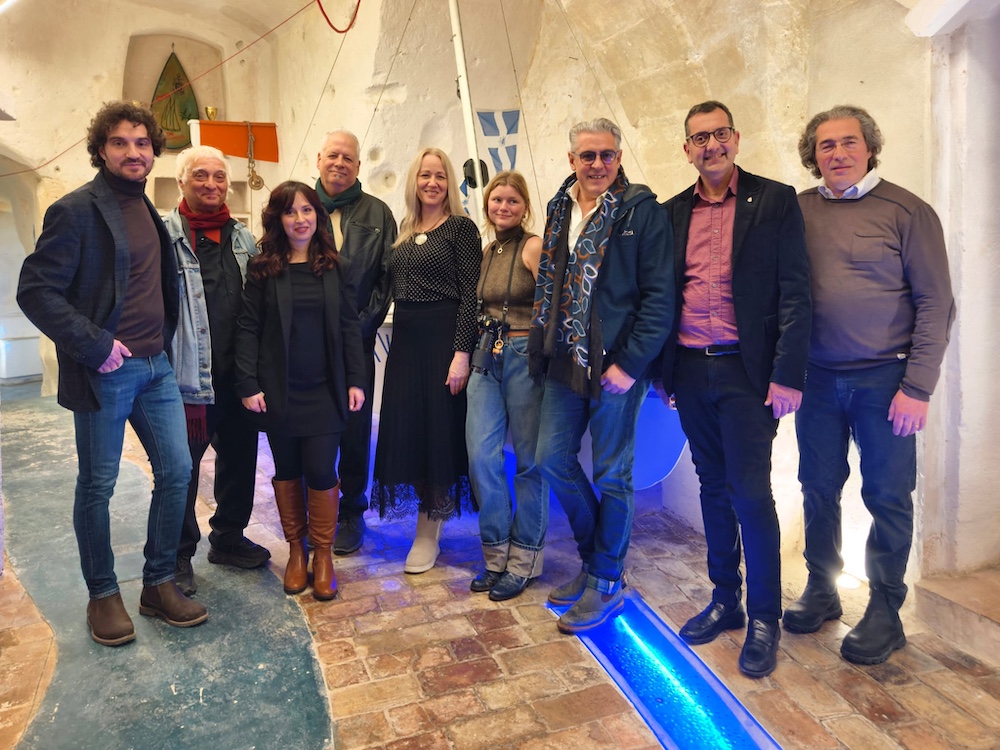
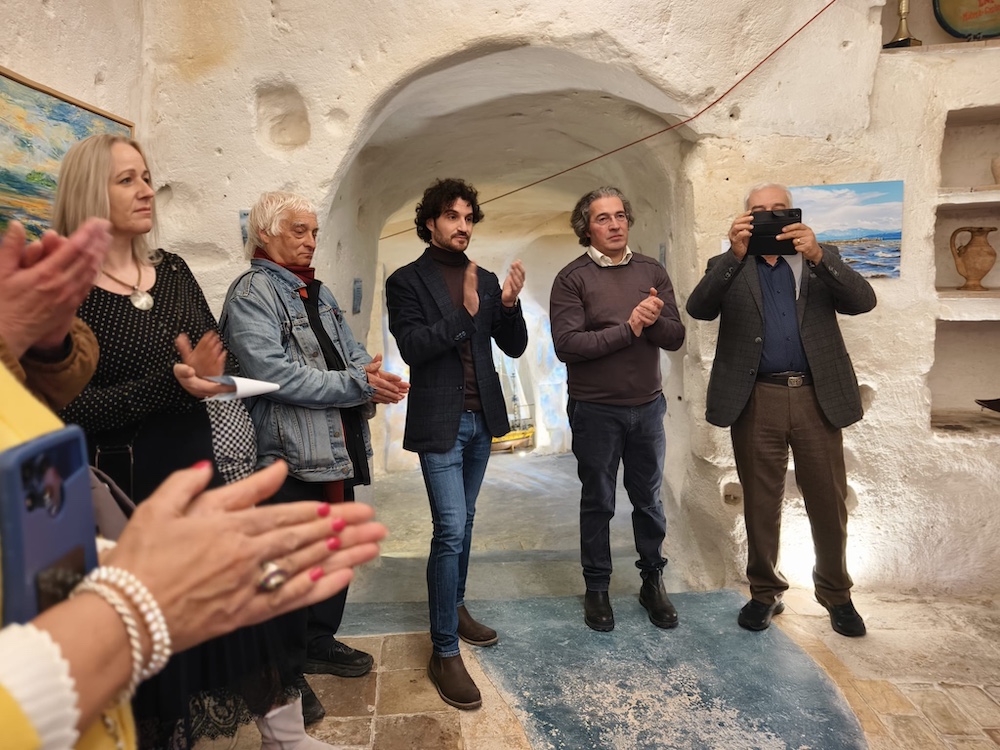
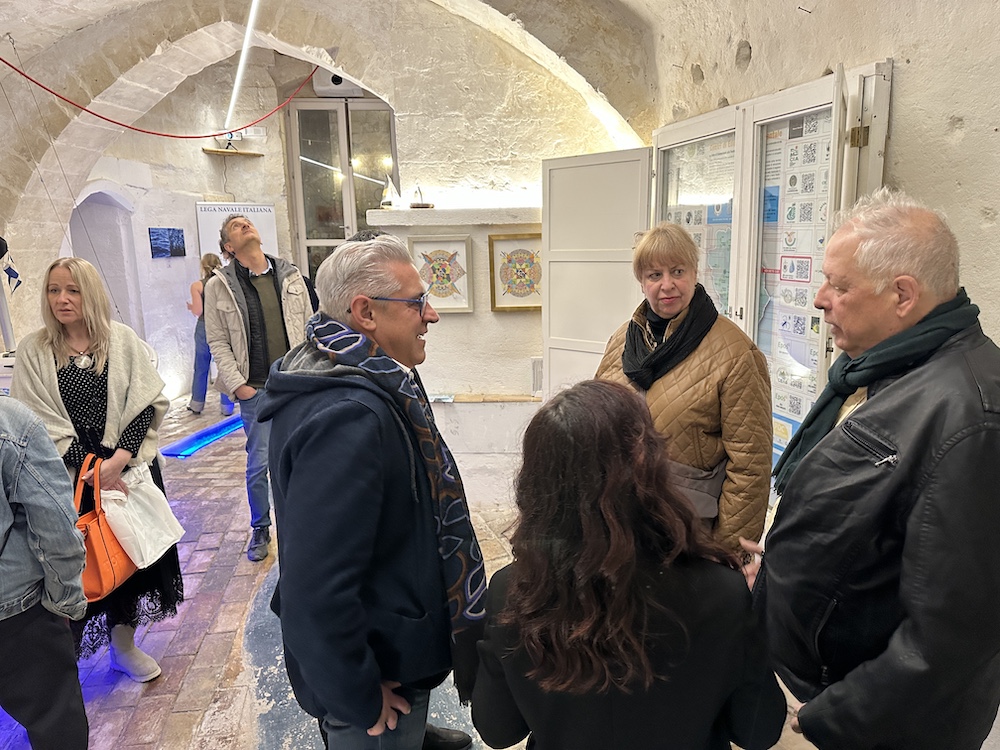
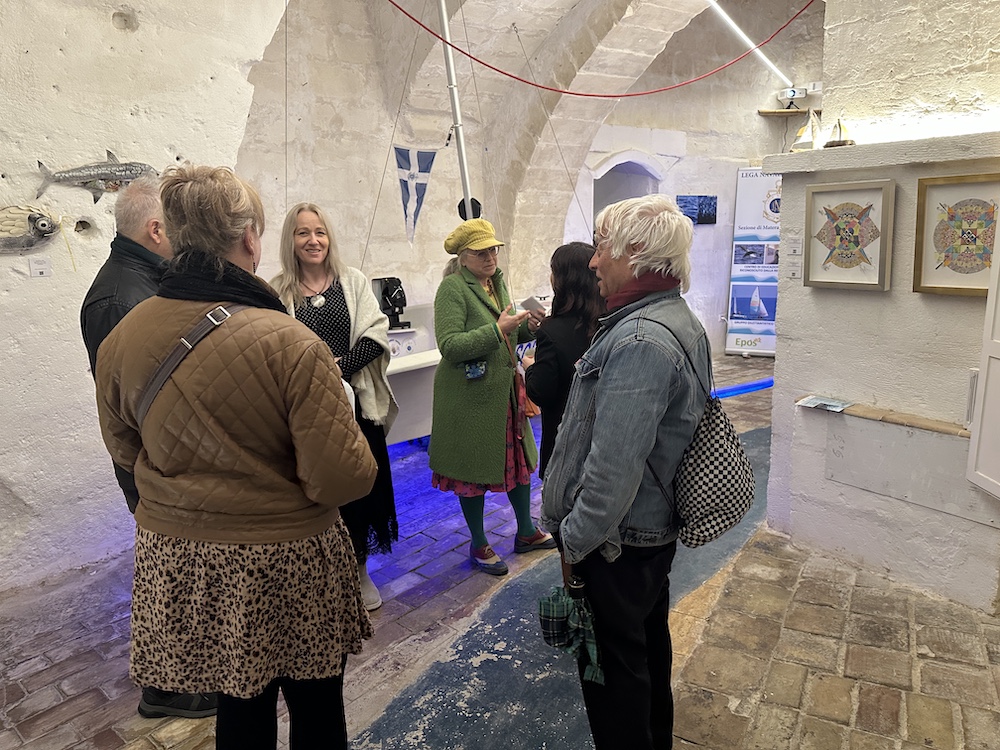
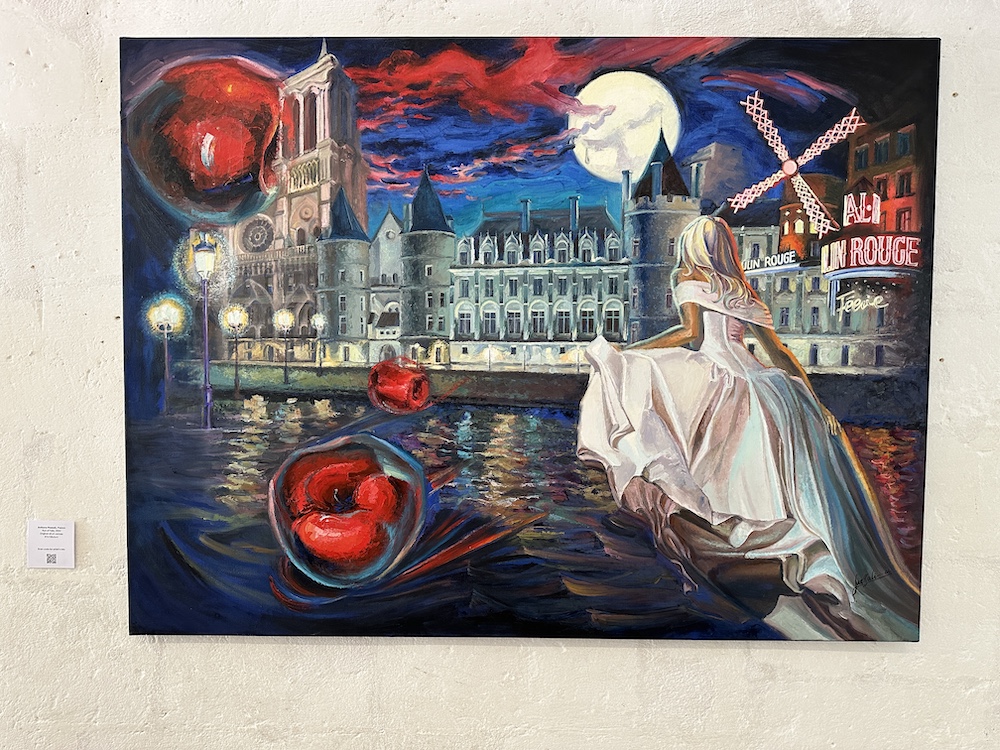
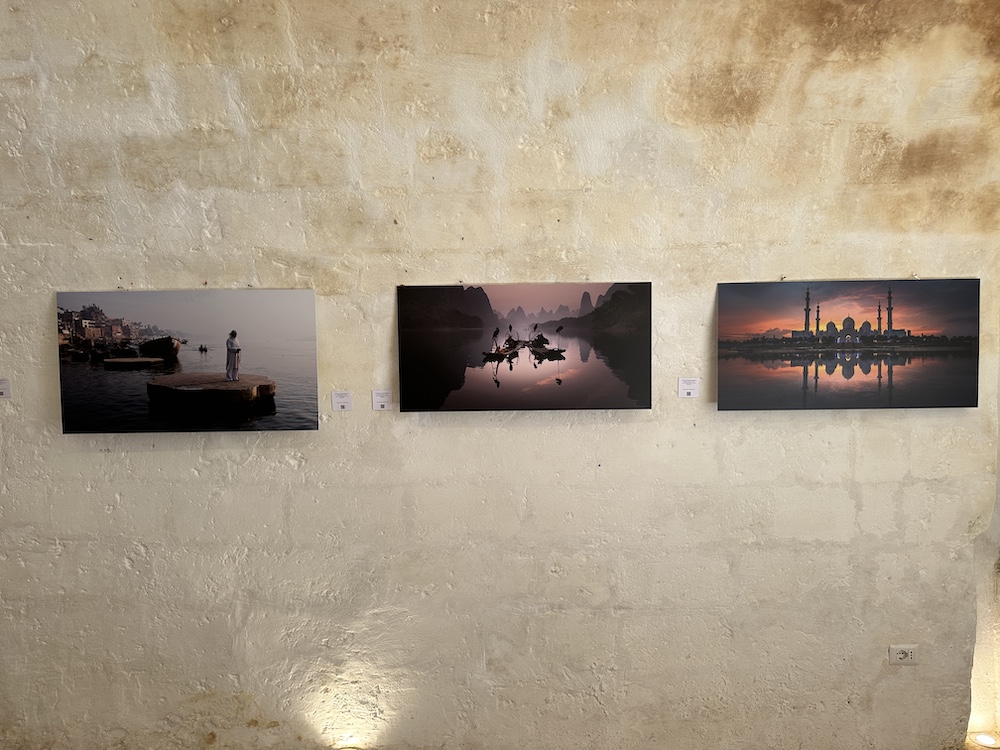
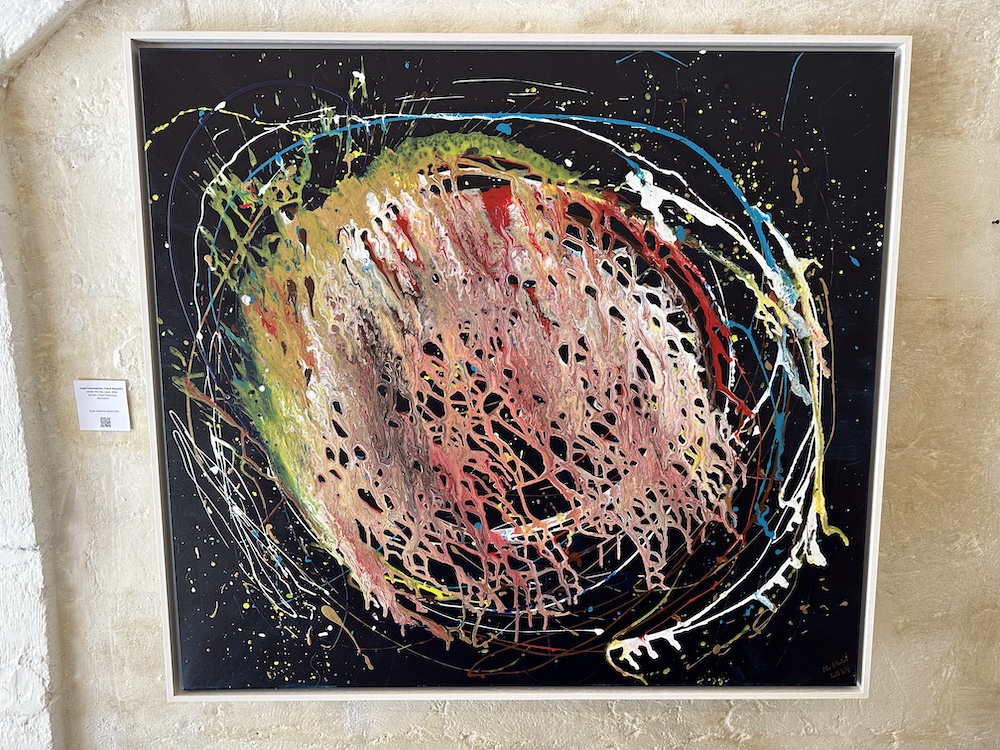
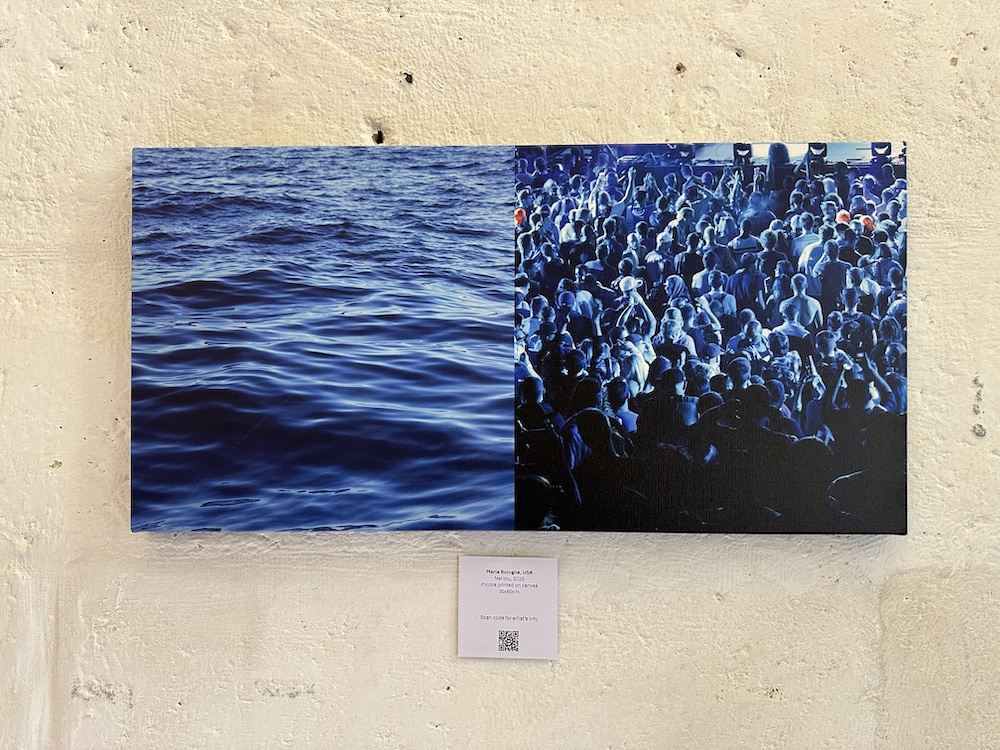
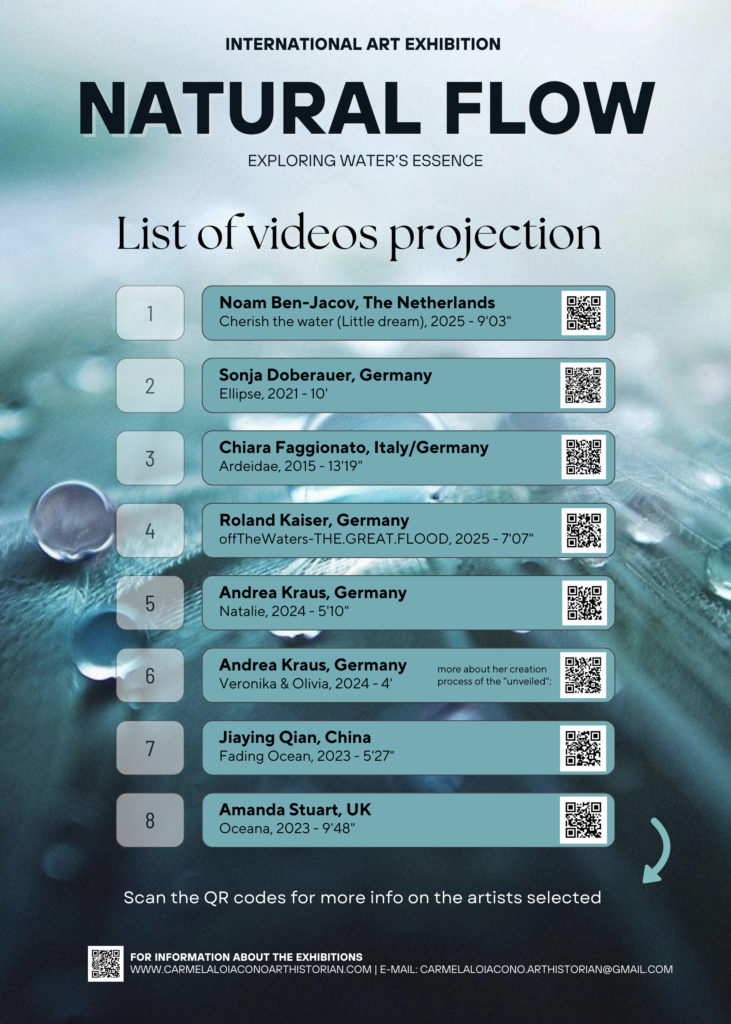
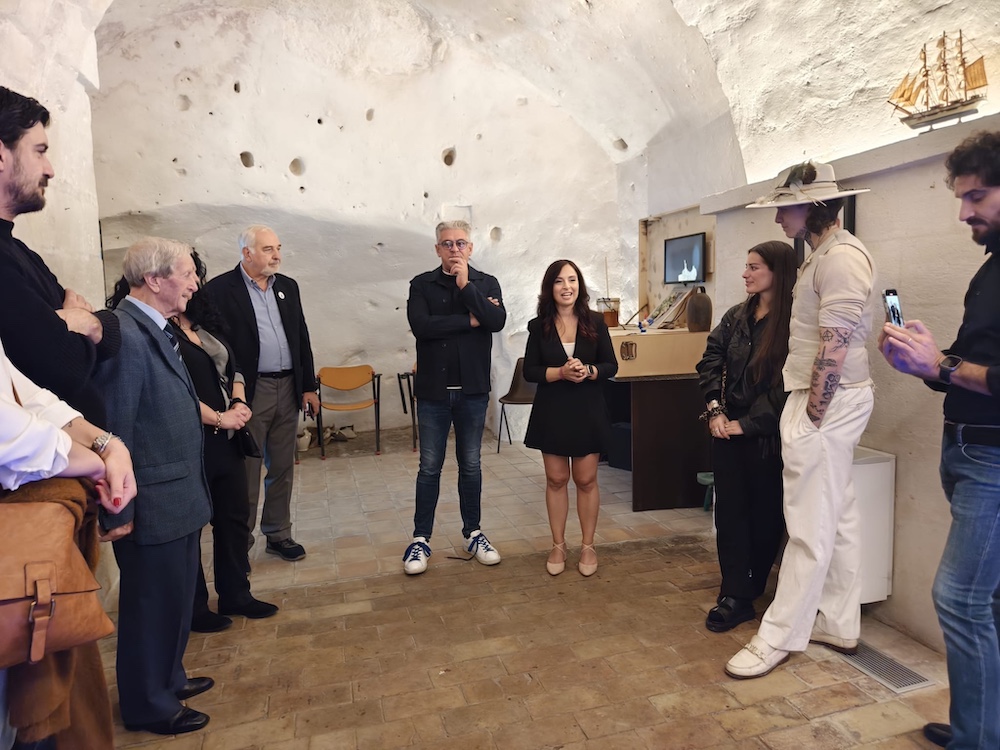
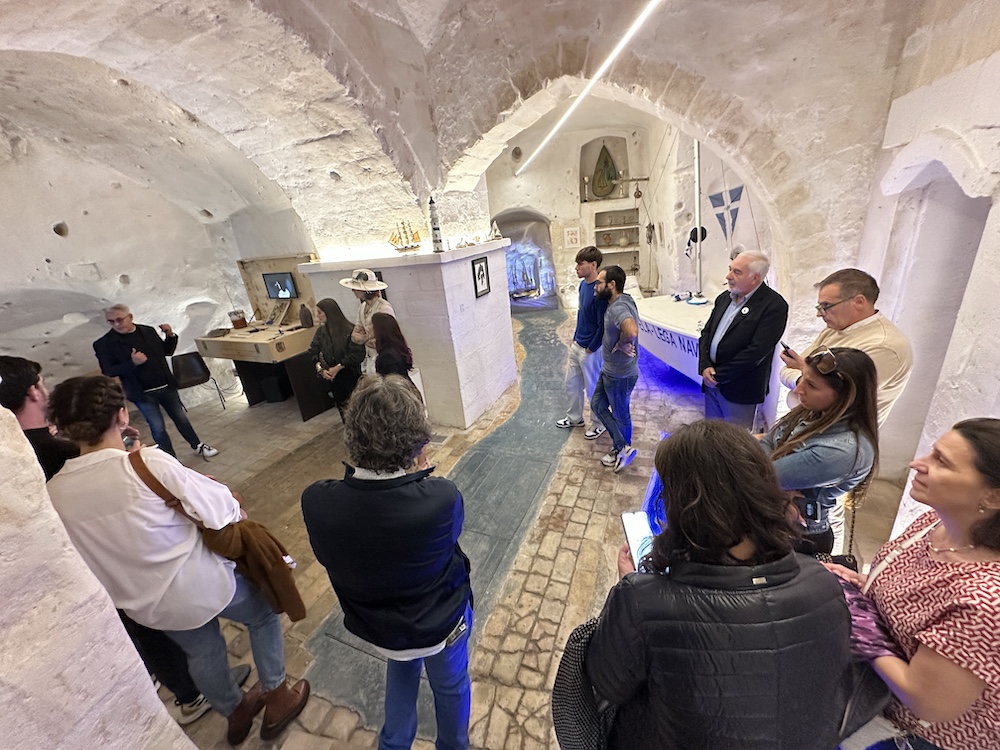
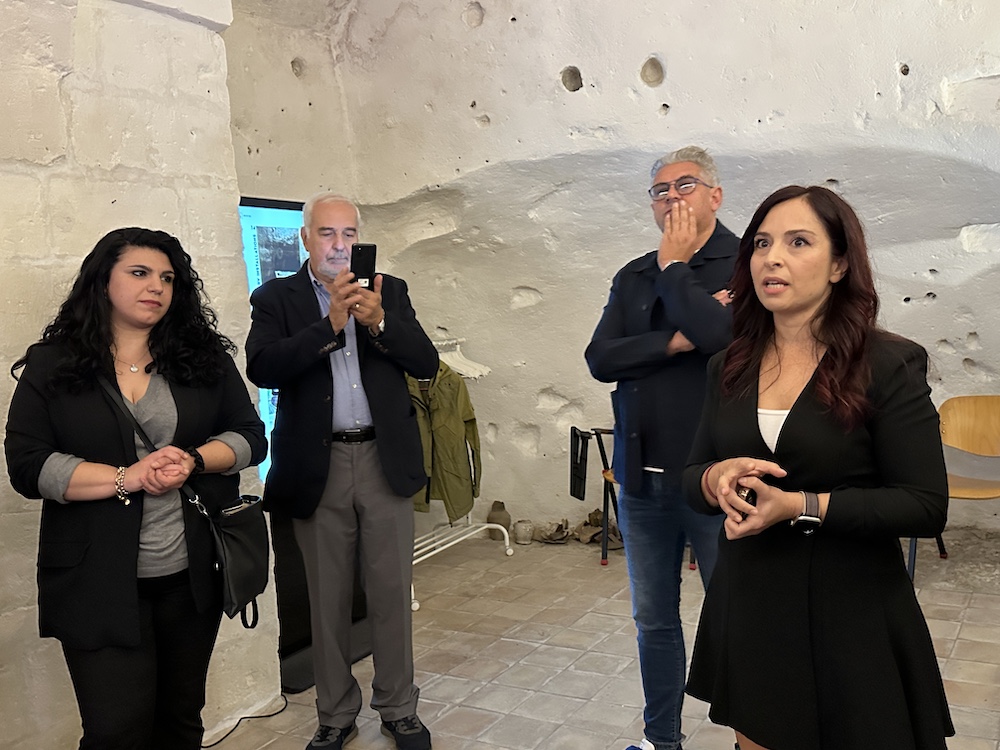
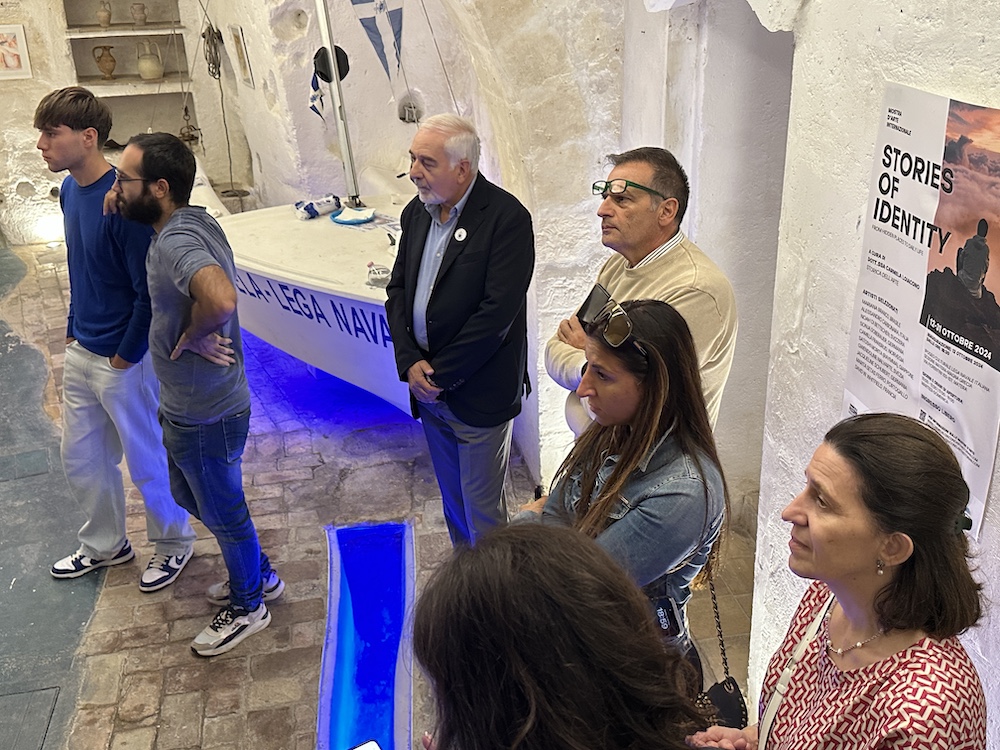
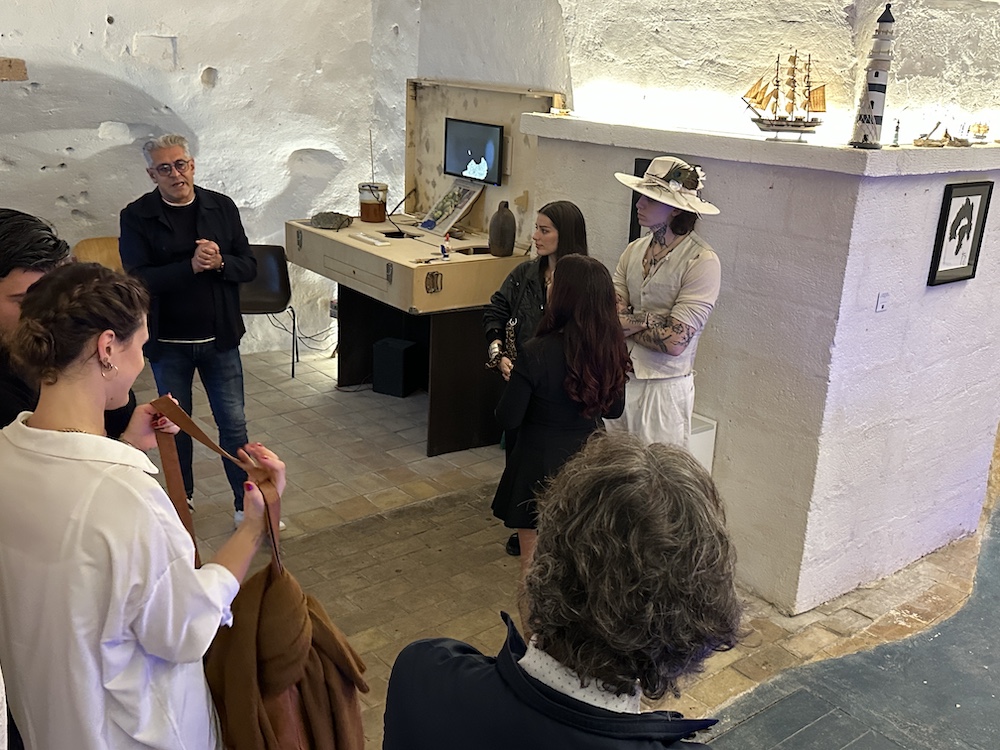
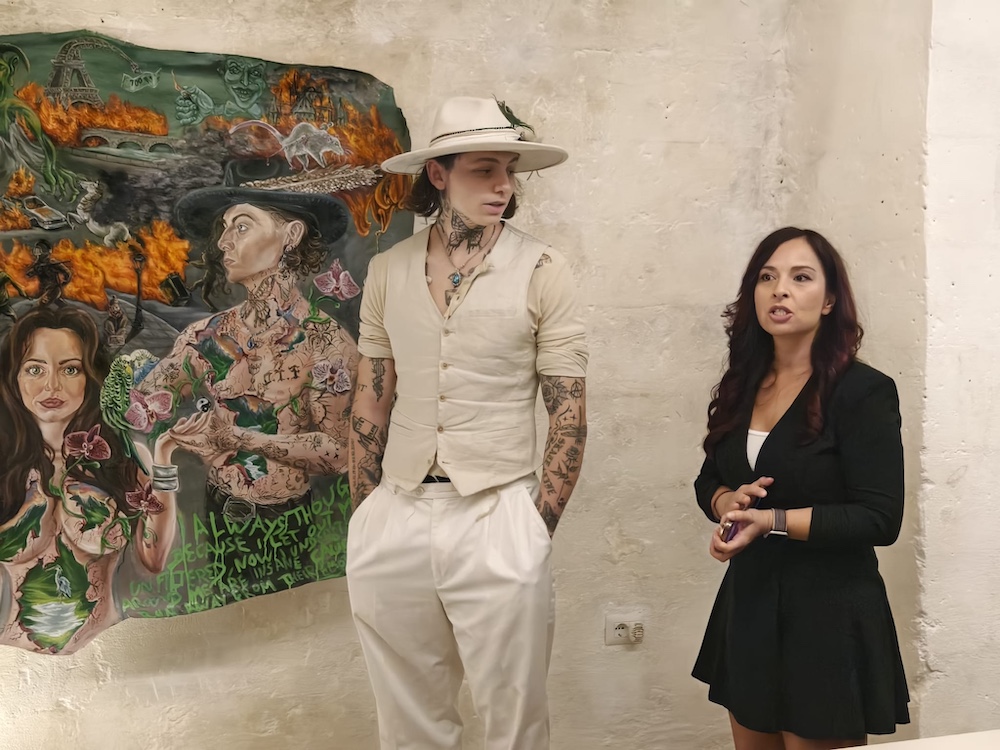
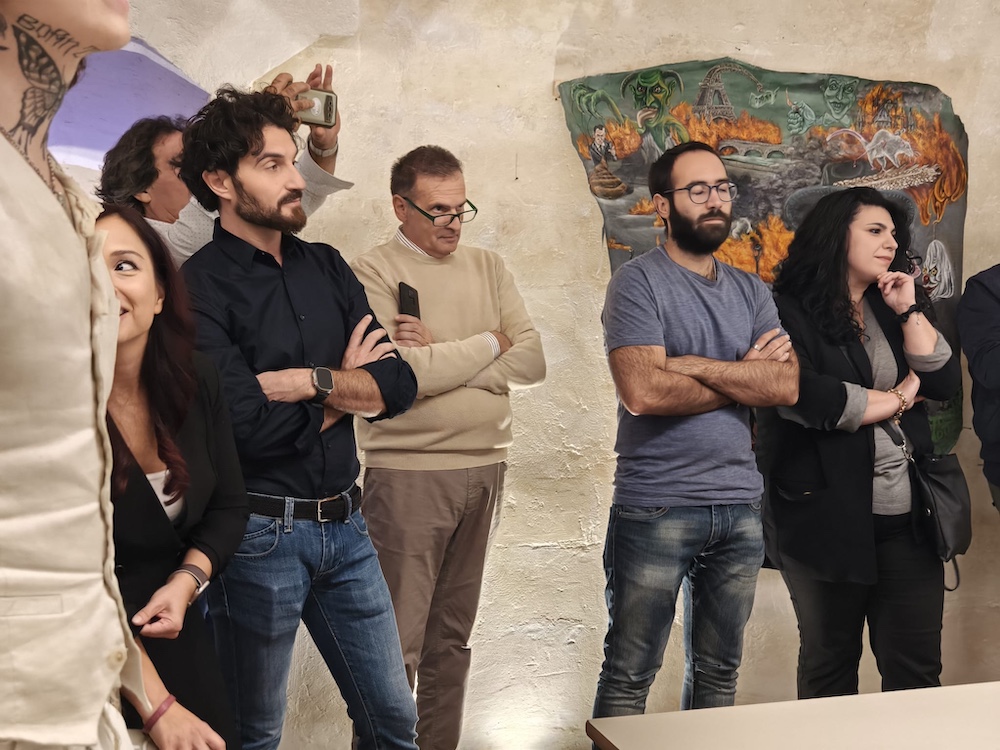
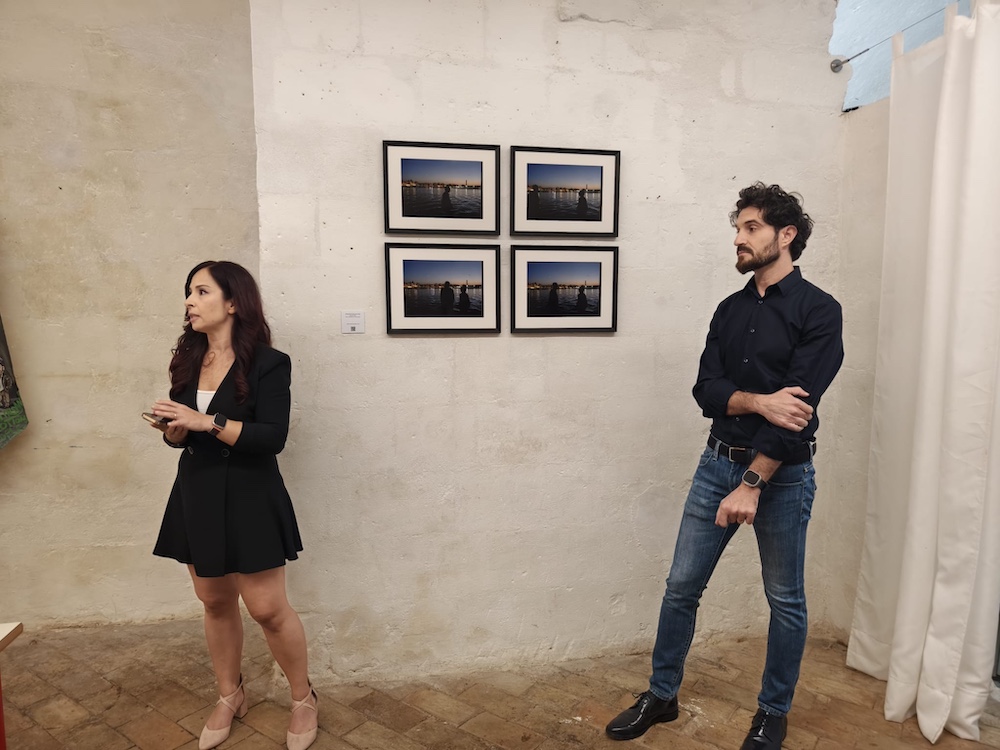
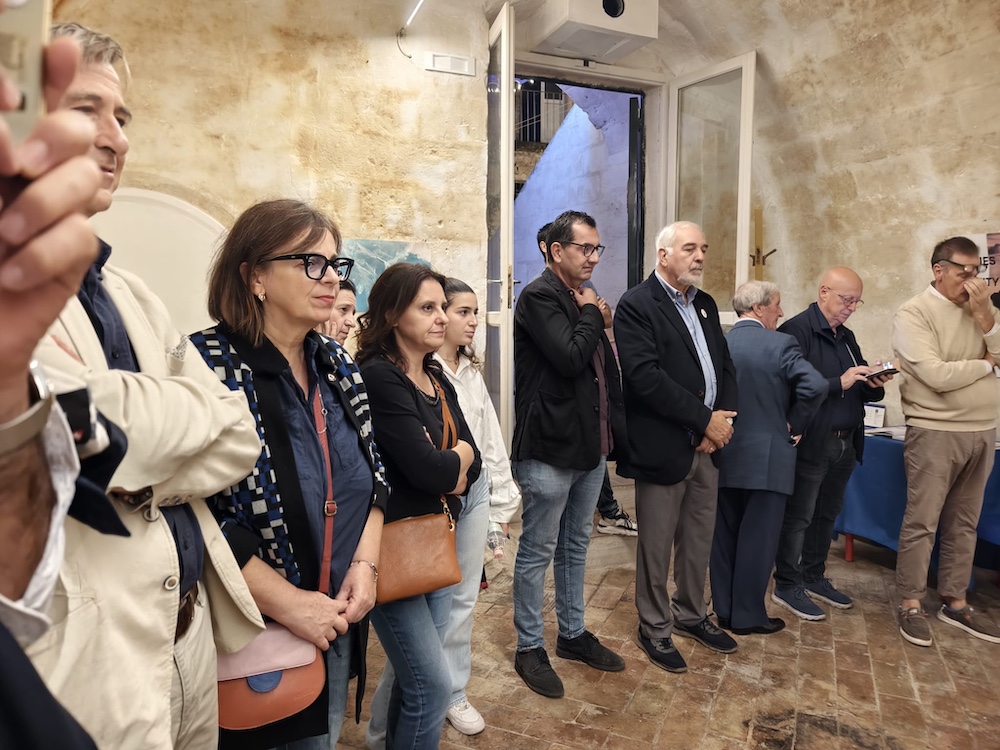
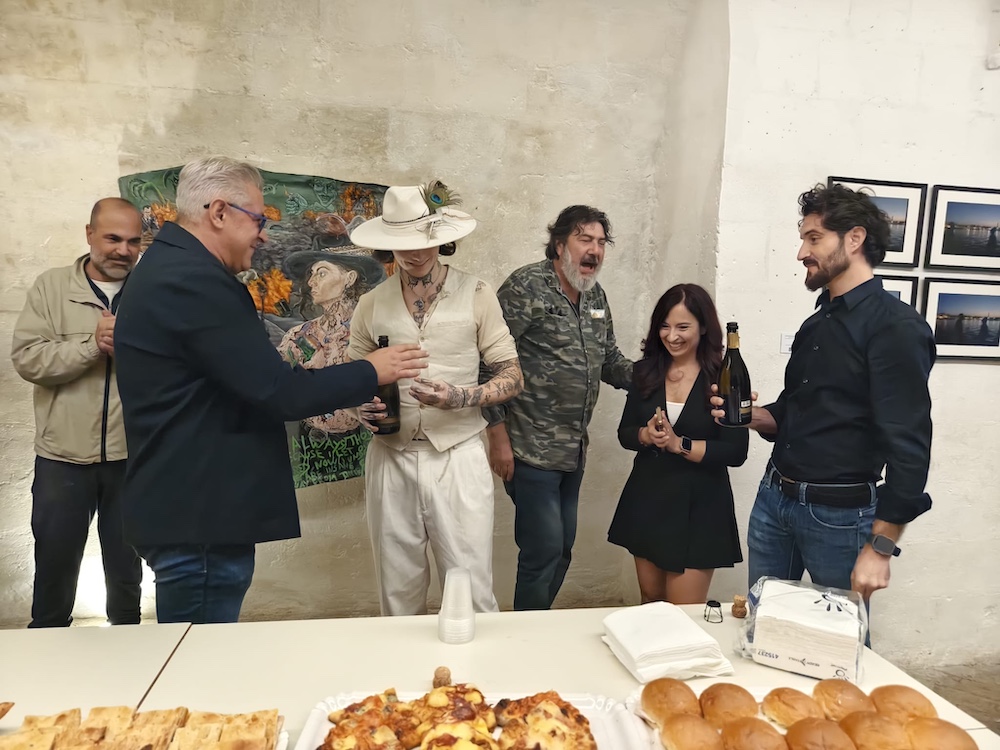
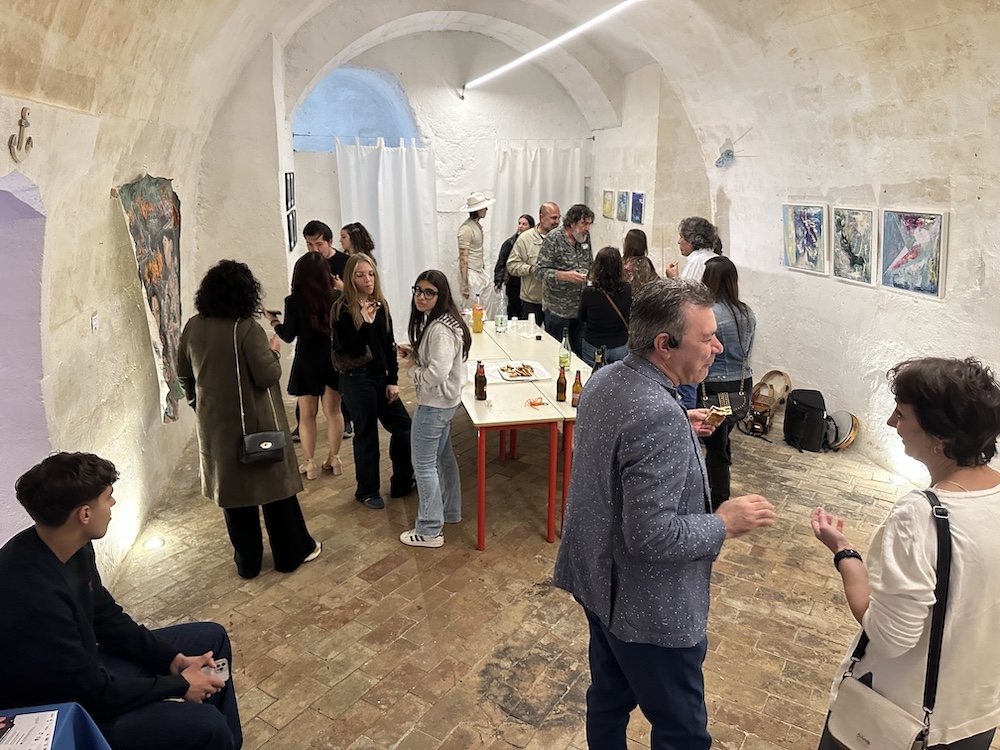
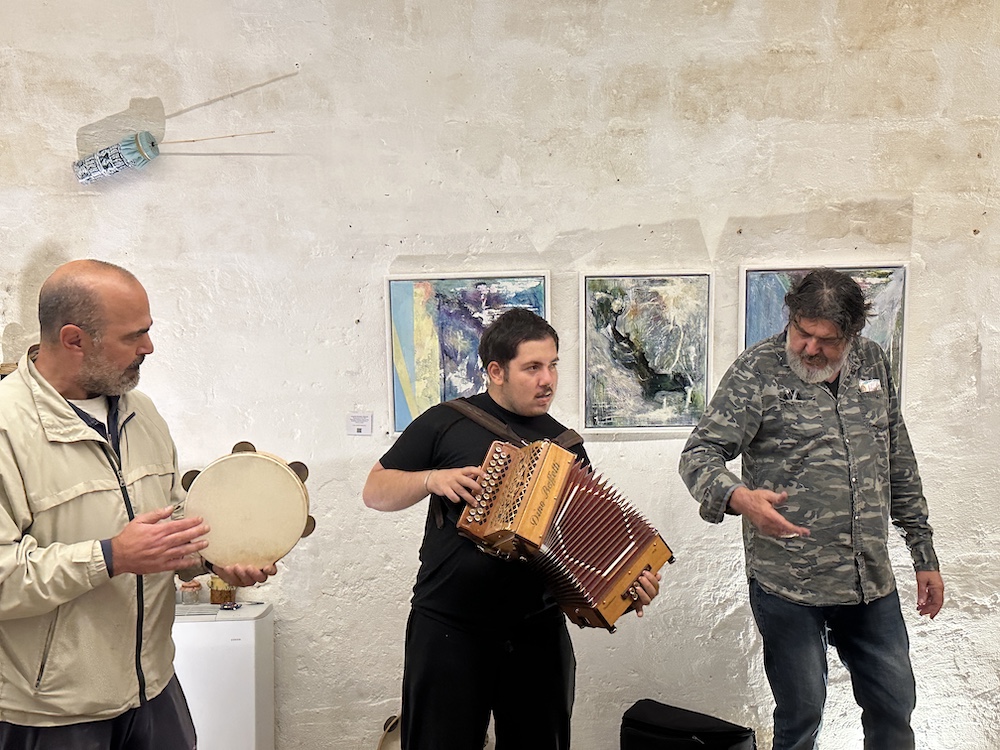
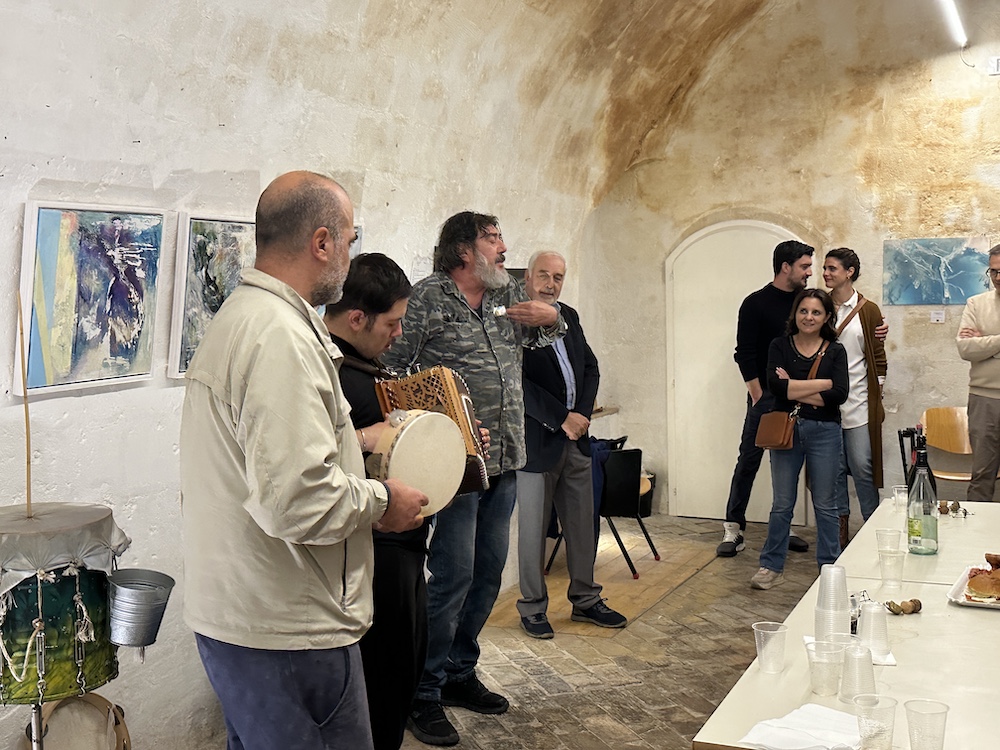
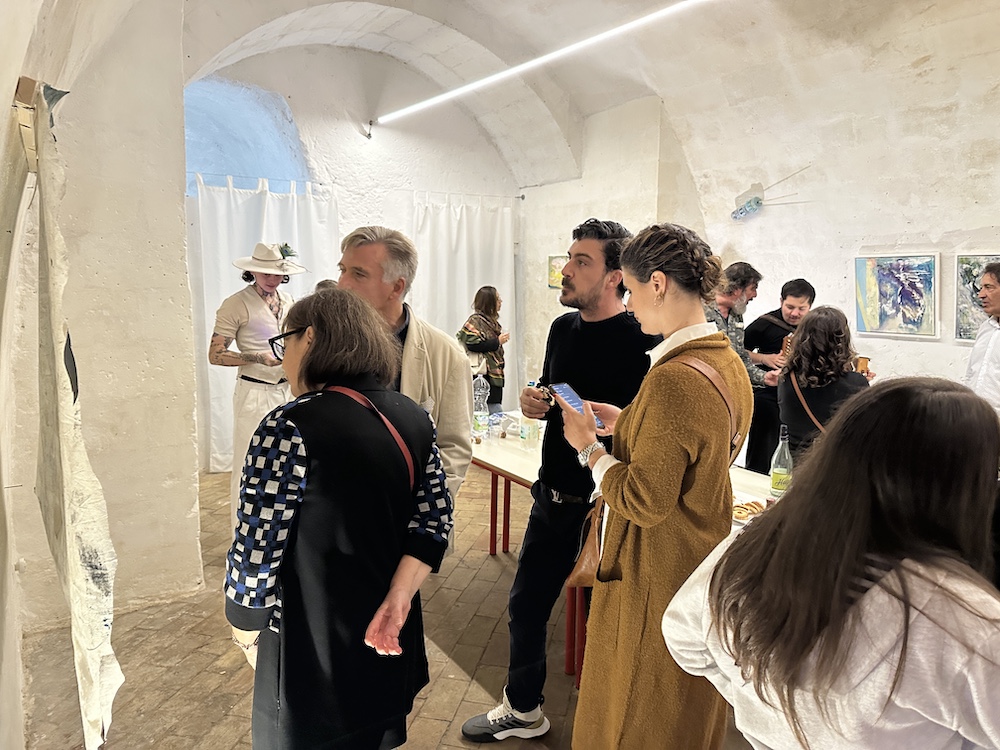
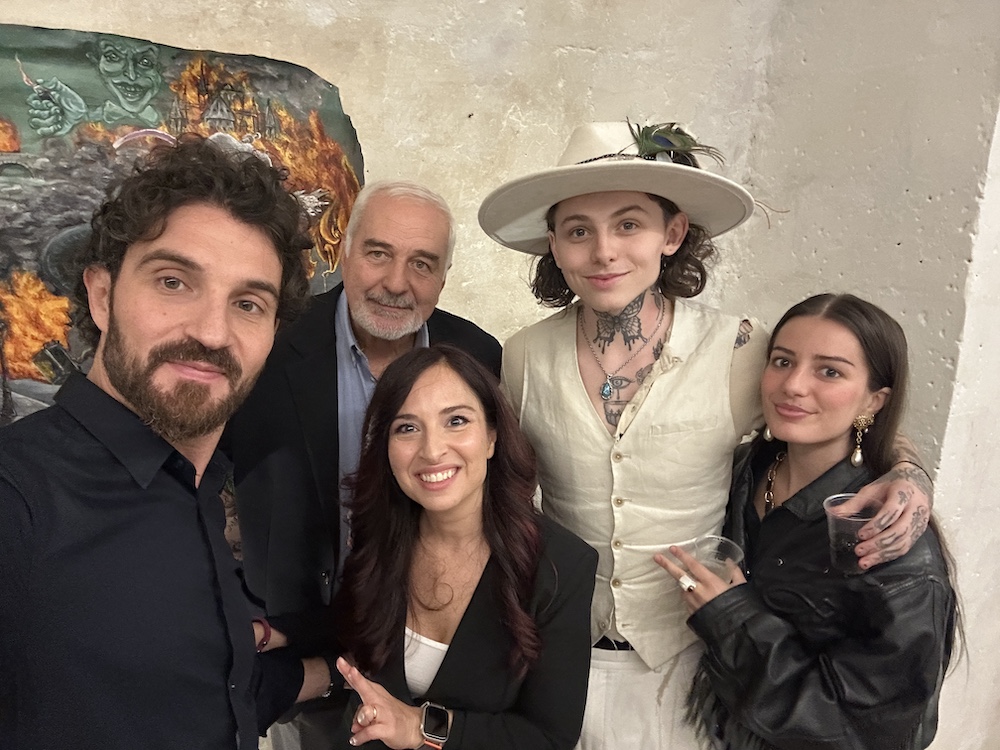
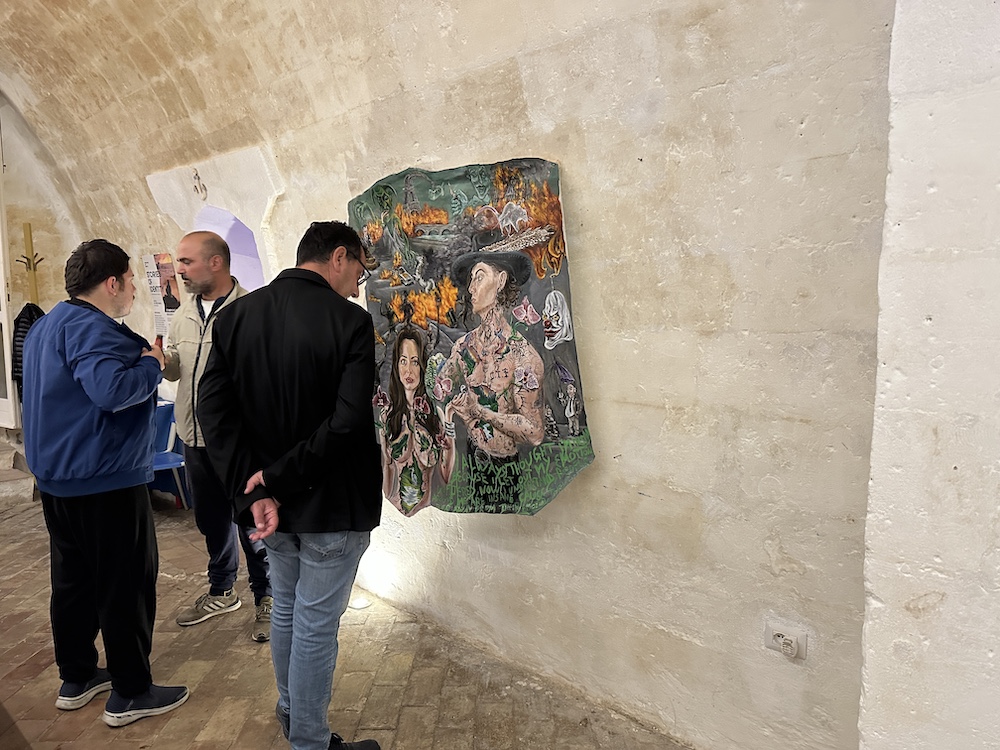
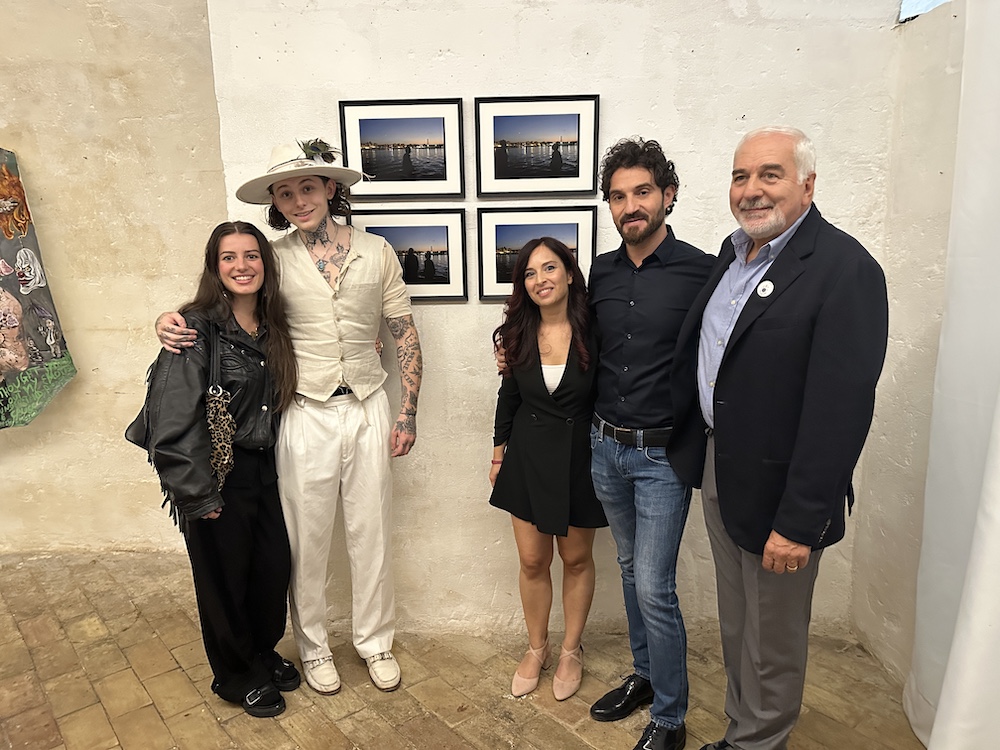
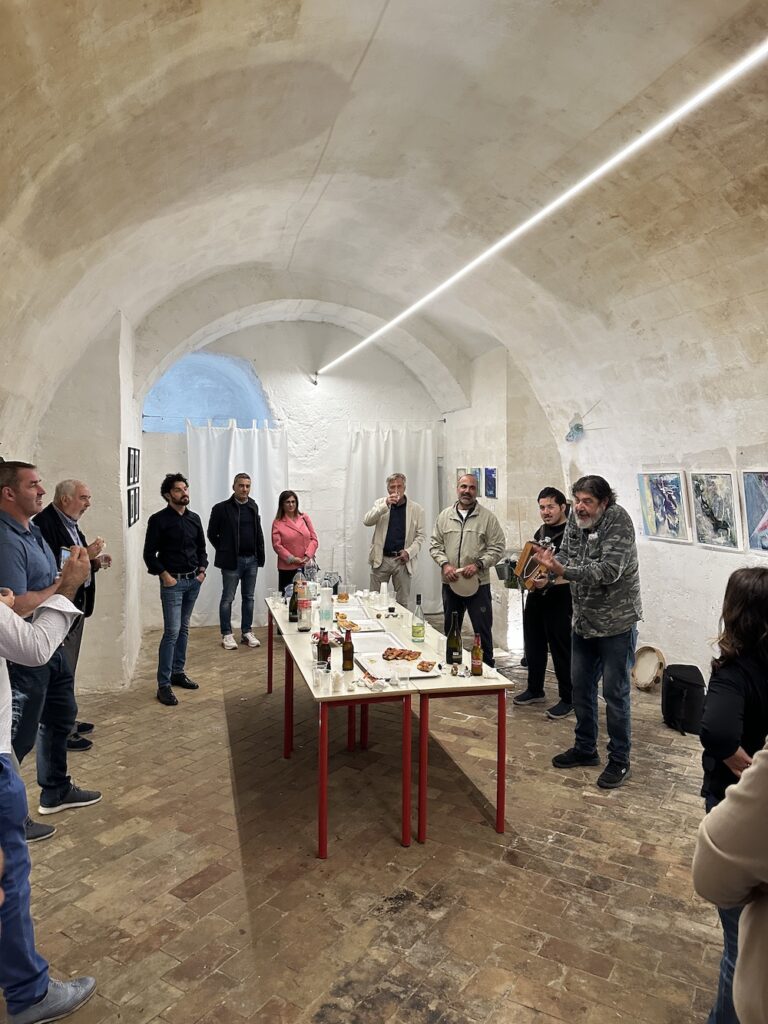
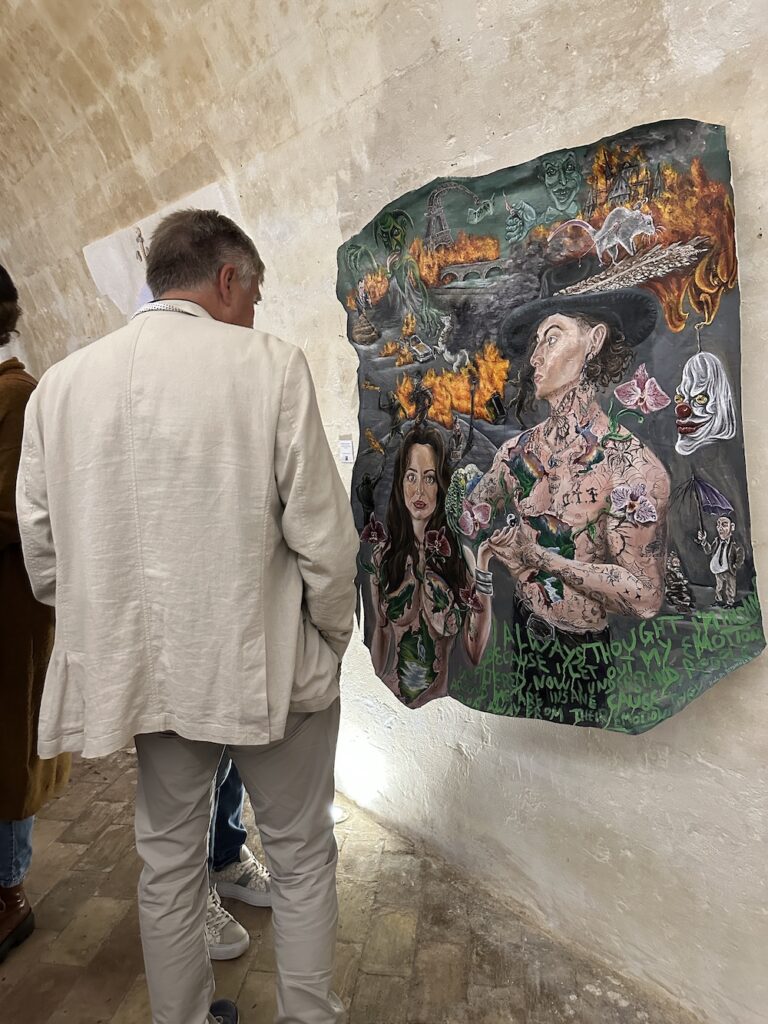
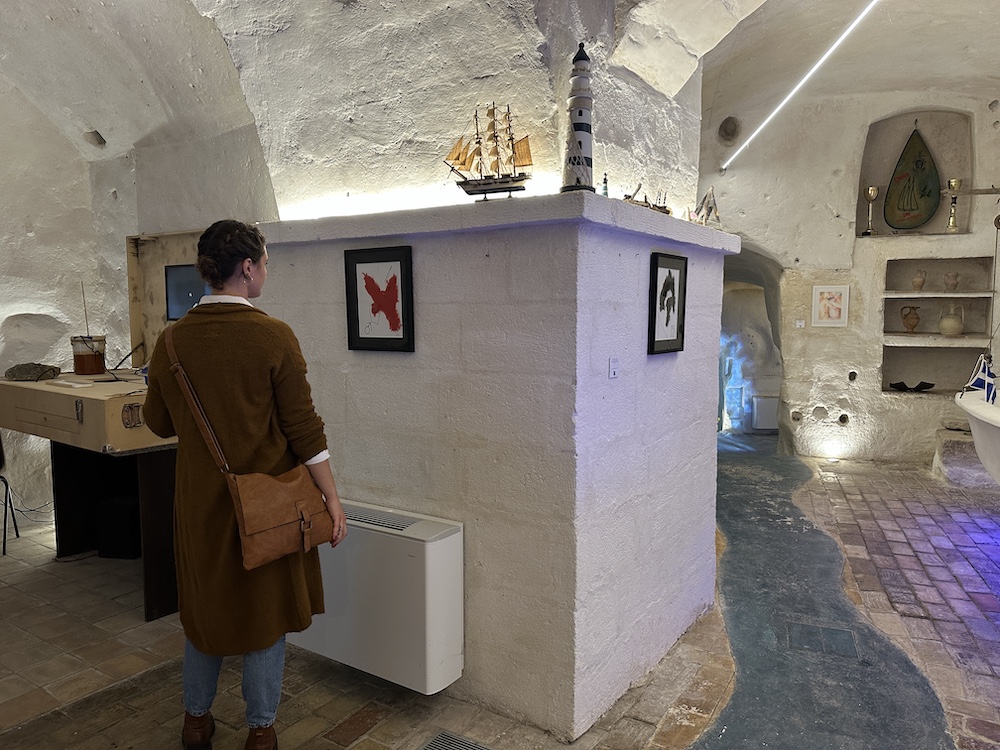
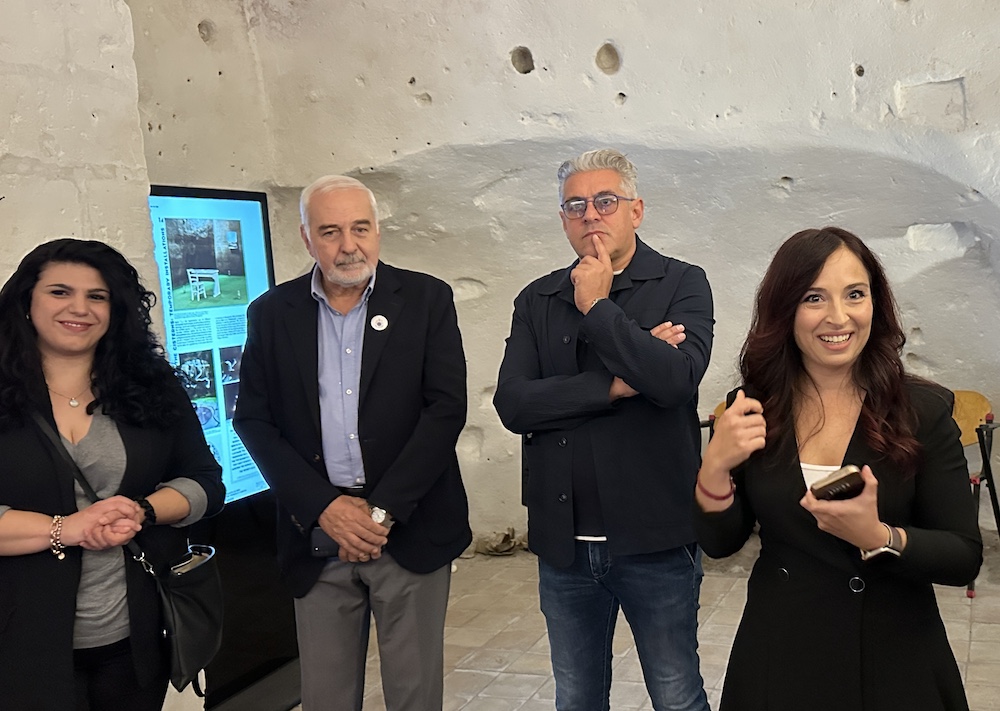
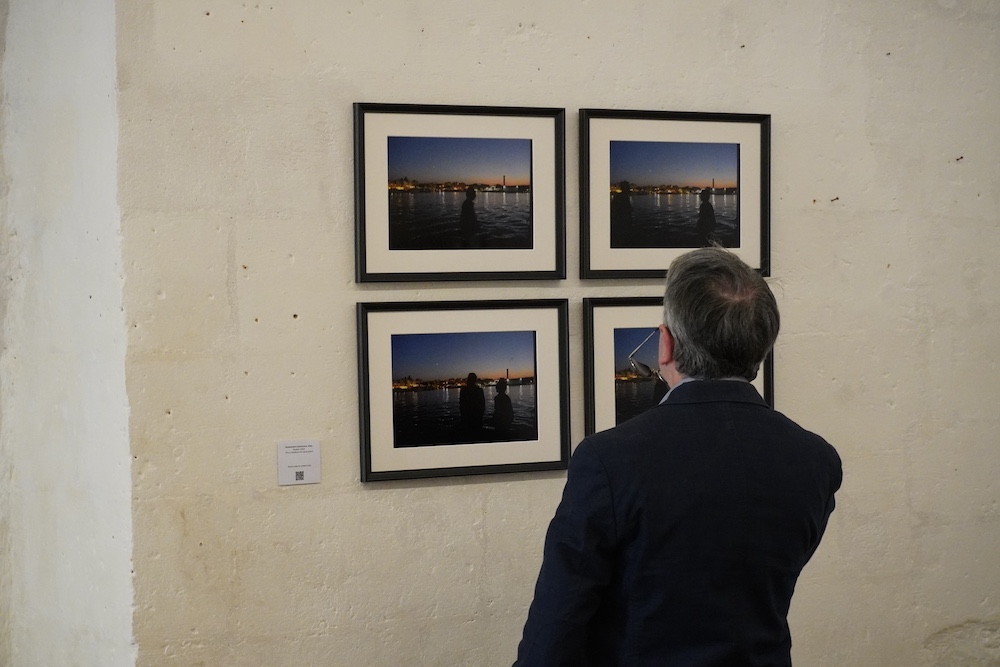
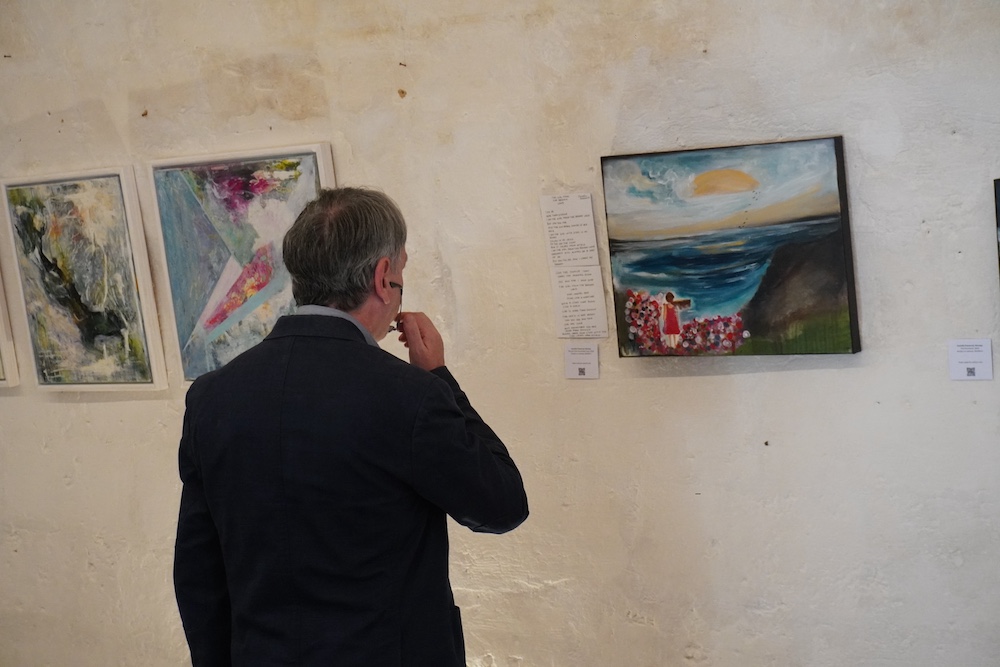
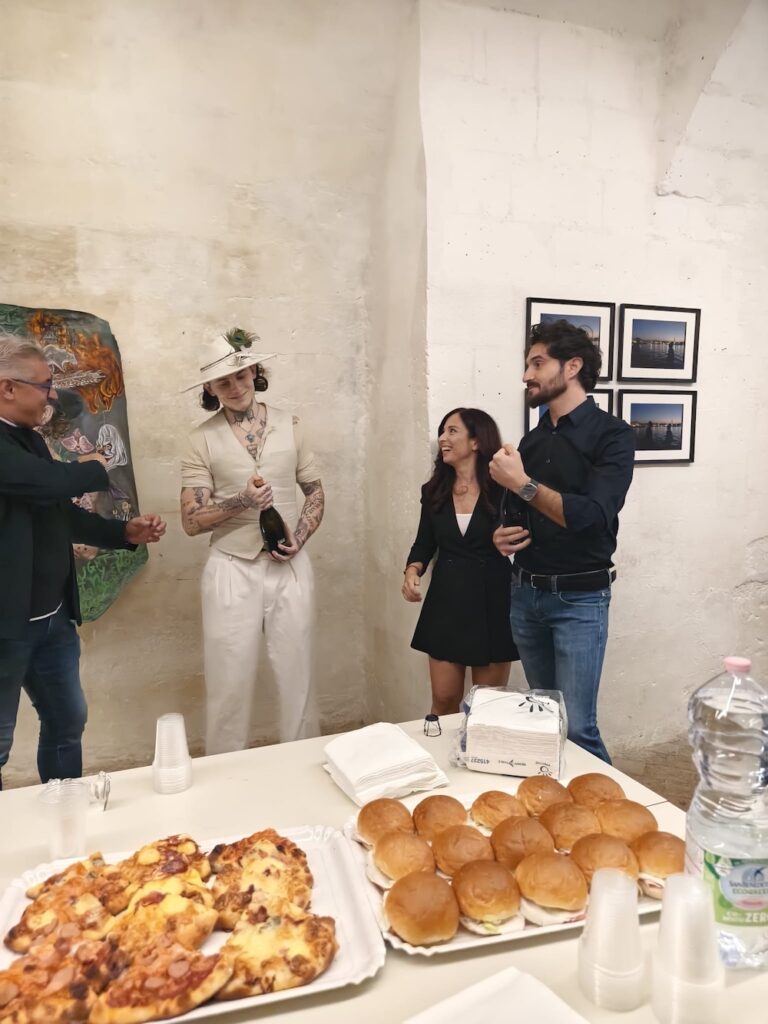
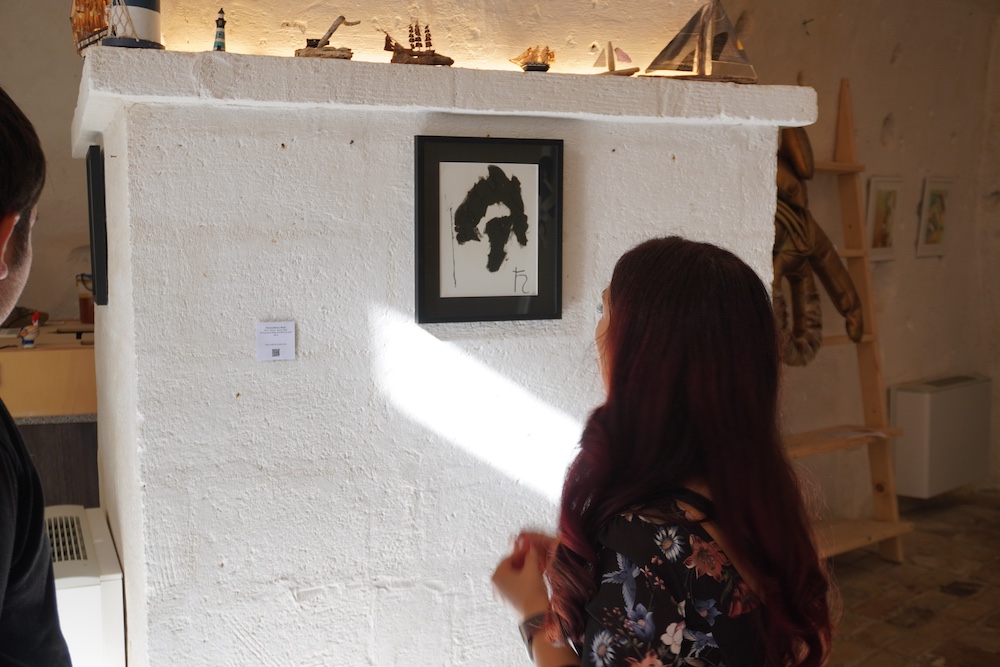
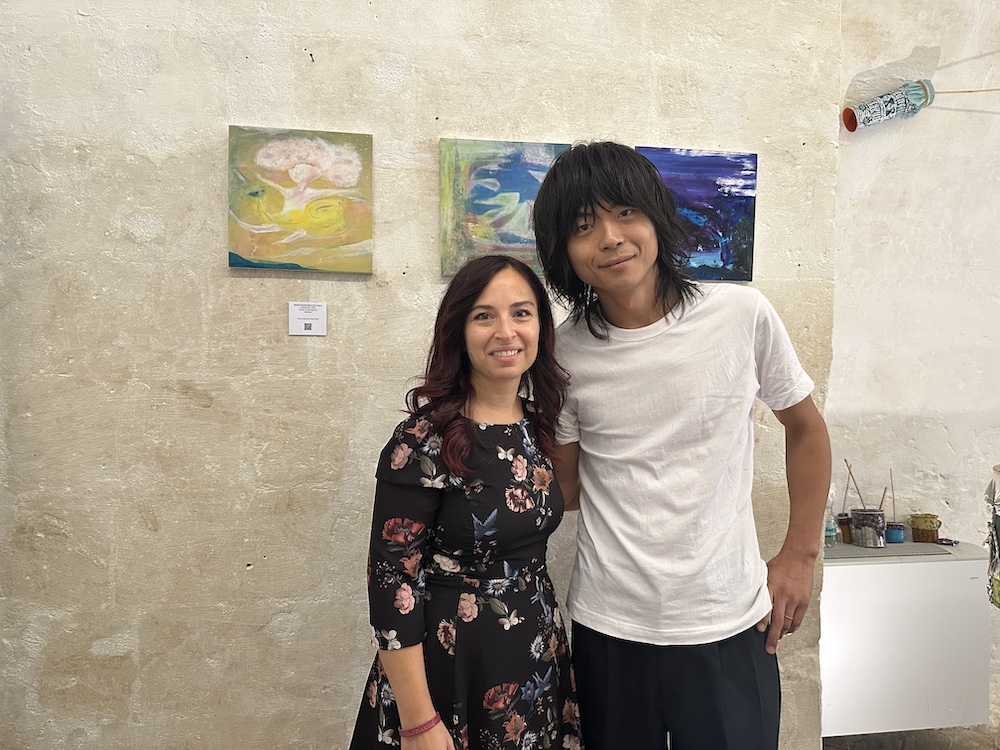
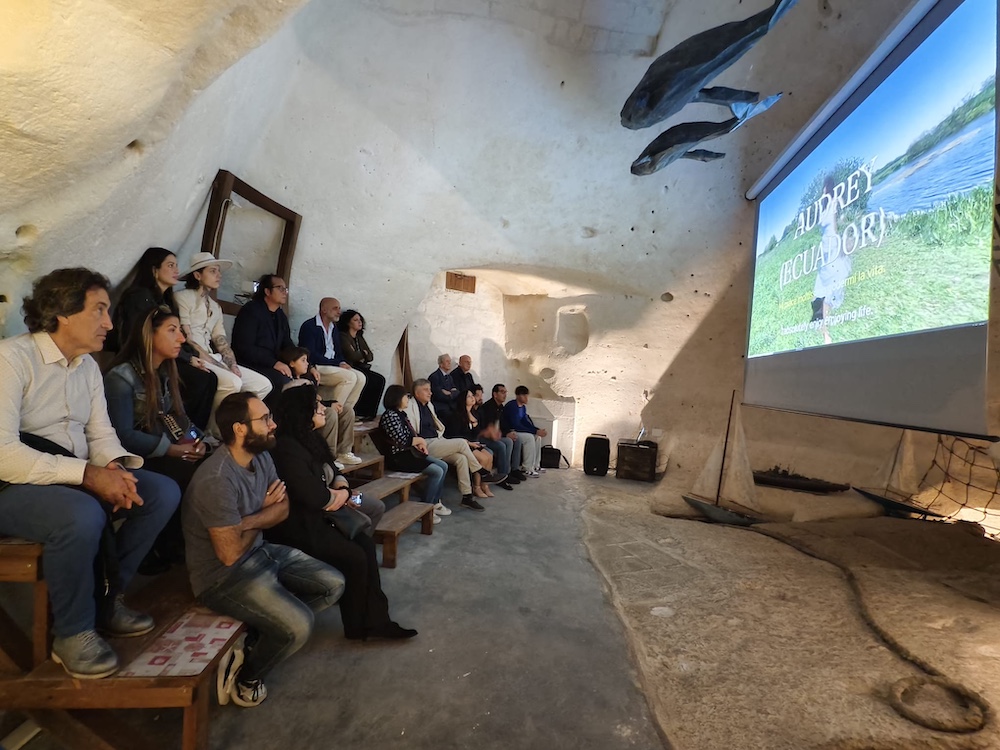
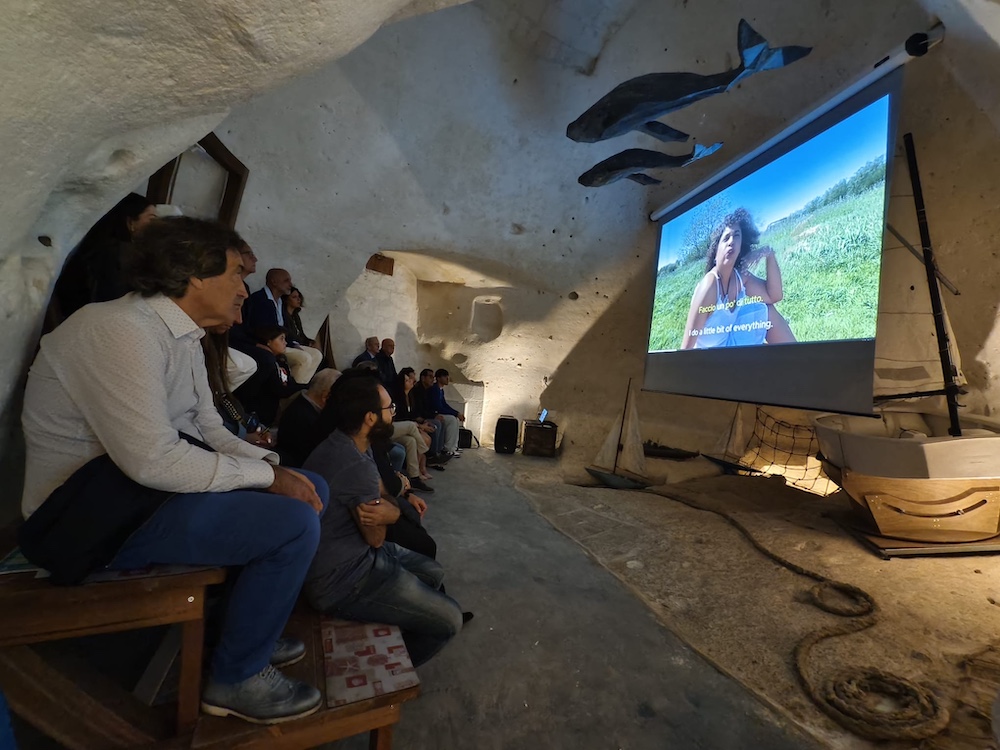
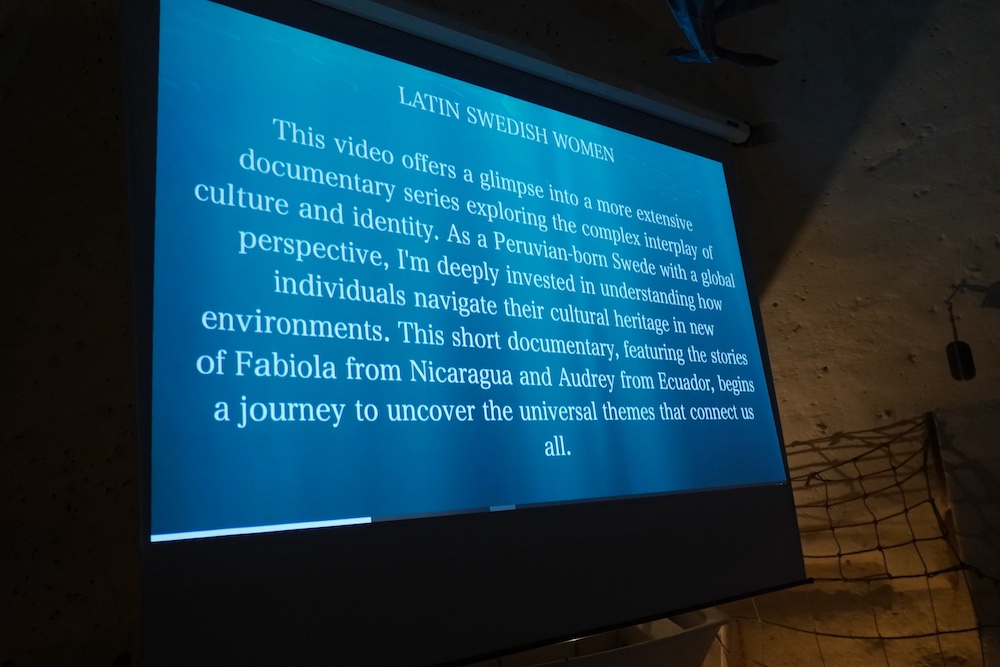
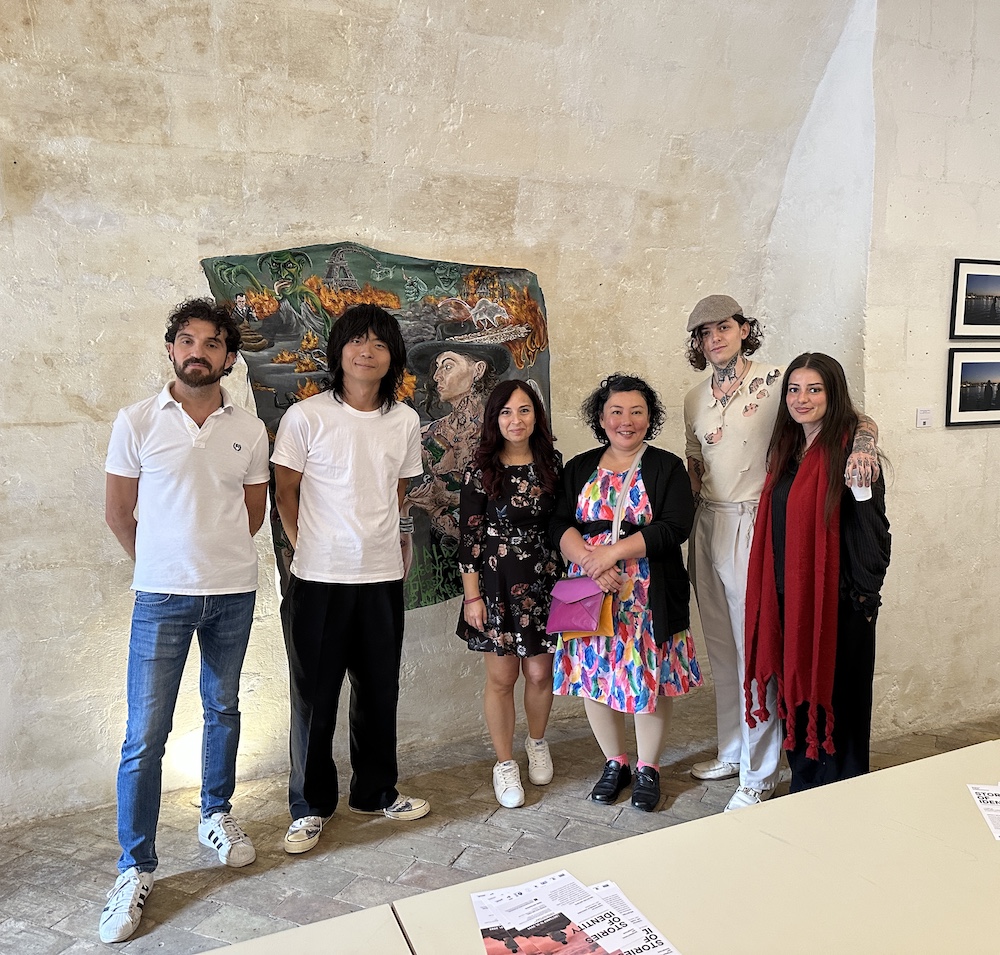
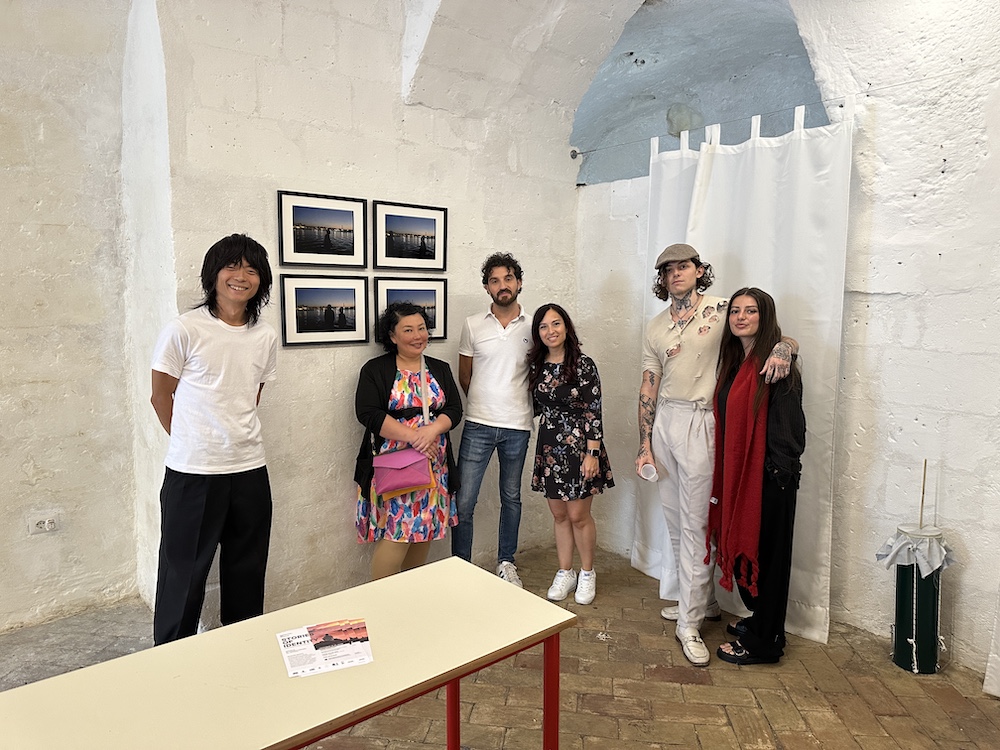
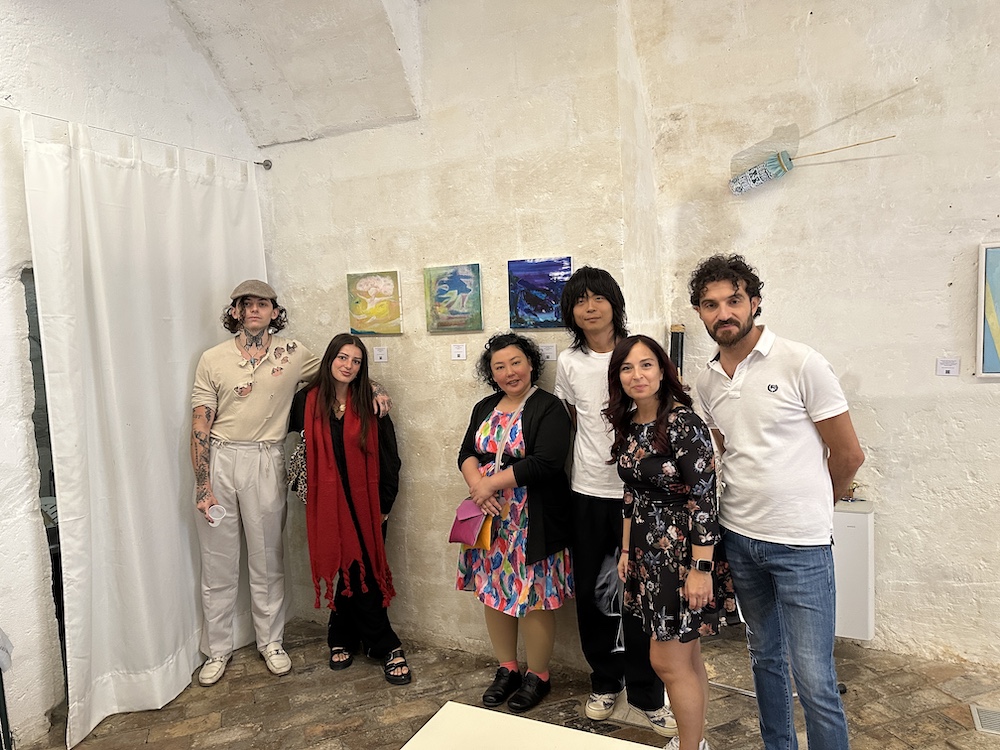
“Every piece of art is the fruit of human expression and the creativity of the individual artist.“
Creativity can be defined as the result of complementarities, between deduction and intuition, between reason and imagination, between emotion and reflection, between divergent thinking (producing many different possible ideas and solutions) and convergent thinking (reaching a single, correct answer to a problem).
Creativity arises above all from the physical and mental action that the artist performs during the artistic process.
Every artist creates his or her works by following emotions, moods and life experiences, and through the application of techniques, shapes, colours, lights, words and sounds, manages to convey an emotional message that can be understood and interpreted directly or indirectly by the observer.
This emotional connection can arouse a range of emotions and feelings involving those who relate to art.
Therefore, artists are invited to reflect on the idea of creativity, based on the relationship between the external world and their own inner world, allowing themselves to be inspired by a dualism made up of differences and assonances that create the action necessary to realise new possible horizons.
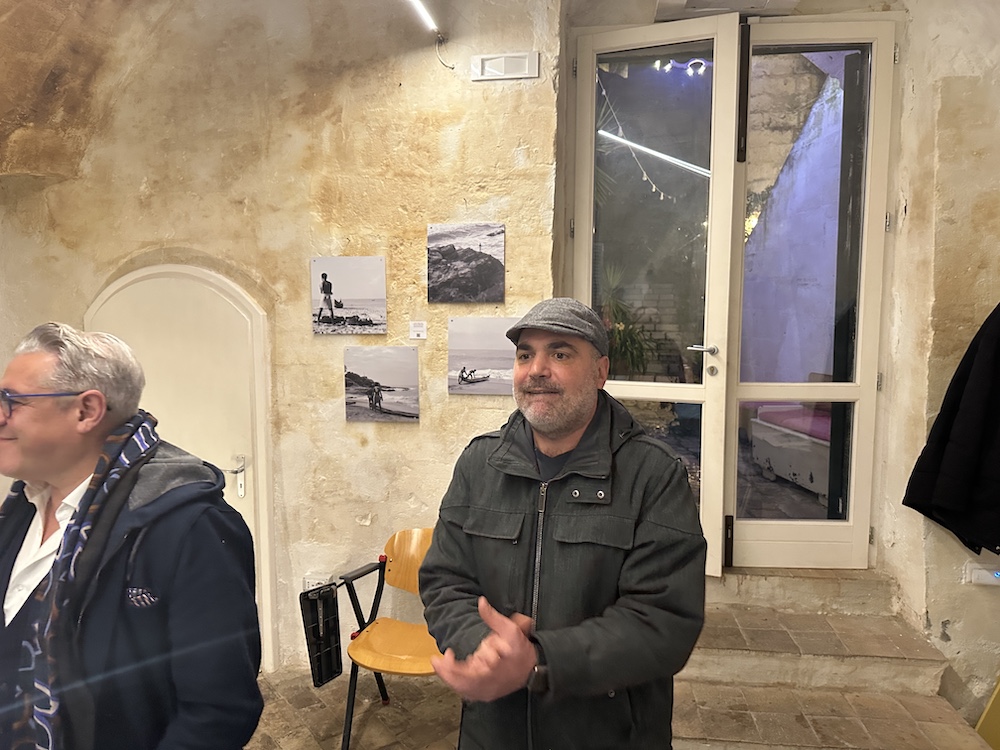
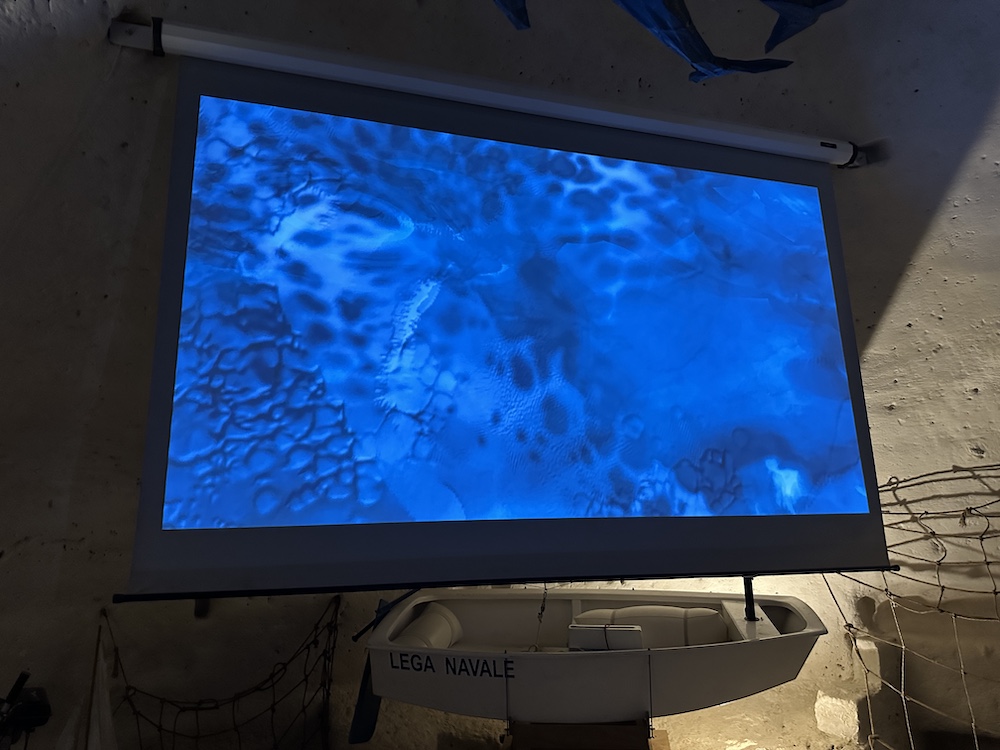
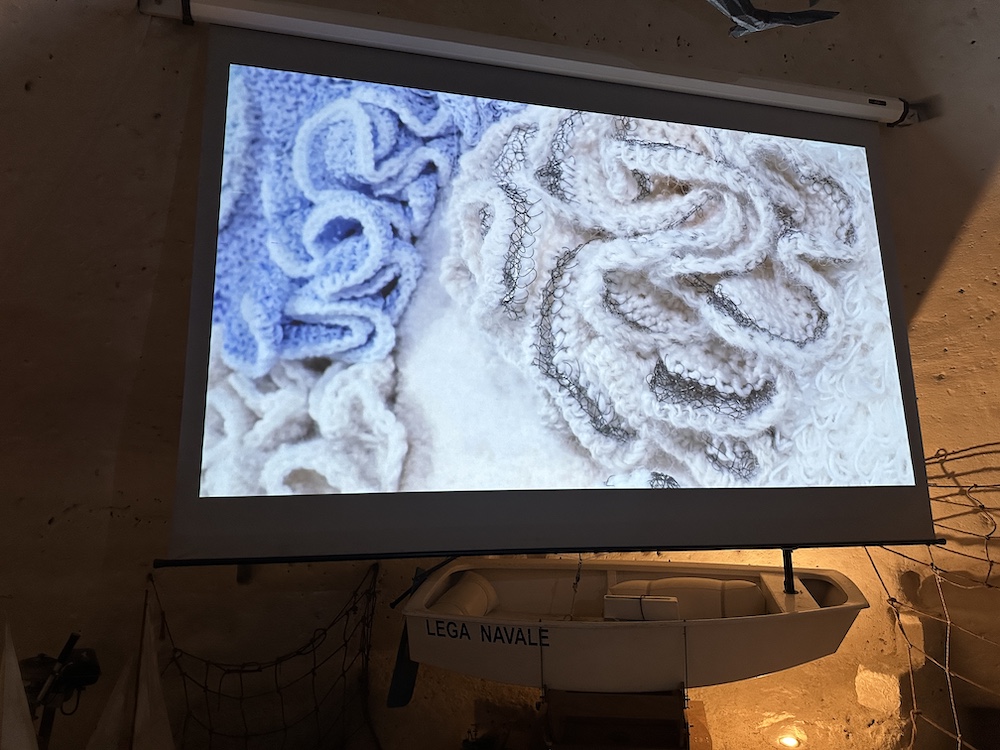
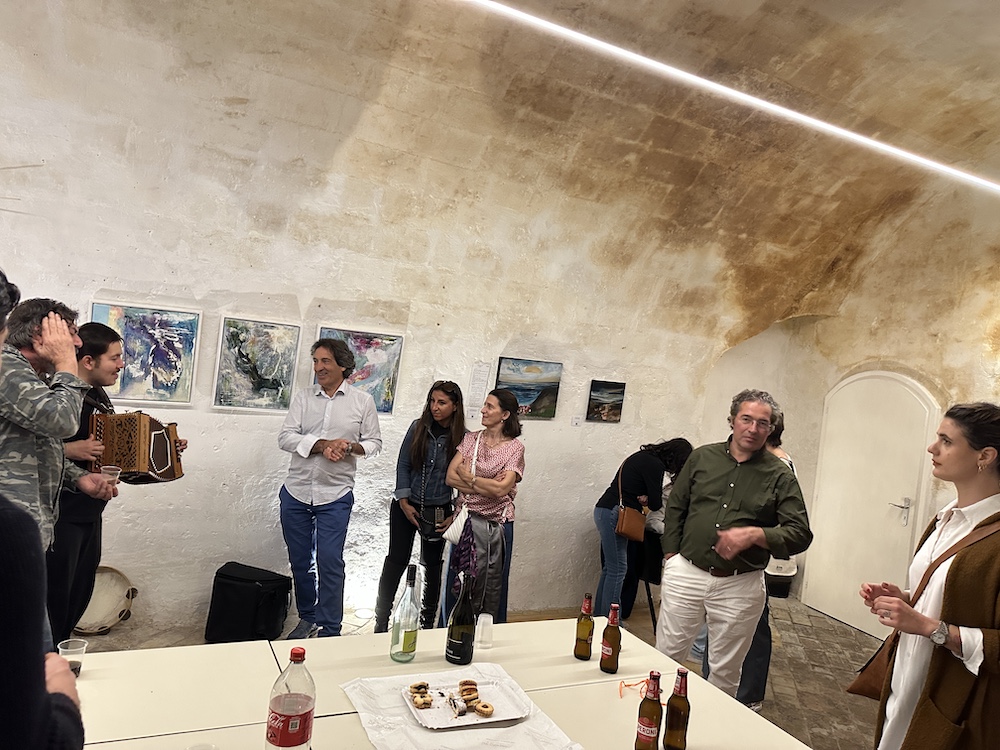
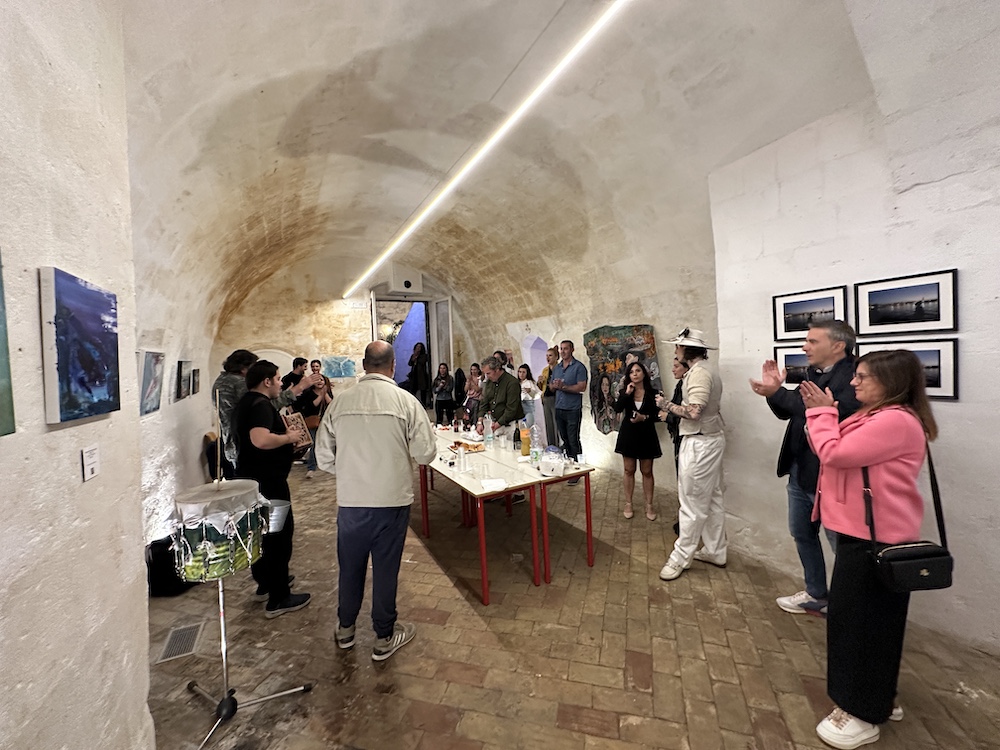
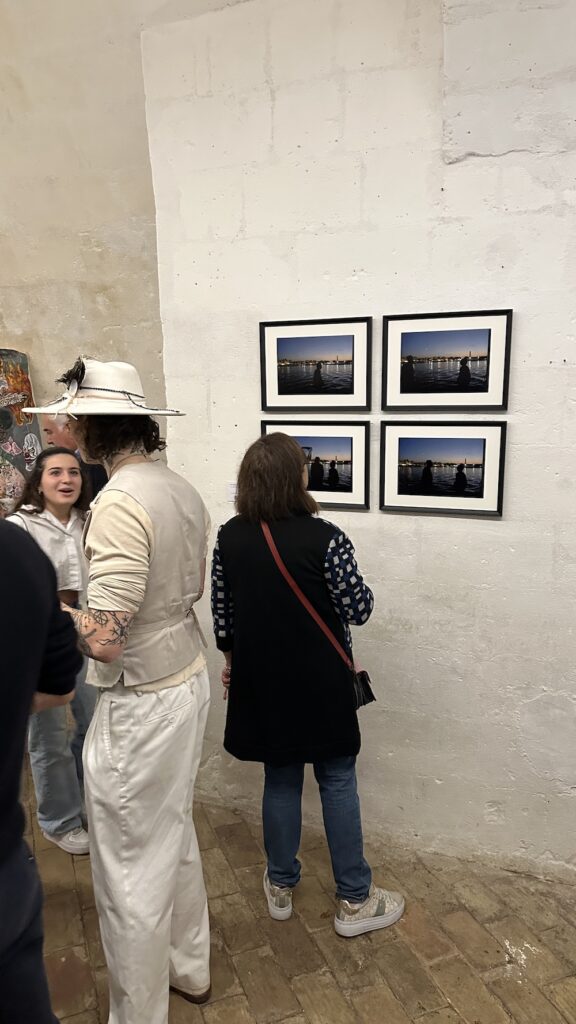
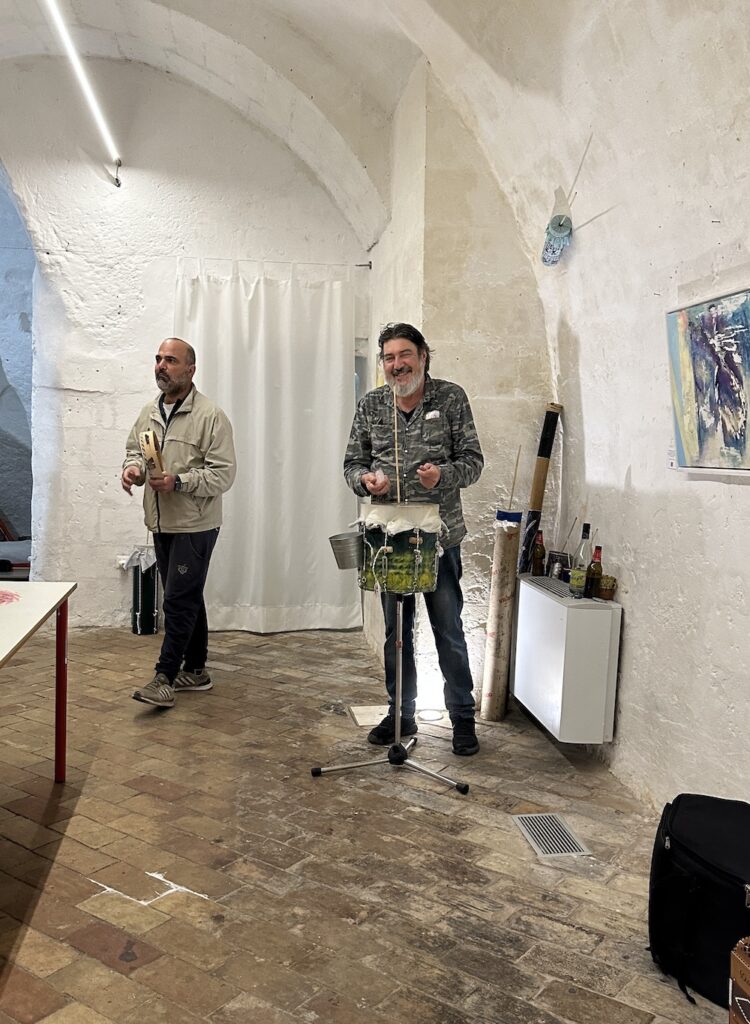
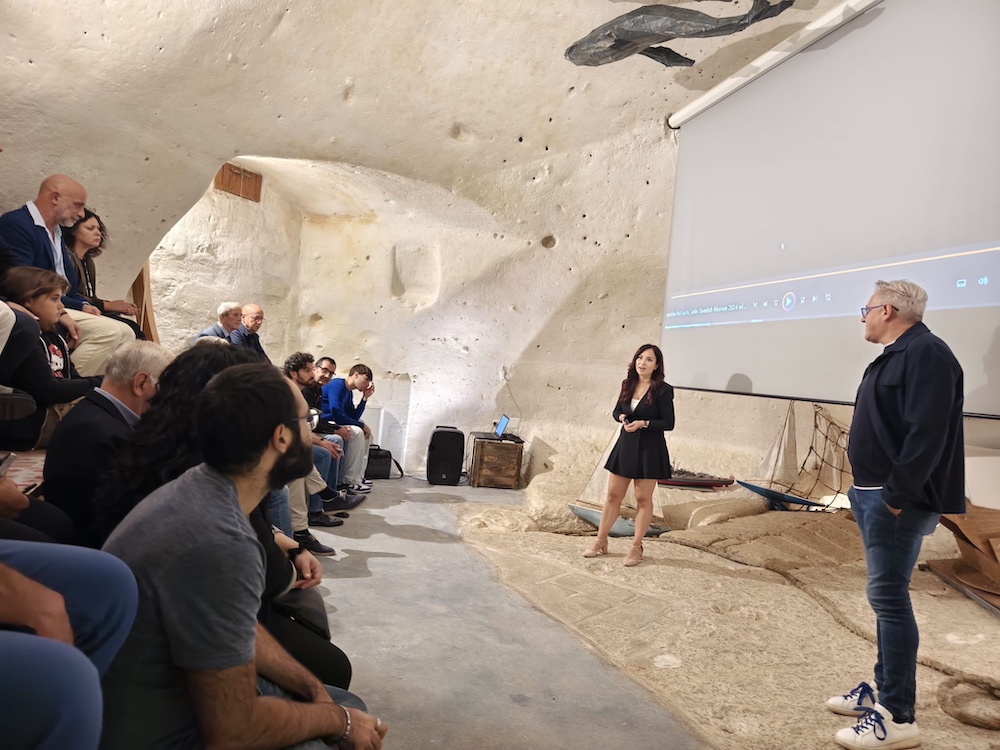
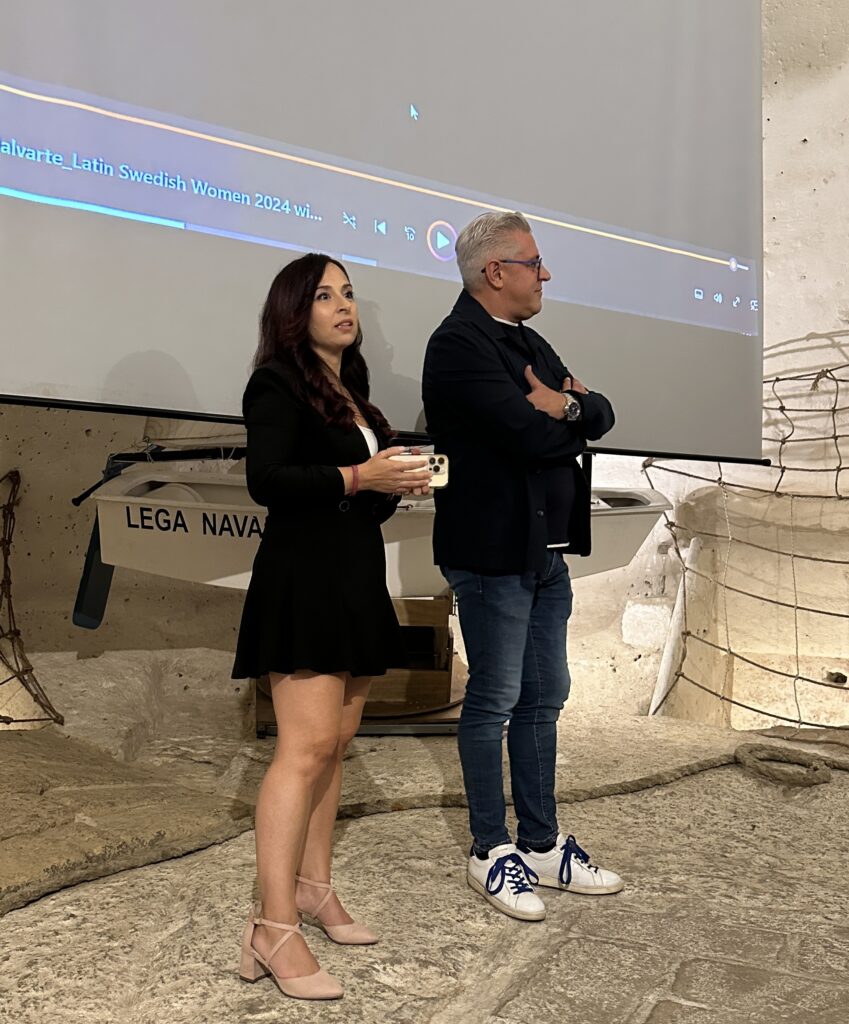
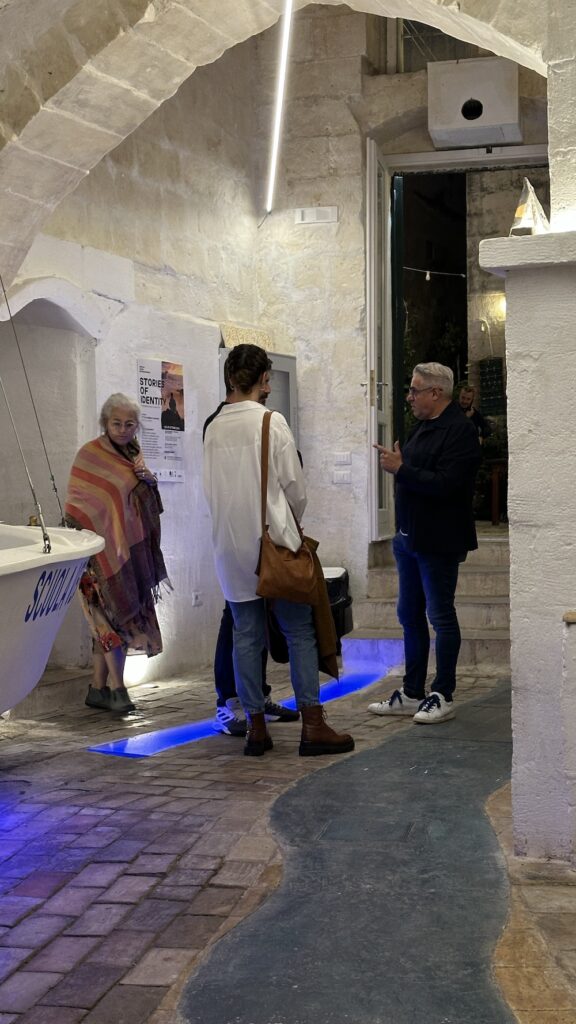
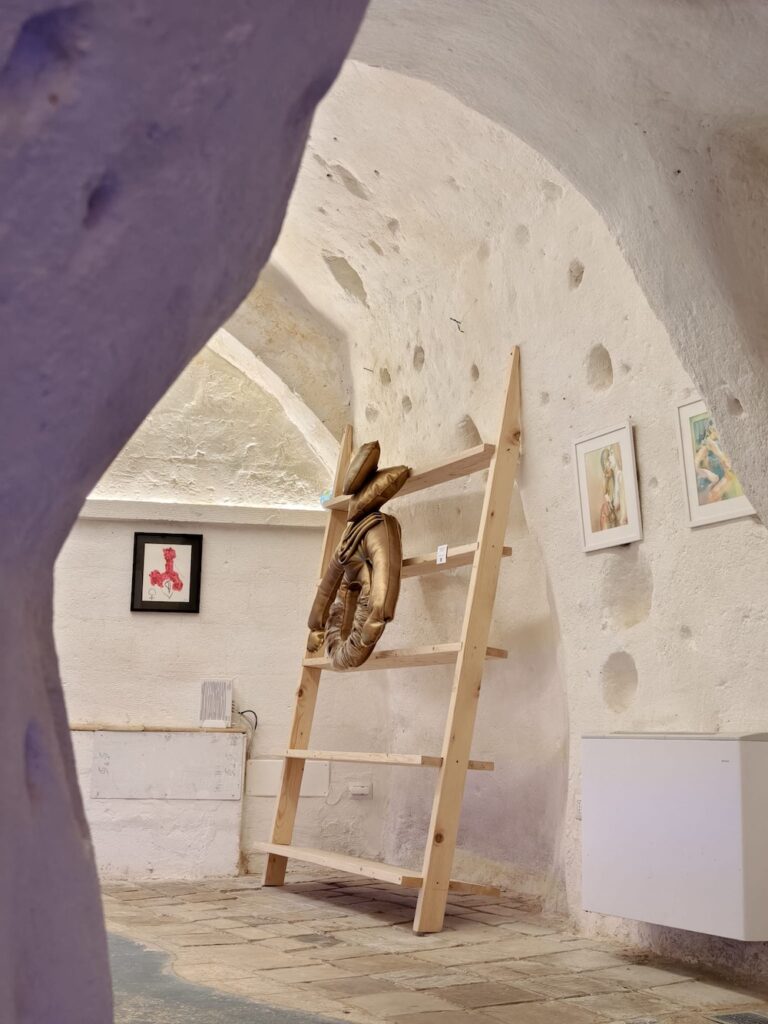
Cultural hypogeum Lega Navale Italiana – Sezione Matera Magna Grecia
The concept
Throughout the centuries, water has inspired various artists and continues to be a source of inspiration for contemporary artists, taking on multiple symbolic meanings.
Water is one of the fundamental elements of nature and it’s the most widespread compound on Earth. Considering both its symbolic value, in philosophical and mythological terms, and its material consistency, the presence of the element water is very recurrent in the history of art. From ancient Egypt to Greek and Roman mythology, water is synonymous with creative force, a representation of life and fertility; a symbol of purification in medieval art, and a fluid and elusive element in the modern age. The theme of water becomes predominant in Impressionism, where transparency and the play of light created by the reflection of colours give life and movement to the works.
Over the centuries, the element water, essential in the life cycle, has inspired several generations of artists, from Cubism to Surrealism to Arte Povera, water continues to be a source of inspiration for contemporary artists.
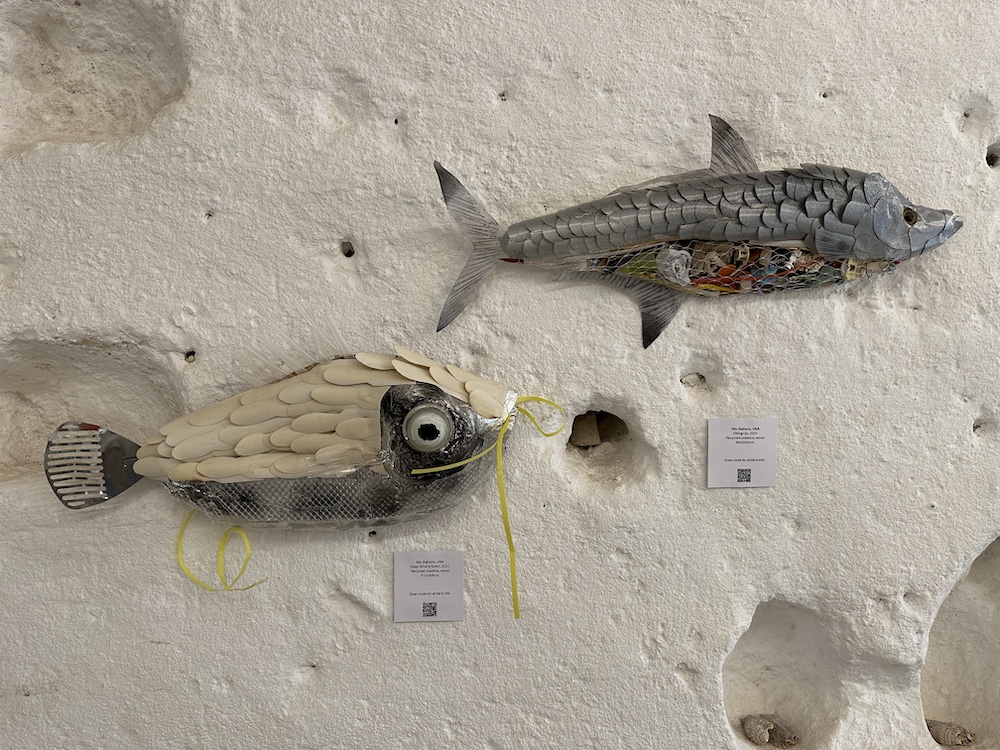
From the vision of seas, rivers and lakes to reflections on its conservation as a resource for the environment, the exhibition Natural Flow – Exploring water’s essence will explore the ways in which water can impact everyday life and inspire creativity. The artworks selected will celebrate the culture of water, the deep connection between art and this natural element without which we could not live.
“Every piece of art tells a story made up of emotions, memories and experiences that are part of the lived of each artist.”
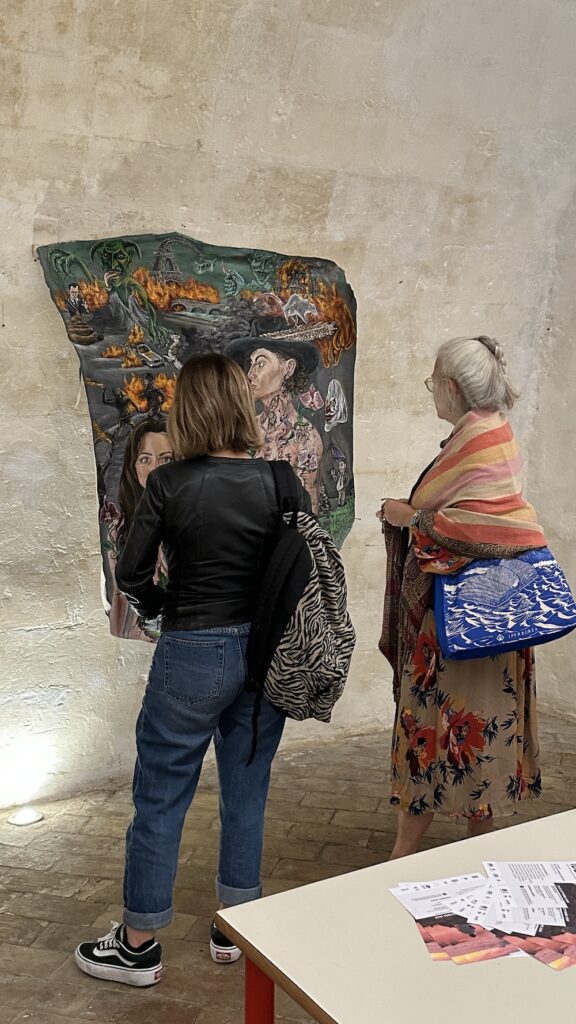
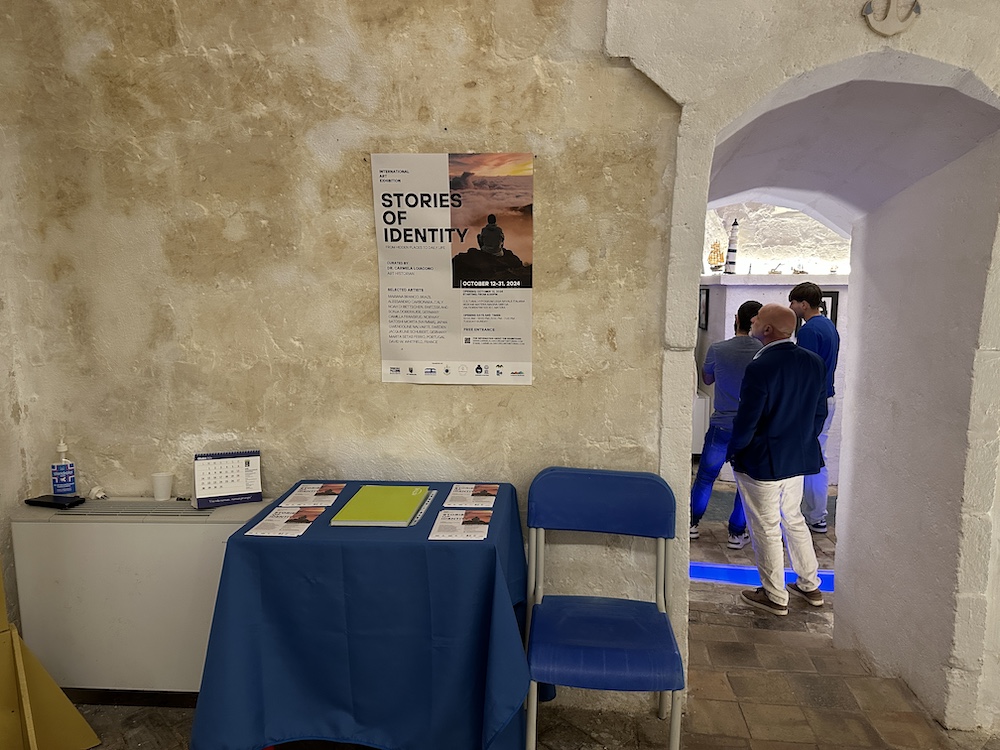
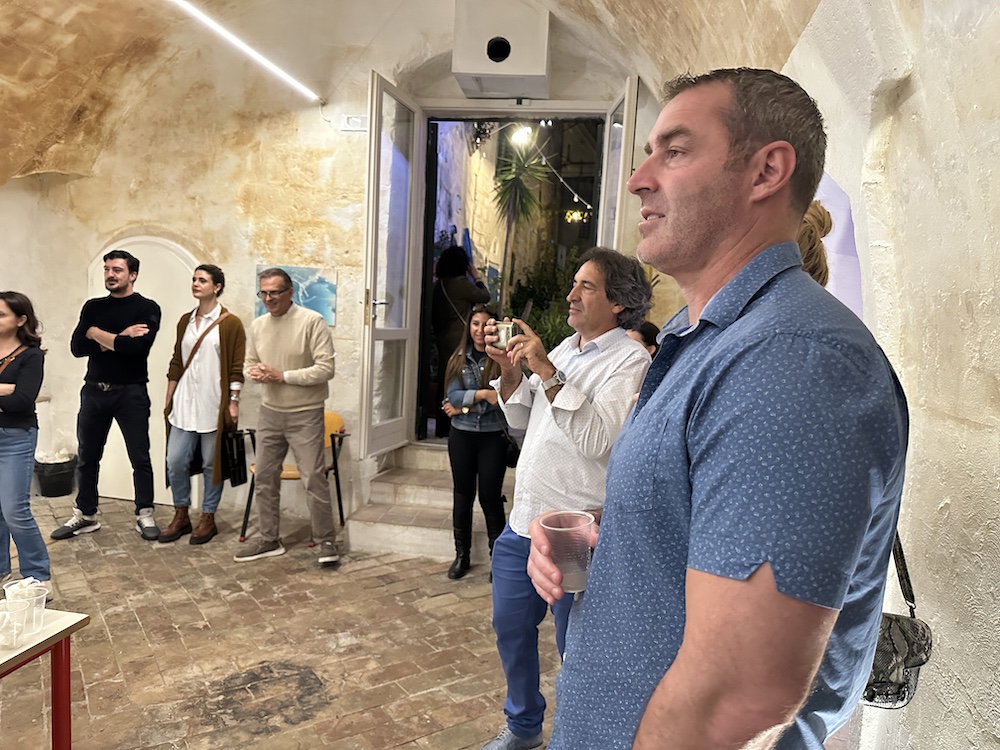
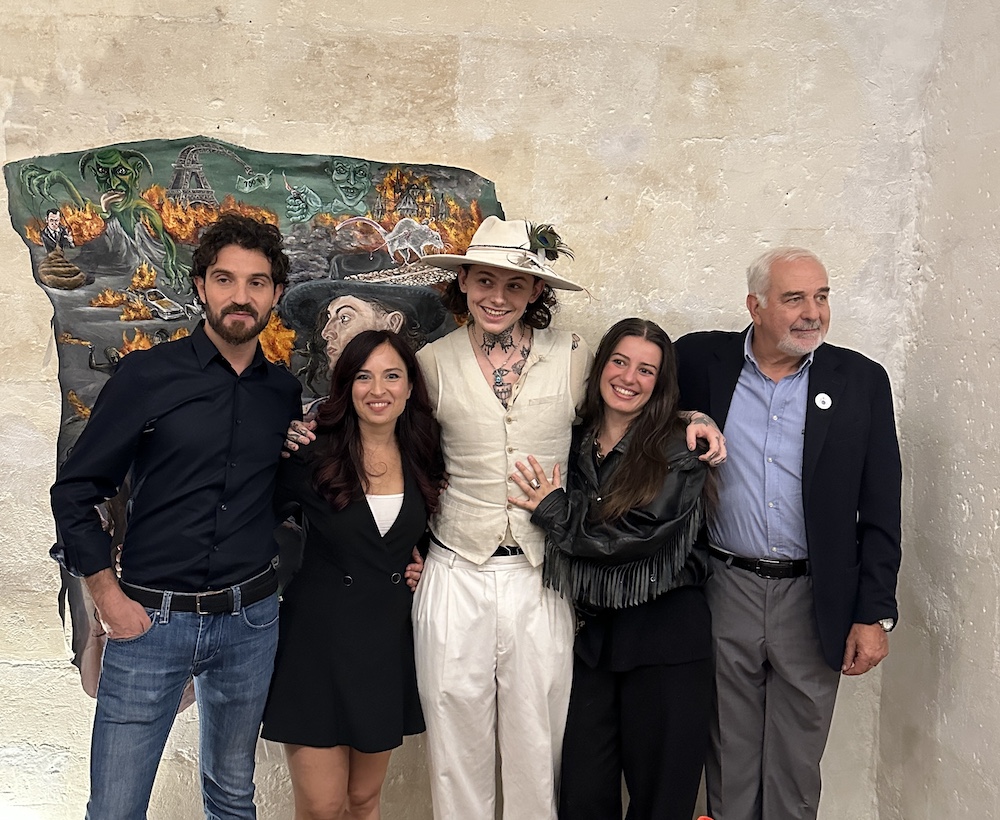
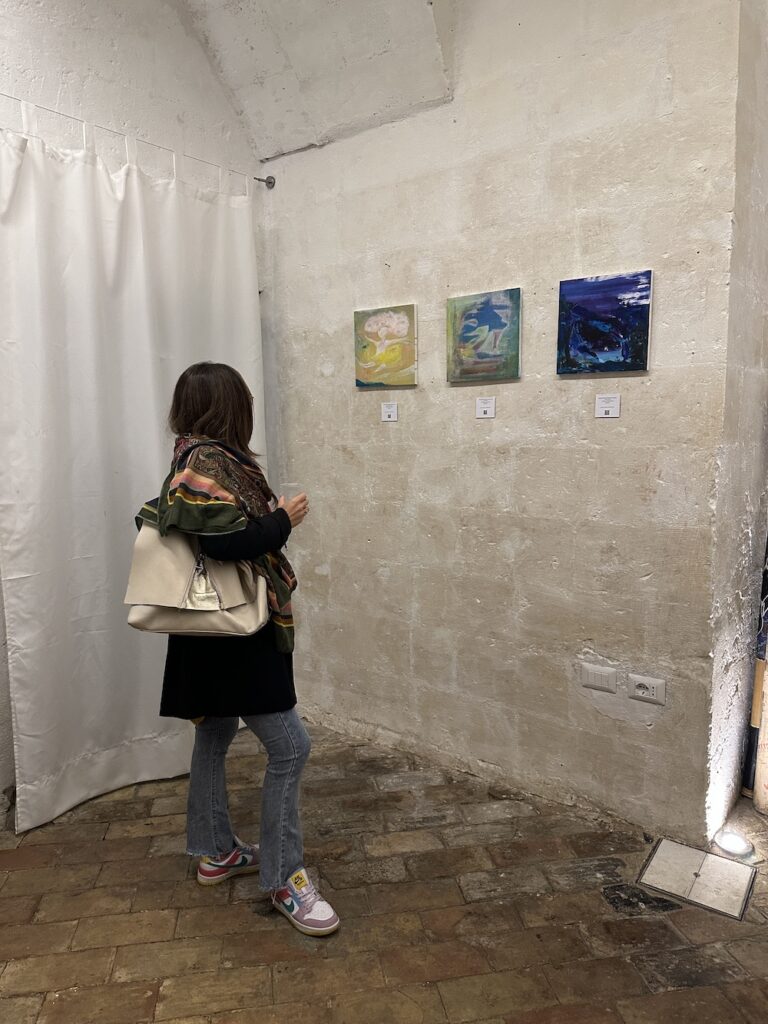
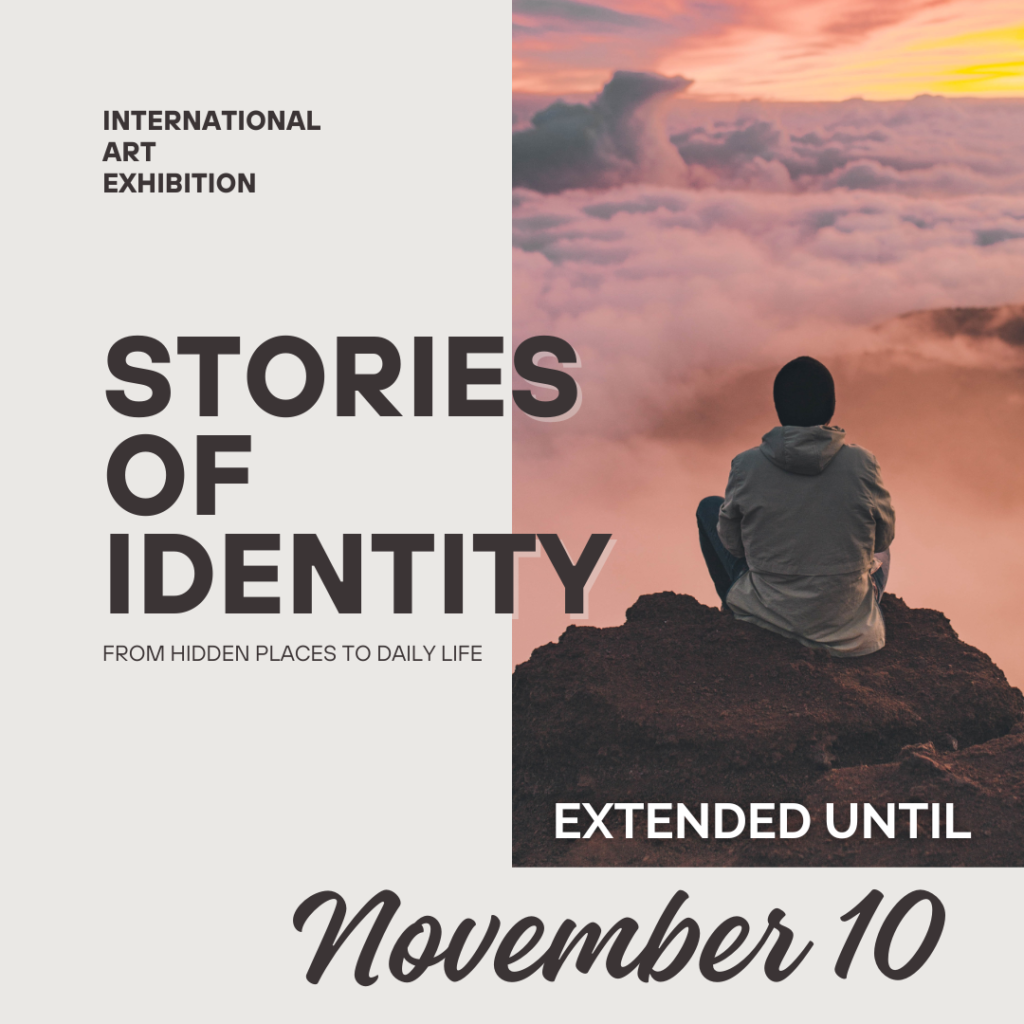
The exhibition STORIES OF IDENTITY aims to observe, analyze and share the stories behind the artworks, in order to become a visual tale, a continuous narration through images in a constant dialogue with the visitor. Artists are invited to share any kind of story and personal experience, starting from the most hidden places of their souls and touching on everyday life.
All the artworks selected are stories of identity, capable of confronting and dealing with the changes of the contemporary world, allowing themselves to be contaminated by it and preserving their uniqueness.
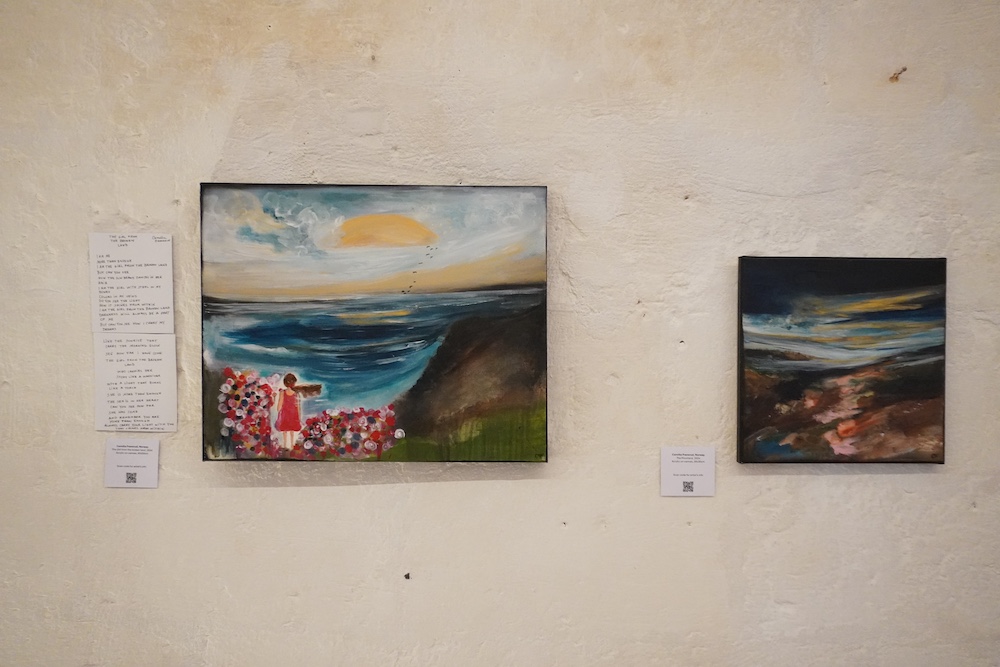
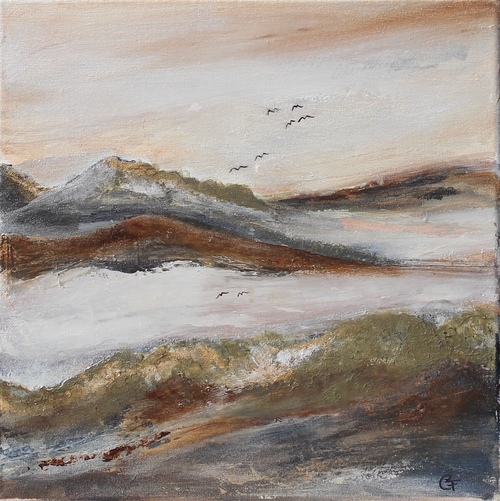
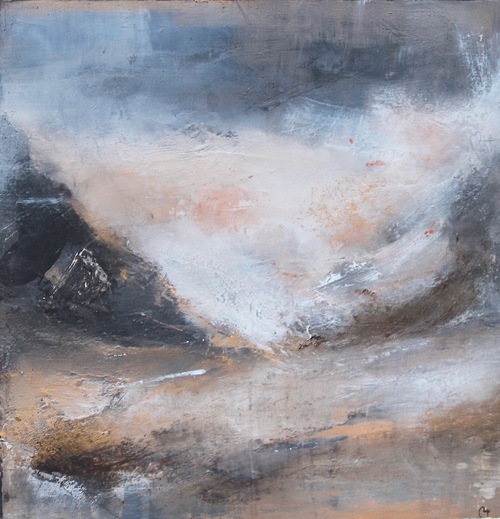
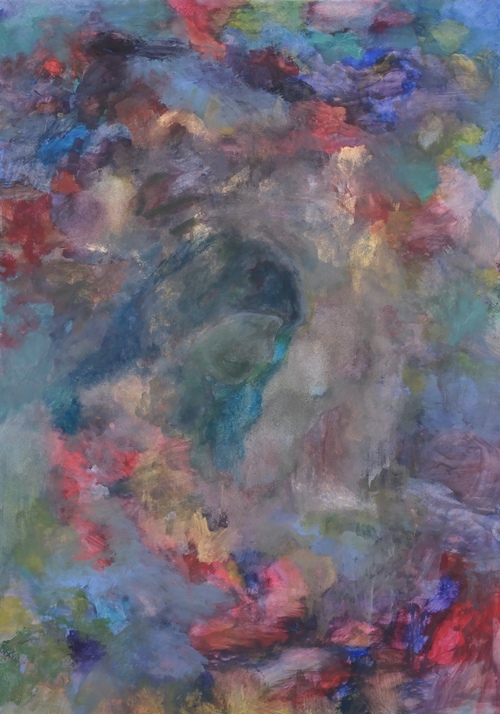
Born in Oslo in 1974, Camilla Fransrud is a Norwegian Contemporary painter. She is self-taught in this artform. She moved to Trondheim in her early twenties and has now lived her for 30 years. Her love for art has always been with her and in sixth form college in her art classes she felt at home among the brushes, easels and colors. Her art teacher was the well-known Erlingur Jonsson, an Icelandic sculptor and he became her mentor and friend. She started to paint professional in 2017, and she paints with acrylic in both an abstract and figurative form. The seaside landscape is close to her heart, and she is living in the countryside with the se nearby.
INTERVIEW with Camilla Fransrud Carmela Loiacono talks with Camilla Fransrud who takes part with her paintings: “The Girl from the broken land” and “The Moorland” in the International Art Exhibition STORIES OF IDENTITY – From hidden places to daily life in Matera, at cultural hypogeum Lega Navale Italiana Matera-Magna Grecia.
Carmela Loiacono – Please introduce yourself and talk about the selected works you presented during the exhibition STORIES OF IDENTITY – From hidden places to daily life. Camilla Fransrud – My name is Camilla Fransrud. I am a contemporary abstract painter from Norway. I also Photograph,my artistic journey started with the camera. I am self-taught in both artforms. I have always painted, but in 2017 I got the courage to share my paintings with the world and had a exhibition in Trondheim where I am based. I paint with my heart, and I also write poetry. My selected works for Stories of identity talks about life itself. When you create art, it is layers of life you are sharing with the viewer, and when you peel of this layers you will come to the core and that is your heart and that is what I attempts to evoke in my art a moment of poetic stillness in this busy world, a place where you can breathe and a place where you can dwell in. I had an abstract landscape painting and a figurative painting in this exhibition. They both talk about the sea and my love for it. And it talks also bout the journey in, that the marks and scars you carry with you makes the person you are and that in this world you can always find light and strength in you to carry on, and that life itself is quite magical and beautiful -you just have to see with your heart.
Carmela Loiacono – How would you describe your creative process? What or who influenced or is influencing your work? Camilla Fransrud – My creative process always starts with a good cup of espresso ,and some music which brings me in a mood to create. I can also get a vision when I read and a painting takes form in my mind. I have a studio in my a house and I have a spectacular view to the sea, and this brings some emotions, reflections that make me inspired to share its beauty ,layers and lightning. I also get inspiration from museums and exhibitions, and this gives me new ideas and inspiration. When I start a project, I create a mood board, I Sketch, and I mix materials and color to bring life to the canvas. My art teacher Erlingur Jonsson is the person who inspired me, and he is still inspiring me. He was an Icelandic artist and sculptor. The way he looked at life and the person he was is something I will always carry with me. I get inspiration from daily life and other artist, like Joan Mitchell, Håkon Bleken ,Vebjørn Sand and Monet.
Carmela Loiacono – What do you think about shared art on social media? Could it be an alternative way of communicating contemporary art? What are your future goals and/or projects? Camilla Fransrud – I think social media is a powerful megaphone to amplify artistic voices and images. It is like a gallery where you can curate your artistic narrative, share your best pieces and invite the viewers to explore your creative world. I think for artist this I a powerful tool that can transform their artistic journey and to share their work to a global audience. I would like to develop me as an artist, to embrace change and that my projects naturally evolve from my creative journey always seeking to showcase my work at exhibitions. I hope to set a mark in my paintings by continuing be curios to the world and to create Unique art and I think I want to develop a affordable art project with smaller images, a step for those who want to be more familiar with art. I have some exhibitions in Italy this year, in Palermo and Bologna, and in Stockholm. And I will also develop my photographic art projects further and I will have some exhibitions with my paintings and photographs together.
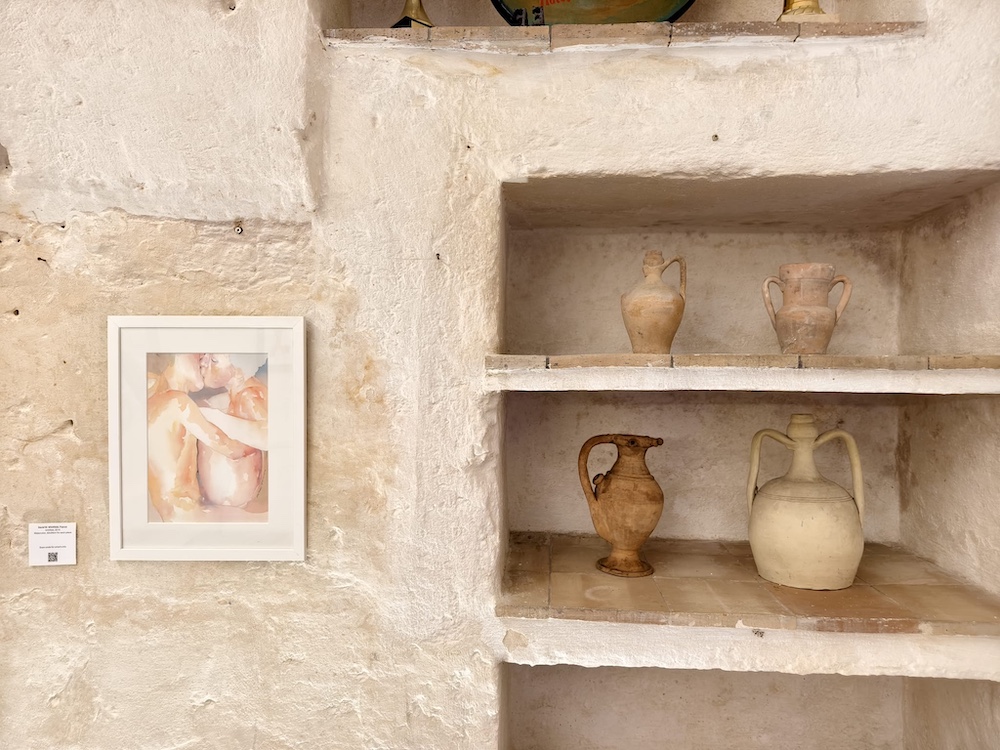
David W. Whitfield was born in the N. East of England where after leaving school attended Sunderland College of Art whereafter worked in land surveying to maintain financial independence and freedom of artistic expression. Exhibitions were few but supplemented by book illustrations for Heron Publishing Company. A move from surveying into nurse practice (State Registered, psychiatry) for many years gaining an insight into many different behaviour able traits, eventually he took early retirement and moved permanently to live in France where he still now resides painting full time and into a later venture of writing, publishing poetry, short stories and novels.
Many paintings have now been exhibited in most European countries, England, France, Austria, Switzerland, Germany and Italy including USA and India as well as works being published in books and periodicals.Art is a visual attempt to come to terms with the world, to make sense of it, an aesthetic philosophy. An exploration and a journey of materials, aesthetic principles and the subject matter of the work itself. A painting requires three components to bring it to life, the work itself, the artist and the viewer. The relationship between the artist and the painting is of an intense private emotional journey of exploration and commitment to the ongoing work. However once finished it lies waiting to be brought into the world to be presented to the viewer only then can it assume an identity which may fulfill its potential. The judgement rests upon those who interpret the image set before them, labelling of such work surely restrict any interrelation from an open unbiased point fo view and limit its full potential.
To entitle or burden it with a meaning shrivels the work, to devoid not only it, but that of the viewer, a chance of a more expanded interpretation beyond that of a title or single meaning.
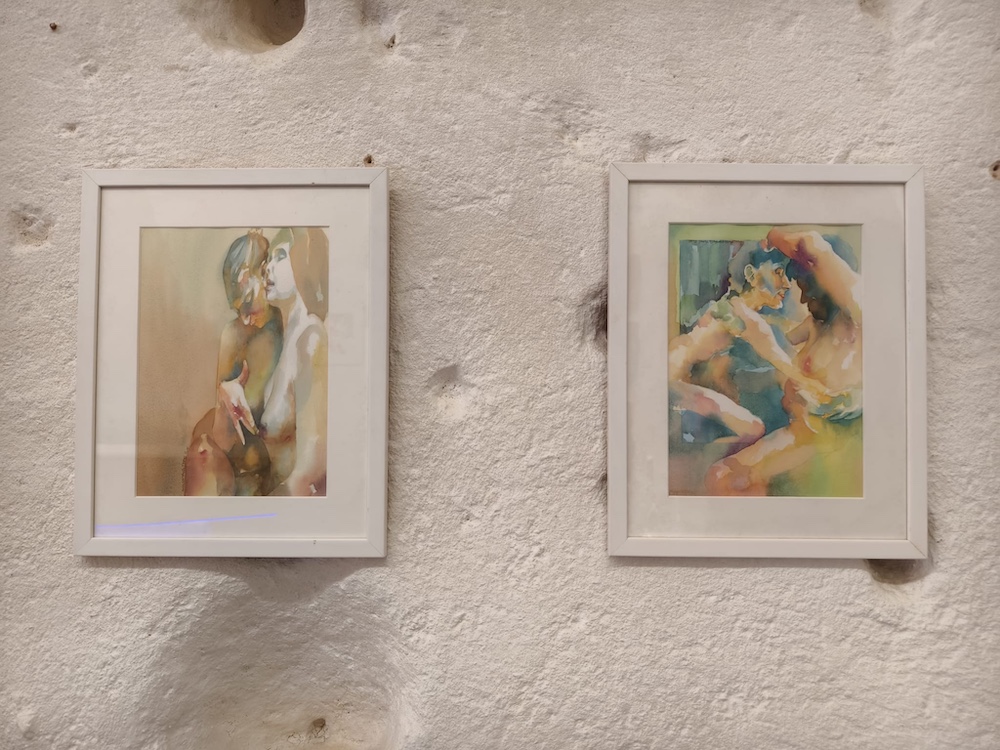
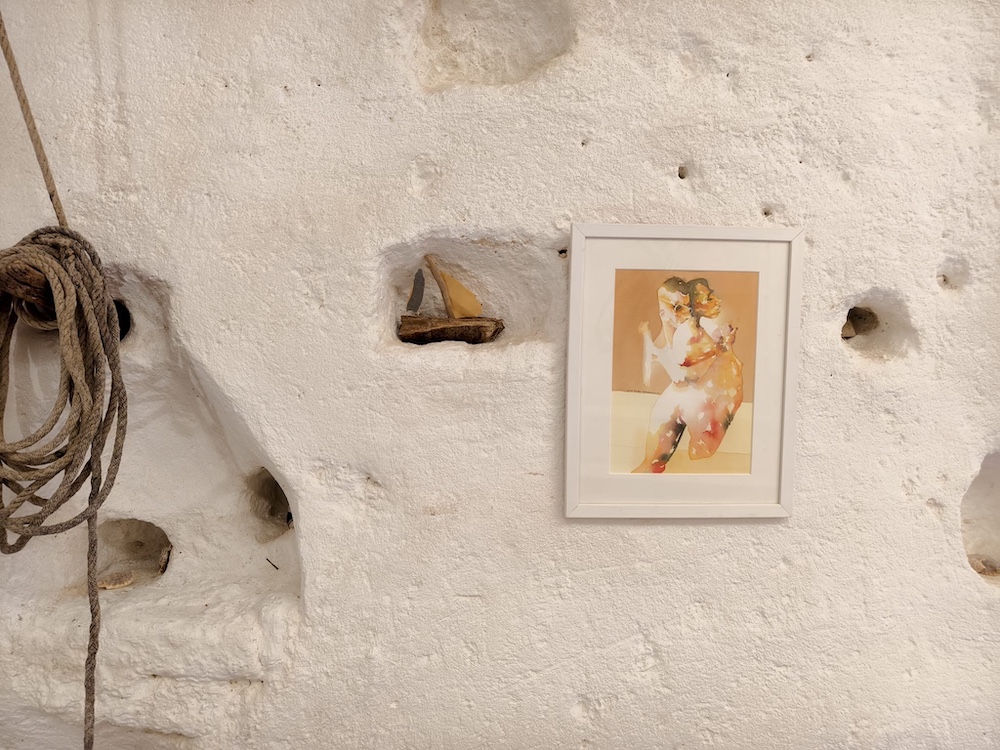
Carmela Loiacono talks with David W. Whitfield who takes part with his four watercolour paintings in the International Art Exhibition STORIES OF IDENTITY – From hidden places to daily life in Matera, at cultural hypogeum Lega Navale Italiana Matera-Magna Grecia.
Carmela Loiacono – Please introduce yourself and talk about the selected works you presented during the exhibition STORIES OF IDENTITY – From hidden places to daily life. David W. Whitfield – Born in the steel town of Consett in the N. E. England, attended Sunderland College of Art (as it was ten know) after leaving school, to gain independence worked first as a cartographer, land surveyor and finally as a qualified psychiatric nurse/manager. Lived mostly in Manchester with periods of work in the Middle East and various countries in Africa as a land surveyor. Finally took early retirement form nursing to live full time and remain in S. West France. Exhibited art work in Sunderland, Manchester and London, with some illustrations for the book publisher Heron, before the move to France, then to exhibit more wildly in Europe, particularly in Italy, including Germany, Spain, Austria, Switzerland, as well as India and USA.
Carmela Loiacono – How would you describe your creative process? What or who influenced or is influencing your work? David W. Whitfield – The works shown in STORIES OF IDENTITY are one of intimacy obviously of a sexual nature the most intense and personal interaction and through this engagement may be revealed a true identity sometimes a surprising one to the partner and oneself when passion strips inhibition and the subconscious takes control, in spite of oneself! Water colour in this instant is the ideal medium possessing an immediacy and freshness to do justice to subject matter itself which relies on immediate instinctive ness for it to succeed as in the act of painting. Given subject may help to commence a work but from then on in it is purely instinctive in the construction design and composition, which is especially true when faced with the horror oh a blank canvas… Where to begin and with what…! After the rift few marks and with a vague notion, then the journey of exploration begins, constant staring at the canvas until a hint of an idea, more marks and a slow progression toward some final solution, the process being g of partnership with the work, to force a path against the instinctive one presented by the canvas usually ends in disaster or a poor finalisation. No meaning no ideal, only marks on a canvas mostly recognisable but the interpretation may be as diverse as every individual as through their own experience of life.
Carmela Loiacono – What do you think about shared art on social media? Could it be an alternative way of communicating contemporary art? David W. Whitfield – Influences are as varied as your personal experience of life, initially from other artists, which may be a constant thread, but often from your own ideas of life, mostly philosophical, and through conversation with many people which enriches ideas and a viewpoint which eventually is channeled back into your work, either consciously or otherwise. Any means to show and share work is fine as long it is not used for propaganda means, the more people are enabled to view art outside of a gallery cannot be a bad thing.
Carmela Loiacono – What are your future goals and/or projects? David W. Whitfield – I have little regard for commercial or financial success to create something and be acknowledged for possessing some merit is enough, but I am my most severest critic and never satisfied. To have a work in a private or public institution would be nice, to have passed by and not be in vain, to be acknowledged would be enough.
Alessandro Carbonara is a pharmacist and a Fine-Art Photographer, born in Bari (Puglia, Italy) in 1983. Since 2024, he has decided to begin an artistic journey, driven by the desire to get involved, because nothing in life ever starts too late. Self-taught since 2007, he has studied in manuals and magazines, leaving room for an inner creative flow. He believes that passion is the wood that constantly feeds the fire of creativity. Perfectionism is his core belief.
He considers photography a tool for creating, documenting and transmitting what is essential, not trivial. He tries to give photography its due value as an expressive and narrative art form, winking at different methods. He prefers the photographic genres of portraiture, from classic to experimental, and expressive, evocative, unconventional landscape photography.
Carmela Loiacono talks with Alessandro Carbonara who participated in four International Art Exhibitions:
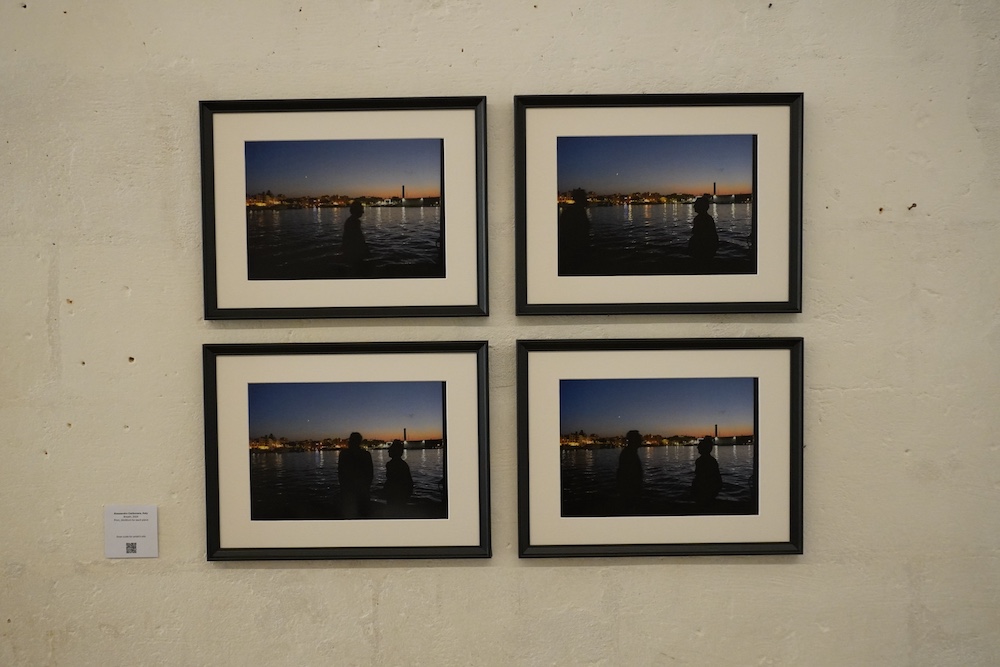
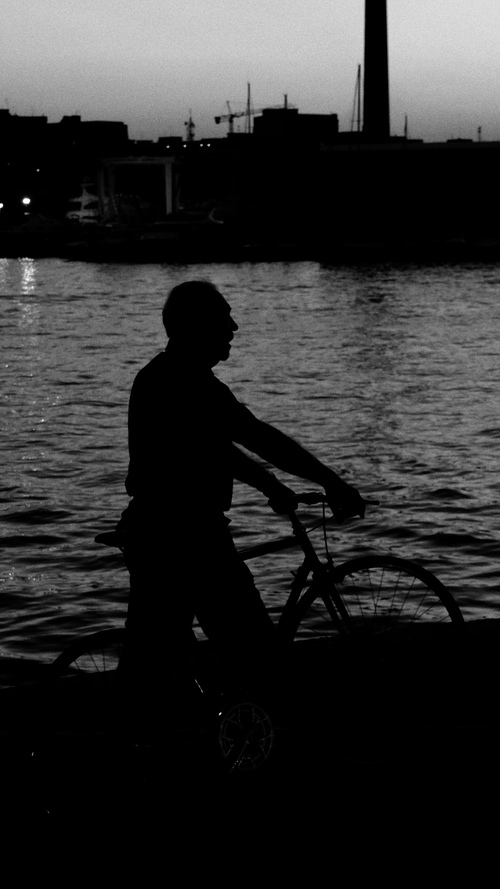
1) STORIES OF IDENTITY – From hidden places to daily life in Matera at cultural hypogeum Lega Navale Italiana Matera-Magna Grecia with his photos series “Breath”. Carmela Loiacono – Please introduce yourself and talk about the selected works you presented during the exhibition STORIES OF IDENTITY – From hidden places to daily life. Alessandro Carbonara – I’m a photographer for passion and pharmacist by profession. Firstly I was to thank you, Carmela Loiacono, the curator of the exhibition, for the possibility you gave me. Regarding the context of the photos, I wanted to play on the words of the exhibition title “Stories of Identity”. The story as a time span that wants to tell something, in which something happens. I decided to tile the four artworks: “Breath”, because the time span, in which the entire composition takes place, is that of a complete respiratory act. So about a few second when something happens. The identity can normally be represented by a series of elements, which are intended to define something or someone in a certain way. However, since photography is a form of art and in art it’s good to step outside the box. In this case on the concept of identity, I preferred that the identity of the individuals shown in the photos was hidden. In fact, the main exposure is the landscape, as a result, the figures are underexposed, so they aren’t recognizable, because in this case identity should not only be what the subject represented in the photo has to tell, but also it should be the identity from the point of view of the viewer. So consequently I like to imagine that anyone can identify with the couple in the photos, whom I firstly don’t know. I took these photos in Monopoli on the harbor and I like the idea that any of us can imagine being there, present at that moment. In this scene something happens. We can imagine that they could be a married couple just taking a walk. The peculiarity comes from the fact that they aren’t in all four photos together, but for example in the first photo where the woman walks alone and then she’s joined later by her husband and they stop and look in the same direction. So there is also something, a storytelling that I leave to free interpretation in the eyes of the viewer of photo’s sequence.
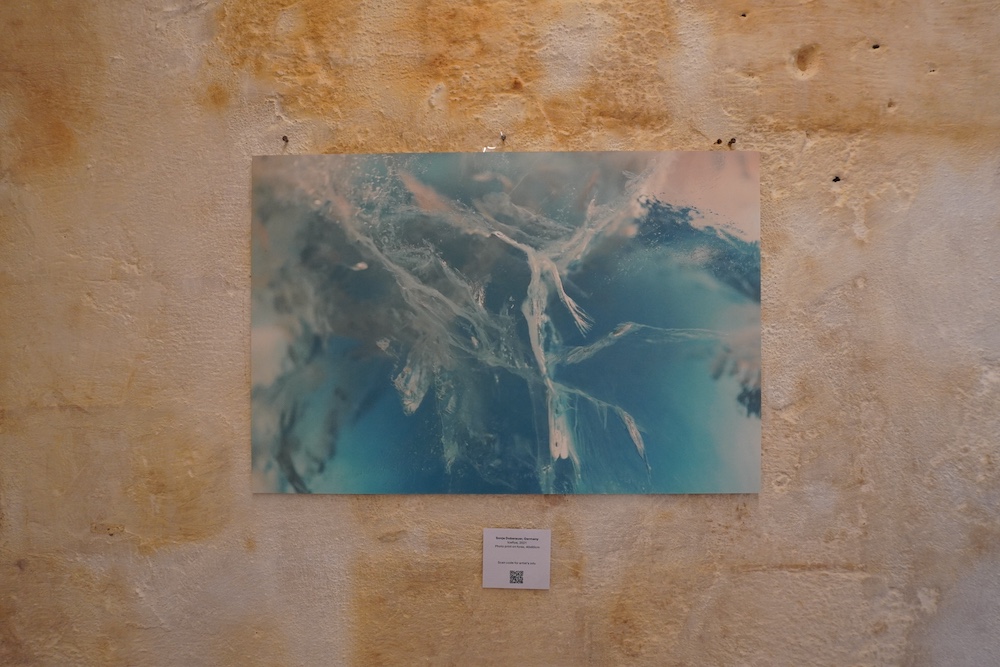
2) NATURAL FLOW – Exploring water’s essence in Matera at cultural hypogeum Lega Navale Italiana Matera-Magna Grecia with his diptych of photos: “Fluctuations I and II”. Carmela Loiacono – In the artworks “Flactuations I and II” the intense blue forms the backdrop to small droplets of water that imprison a hidden force. What is their deeper meaning? Alessandro Carbonara – The water droplets are of great importance throughout the composition, as are the background and the ethereal human figure. They are a source of life, survival, and completion, almost as if representing cells of the human body about to unite to develop tissues, which in turn form organs and which, together, define the human figure in its complete and finished form. We are witnessing an extraordinary stage in the formation of human life, normally invisible because it develops in the mother’s womb, but artistically visible in a small evolutionary moment.
3) CREACTION in Matera at cultural hypogeum Lega Navale Italiana Matera-Magna Grecia with his photos: “Mater Terra”, “Acrofobia” and “Fermarsi”. Carmela Loiacono –Could you kindly tell me about the works “Mater Terra,” “Acrofobia,” and “Fermarsi” exhibited during the CREACTION exhibition in Matera? What techniques you used for each photograph? Alessandro Carbonara – Through the photographic technique known as ICM (Intentional Camera Movement), I sought to recreate an idea of movement capable of conveying an expanded perception of time. By convention, we live without being aware of the infinitesimal instant, and in Fermarsi and Acrofobia I wanted to evoke physical and temporal sensations that we might perceive if we had the ability to slow down or momentarily stop time. The feeling of emptiness that arises at the beginning and end of a sudden movement is indeed perceived by our brain, but our sight cannot fully capture it. Mater Terra is a digital collage composed of two photographs representing the passage of time for both a human being and a landscape — the latter marked by centuries and far more enduring than the former. Although separated by time, the profiles of the woman and the caves seem to merge, as if aging together, in a visual union that gives us the impression that the head and the land are intertwining — creating a connection between mother (fertile earth) and earth (mother of nature).
4) STORIES OF IDENTITY – The 2nd Edition in Matera at cultural hypogeum Lega Navale Italiana Matera-Magna Grecia with his photos: “Inferno”, “Purgatorio” and “Paradiso”. Carmela Loiacono – The works “Inferno,” “Purgatorio,” and “Paradiso” make up the series presented during the exhibition STORIES OF IDENTITY – The 2nd Edition in Matera. What is the deeper meaning hidden within each photograph? Are there specific messages you wanted to convey? Alessandro Carbonara – In the three realms of the afterlife — viewed from a cultural rather than a religious perspective — we are called to spend our spiritual eternity. Whether it will take place before a higher God, through atonement of sins, or in awaiting a final judgment, we cannot know. Yet these three realms embody the essence of who each of us has been on earth. The black souls in Inferno bear an eternal weight. Undefined souls in shades of grey are in a state of purification. White souls are pure, wandering blissfully. None of these conditions can be seen as entirely separate — redemption and damnation may coexist in a dynamic process where the two fates transform into one another. Is there a message? Yes! Let us strive to be the best vessels for our souls; let us take care of our bodies while on earth, for they will not accompany us at the moment of passing.
Carmela Loiacono – How would you describe your creative process? What or who influenced or is influencing your work? Alessandro Carbonara – I always try to convey some emotion, I don’t want photography to simply be a photocopy of reality. There must be something more to what I do, and my photographic tool must become an extension of both my eye and my mind. The vision must create an expansion in the instant it is conceived. I would like to be the drop that creates circles in the ocean, which although losing intensity as they expand, continue to influence everything they encounter on their journey. I do not have a single source of inspiration. I want to be inspired and contaminated by everything around me. I don’t want to have any limits.
Carmela Loiacono – What do you think about shared art on social media? Could it be an alternative way of communicating contemporary art? Alessandro Carbonara – We are children of our past, but we live projected into the future. Social media are our calling card and should therefore be used in the best possible way. Yes. Social reaches further than our voice.
Carmela Loiacono – What are your future goals and/or projects? Alessandro Carbonara – I would like to try to make a recognisable mark in my photography by continuing to study, reinterpret or create unconventional genres. During this quest for maturity, I will continue to exhibit my photo-works by collecting feedback from my observers. To keep improving, seeking new ideas, new inspirations, new ways to reflect — to let myself be guided by curiosity in all its forms. To live while trying not to waste my time.
Breath I, seriesBreath II, seriesBreath III, seriesBreath IV, seriesFermarsiMater TerraAcrofobiaFLUCTUATIONS #1FLUCTUATIONS #2
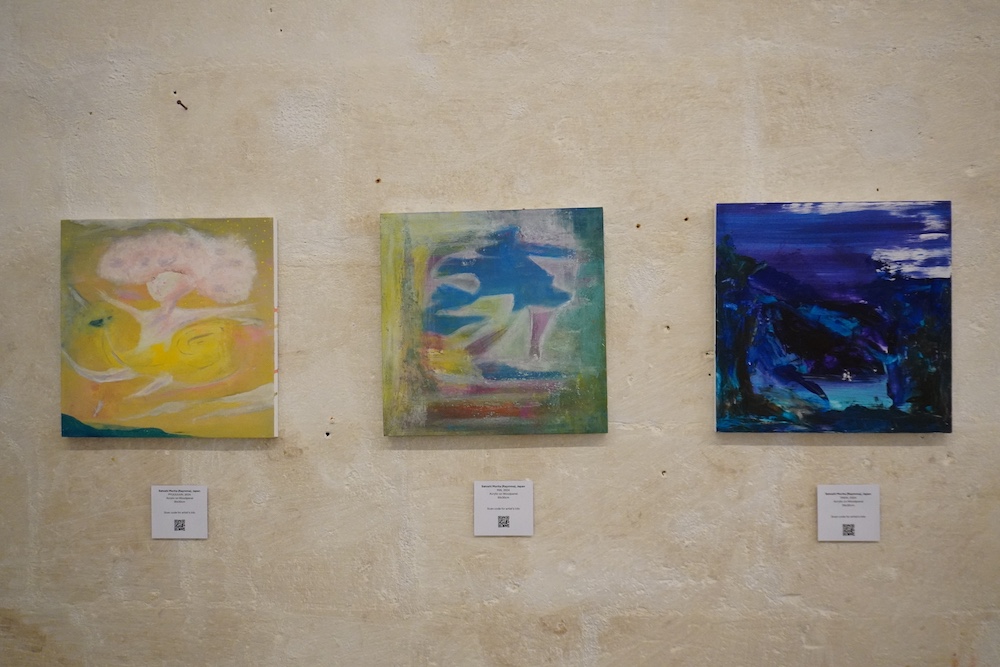
Satoshi Morita was born in Fukuoka, Japan, and raised in Saga, Japan. Satoshi is a traveling ‘Amazinist’ who seeks and continues to capture and seek “Beauty” from varying perspectives. All of Satoshi’s artwork transcends all genres. Morita continues to play with photography, painting, along with playing improvised piano through his unique, original, and self-created way.
Artist Statement “I aim to make the invisible visible. Projecting new stories. Sharing new lights, while exploring unknown light and darkness and expressing a story about how light and darkness are reconciled. My painting process and technique encompasses a number of mixed media along with approaching the work from varying angles. I paint, rub, scrape, and do various things whatever I think of. My body just follows along with my energy and inspiration. I feel this natural movement of my body is my technique and that makes his art unique. In regards to inspiration, my voice sometimes ask myself , “Is the source heaven, hell, or even the universe? I am playing with the image whichever source it comes from.”
Carmela Loiacono talks with Satoshi Morita who participated in two International Art Exhibitions:
1) STORIES OF IDENTITY – From hidden places to daily life in Matera, at cultural hypogeum Lega Navale Italiana Matera-Magna Grecia with his artworks: “PYUUUUUN”, “MAI” and “YAKAI”.
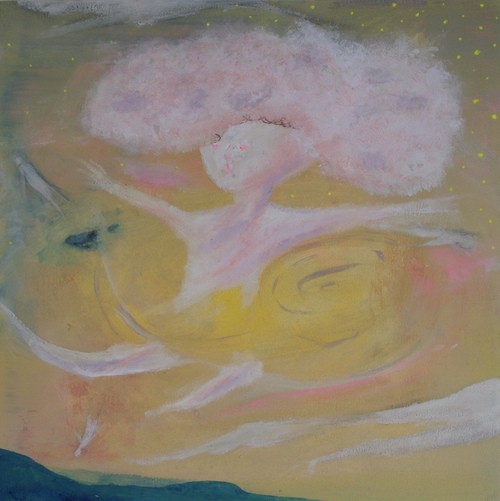
Carmela Loiacono – Please introduce yourself and talk about the selected works you presented during the exhibition STORIES OF IDENTITY – From hidden places to daily life. Satoshi Morita – My name is Satoshi Morita. Iʼm from Japan. Well, I define myself as “The questioning artist”. About all of these artworks: “PYUUUUUN”, “MAI” and “YAKAI” – since I create them with no intention at all, I myself have no idea what will come out while I am creating them. Sometimes I create in the dark. The reason why I ask the question is that when I look at my own artwork, I look back at myself, or rather, it is like a mirror, so I have to see what the audience sees from my artwork. And this is how my artwork is completed – by gathering each viewpoint of all the audience, my artworks will grow into a multi-layered and unique form. About this collaboration, first of all, I am very happy to have come to this city, Matera. I had great time to walk around a lot and feel the activities of various ancient people. The theme of this exhibition – “STORIES OF IDENTITY” reminds me of a lot of stories with my very own roots and myself, so I am very grateful for this wonderful opportunity.
2) CREACTION in Matera, at cultural hypogeum Lega Navale Italiana Matera-Magna Grecia with his artworks: “Sei”, “Dou” and “Sin”.
Carmela Loiacono – How would you describe your creative process? What or who influenced or is influencing your work? Satoshi Morita – My creative process begins with starting the day in a good mood! Taste my favorite honey, drink a leisurely cup of coffee, or take a different driving route to my studio…depending on my mood that day. In my studio, I rock in my favourite rocking chair while looking at the scenery. Then, I suddenly start painting. Before start creating, I haven’t decided on a theme, a painting medium, or anything else. I just let my body do the colouring without thinking about it. Sometimes an unexpected process comes in. And when my hand spontaneously stops, the artwork is complete. Then – as the first audience – I look and feel the artwork from various perspectives. I find something from the painting and the orientation of the painting is determined. At this point I have followed this creative process, however I don’t know how it will change in the future. That is also something to look forward to! Influences. – The beauty of nature, living and playing in the countryside as a child, traveling. People who have influenced me. – My children, Nanako Ijichi, Leonardo da Vinci, Hokusai Katsushika, Picasso, Gaudi, Matisse, and my friends.
Carmela Loiacono – What do you think about shared art on social media? Could it be an alternative way of communicating contemporary art? Satoshi Morita – I am very grateful to social media because they made my artwork known and through those, many people in art approached me. Then various exhibitions were realized. However, when I look at social media from multiple angles – I find some issues. There is the adjustment of the administrator’s algorithm. And of course, artists who are skilled in showcasing in social media take more advantage than old-fashioned person on the internet. In light of these and other things, it is questionable whether social media genuinely works in art, in my opinion. I also believe that there is no experience beyond facing the artwork in real life.Therefore, I believe that social media should be used well as a tool. As for its use in art, it should be used as a communication tool to recognize artworks and the artists themselves, and to obtain comprehensive information. If an artist creates only for the purpose of getting attention on social media, that person may lose sight of the essence of their own art. I would like to continue to focus on the essence of my activities and try to have a good relationship with social media.
Carmela Loiacono – What are your future goals and/or projects? Satoshi Morita – My goal for the near future is to hold a solo exhibition in Tokyo and Osaka, Japan in April/May 2025, so that many people can actually view and interact with my artwork. As a new project, I am also considering creating artworks to order. In this project, I will create one-and-only artwork for each client, according to their request theme in a very short sentence, for the inspiration of the piece. Plus, also planning to start renting my artwork. I will propose this as an easy first step for people to feel familiar with art. If someone would like to display a painting but cannot afford to buy one, this will be a casual, good option. One more fun plan – organizing an art party to enjoy together! I am thinking of holding a salon for a small group of people. It will be like a regular small party where we can enjoy good food /drinks, painting together, talking about artworks and travel episodes through my art exploring.
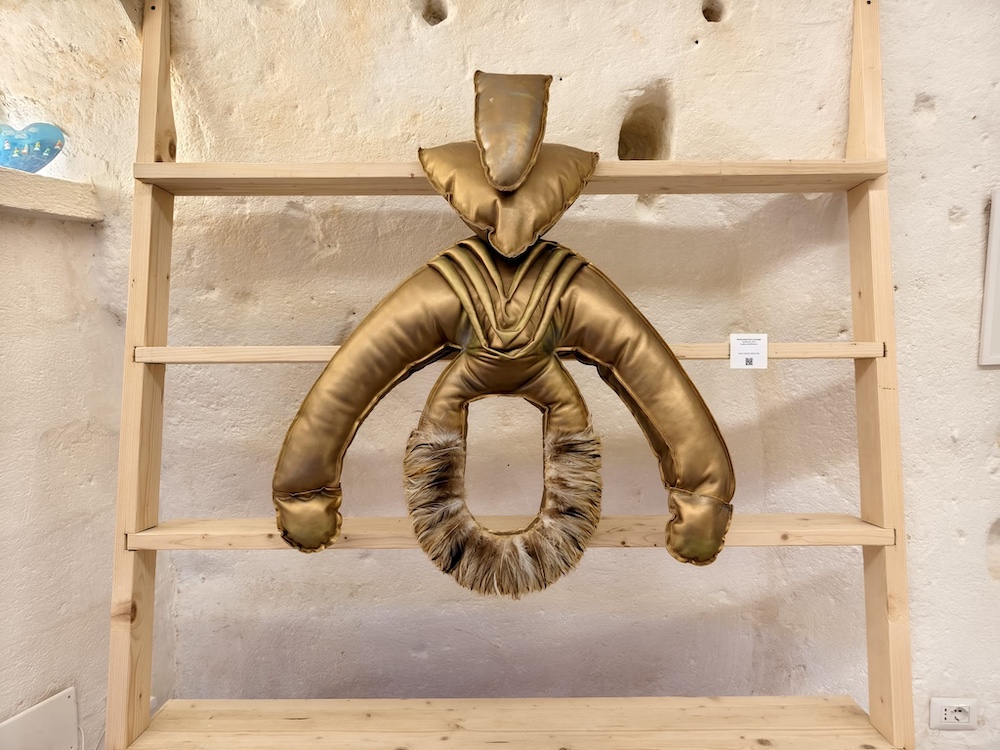
Marita Setas Ferro, born in 1967 in Beira, Mozambique, is a Portuguese cultural manager specializing in art, fashion, sustainability, and crafts. She integrates these fields in innovative projects as a fashion designer, sculptor, culture manager, and creative director. Ferro focuses on Fine Craft and heritage, merging crafts with design and art to create impactful projects.
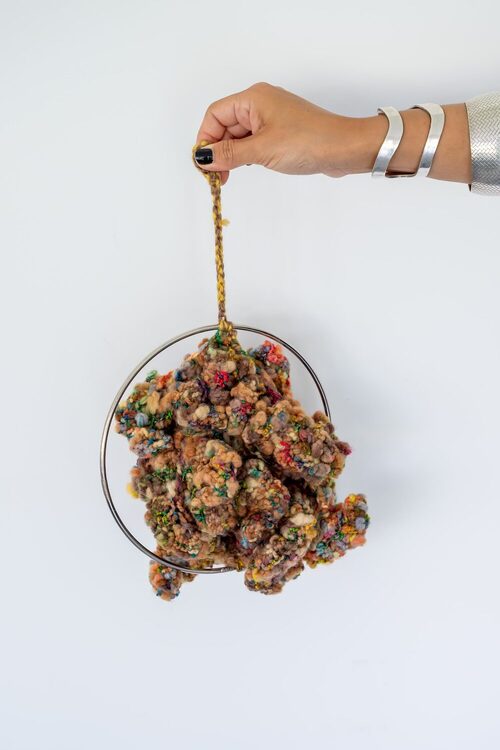
Ferro is the Founder and Board President of Between Parallels – Ass. for Design and Sustainable Development, and a board member of Portugal à Mão. Since 2012, she has held an artisan professional card and craft production unit, training in craft, design, textiles, and fashion. Her notable works include the “Soft Works” series and “Wearable Sculptures,” exhibited in Portugal and at World Art Dubai, selected for COLLECT OPEN 2024 London), Future Icons Selects/London Craft Week 2024, 74th A-ONE exhibition, Silvermine Arts Center, Canaan, Connecticut, USA and several on-line exhibitions.
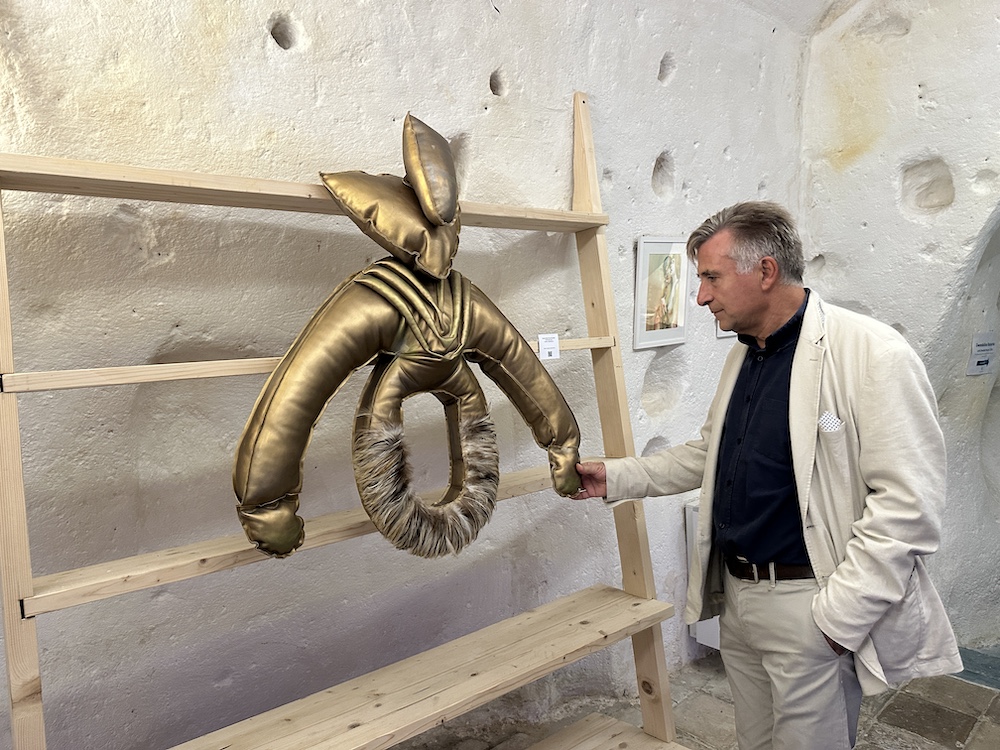
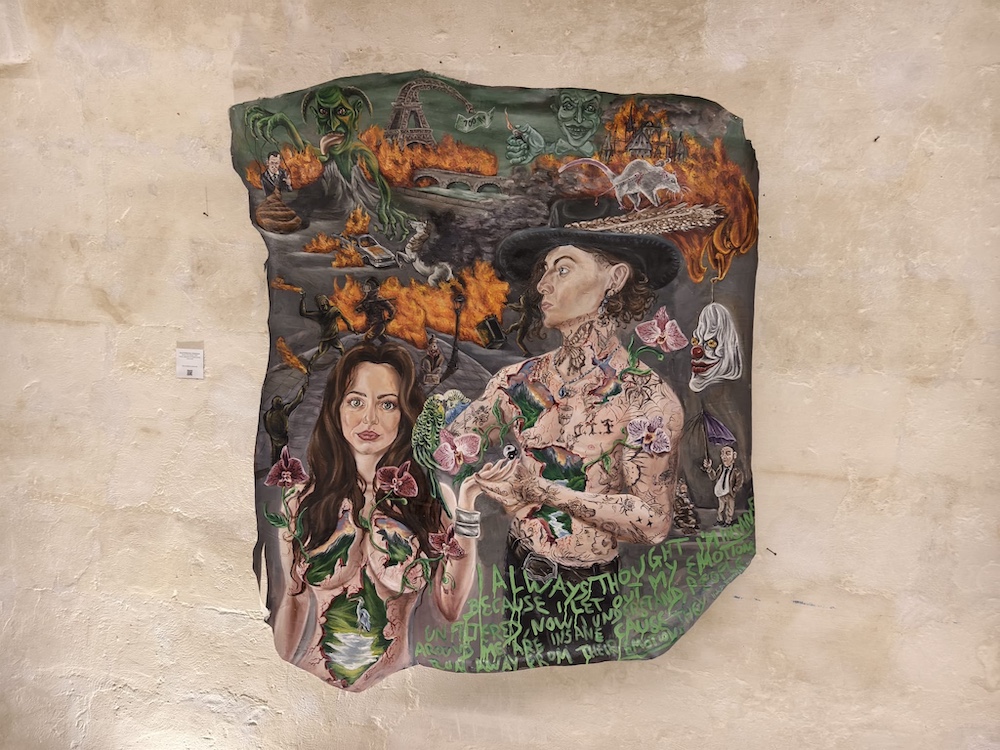
Carmela Loiacono talks with Marita Setas Ferro who takes part with her leather sculpture “Symbol #2” in the International Art Exhibition STORIES OF IDENTITY – From hidden places to daily life in Matera, at cultural hypogeum Lega Navale Italiana Matera-Magna Grecia.
Carmela Loiacono – Please introduce yourself and talk about the selected work you presented during the exhibition STORIES OF IDENTITY – From hidden places to daily life. Marita Setas Ferro – I’m a Portuguese artist that works within several areas: art, fashion, sustainability and crafts and I like to combine them in new and impactful approaches. I’ve been exhibiting and also developing and curating exhibitions dedicated to Fine Craft and Sustainable Design. Focused on the Fine Craft and heritage with a desire to combine crafts with design and art, I always tried to developed unique and distinct art pieces and artistic projects that combine different aspects in which the artistic perspective, the connection to crafts and the need to positivity impactfully people’s life has always been a constant.
Carmela Loiacono – How would you describe your creative process? What or who influenced or is influencing your work? Marita Setas Ferro – My creative process is deeply rooted in my visual perception, where small details, lighting, images, and reflections capture my attention and inspire me to stay curious. This heightened awareness leads me to seek out more information, adding layers to my creative vision. Exhibitions and museums are also a constant wellspring of inspiration, fueling my work with fresh ideas and perspectives. When beginning a project, I start with a broad theme and gather images, ideas, and relevant information. Once I feel ready, I select the materials and techniques that best fit the concept, moving into sketches or collages. Often, I can clearly visualize the final piece in my mind, making the process of bringing it to life smoother and more intentional. Each step is a journey, blending intuition with structure, transforming ideas into tangible art.∑
Carmela Loiacono – What do you think about shared art on social media? Could it be an alternative way of communicating contemporary art? Marita Setas Ferro – Sharing artwork on social media is incredibly exciting because it allows us to showcase our creations to a global audience instantly and effortlessly. The reach and speed of digital platforms mean that our work can connect with more people, including curators, galleries, and fellow artists, fostering a network of creativity and collaboration. Social media becomes a dynamic space for inspiration, feedback, and exposure—turning what was once a local showcase into a worldwide art community.
Carmela Loiacono – What are your future goals and/or projects? Marita Setas Ferro – My future goals and projects naturally evolve from my creative journey. I’m actively pursuing opportunities to showcase my work at various exhibitions and biennials in textile and fiber art, which will allow me to present pieces that weave together textiles, leather, and other materials in unique, unexpected ways. I’m constantly exploring new approaches and materials that better express my artistic vision, pushing boundaries and discovering fresh avenues for creativity. Each project is a chance to deepen my practice and reach new audiences, connecting with the art world through an ever-evolving tapestry of techniques and textures.
SONY DSCFading Luminescent CoralsFading Luminiscent Corals (detail, Henry Kapaun)Luminiscent Corals (Henry Kapaun)Luminiscent Corals (detail, HenryKapaun)Blue AnemonesAnemones In Volcanic RockAnemones In Volcanic Rock (detail)White AnemonesStarfish #1Starfish #2Scarifications (detail)Symbol #1 (detail)
Jacqueline Schubert started painting in 2015. Many years she had been living and working abroad. Now she lives in Germany, near Düsseldorf as a freelance artist. Style and technique she developed decisively through attending the “masterclass for painting”. Most of the time she works independently as an individual artist. Since 2022 she also has been working together in an artists group “qu*ART*et” with a total of 4 artists.
She participated in exhibitions in Germany and Italy (Düsseldorf, Krefeld, Berlin, Milano, Venice, Rome and Matera).
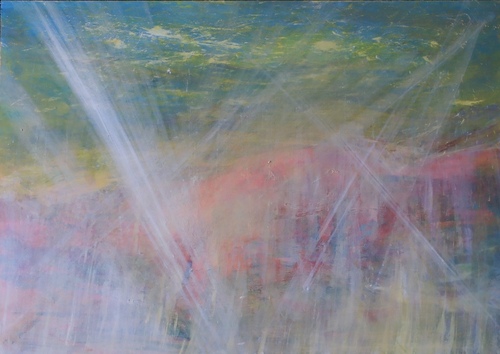
Most of her paintings are experimental, permanently incorporating new media and materials in the creative process. The topics revolve around things in everyday life, unusual perspectives and motif fragments. The style of painting is modern, expressionistic and mostly colourful. She takes her inspiration from nature, personal experiences or current events.
Artist statement “The emergence and disappearance of things, snapshots of creation – these are my themes in painting. I try to translate natural elements into modern abstract painting in which also romantic classic elements can be found. Questions such as – what came before the form, what do we consider beautiful or repulsive or what remains at the end – play a major role. The opposites of life can always be found in my paintings, beautiful colors in chaotic shapes, clear elements in fragments of colors and unconcrete shapes.”
Carmela Loiacono talks with Jacqueline Schubert who participated during three International Art Exhibitions:
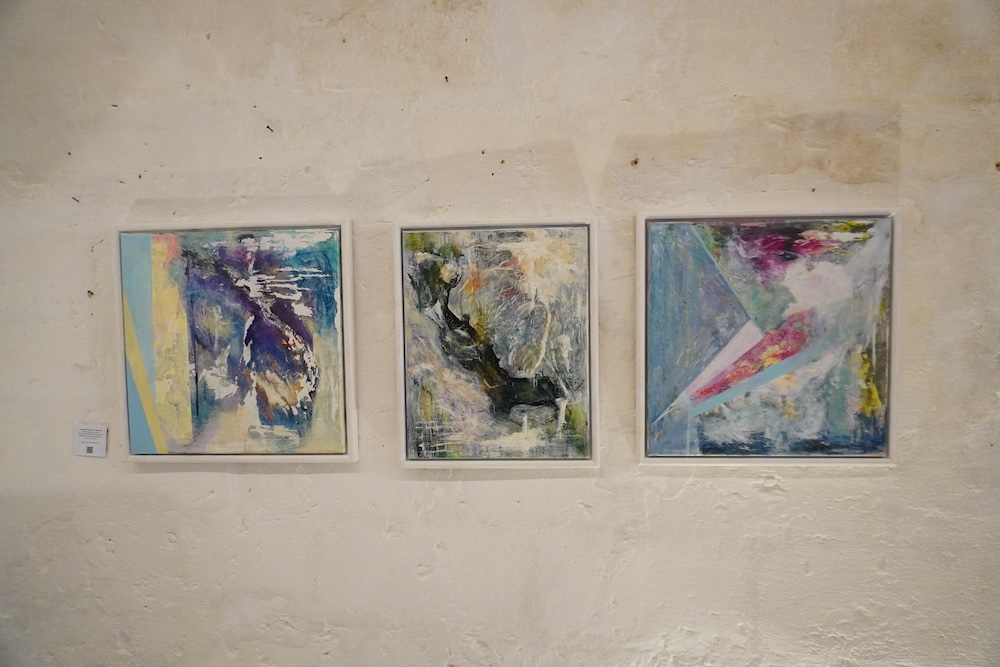
1) STORIES OF IDENTITY – From hidden places to daily life in Matera, at cultural hypogeum Lega Navale Italiana Matera-Magna Grecia with her Triptych “Structures”, composed by Resolution, Natural Flow and Structure.
Carmela Loiacono – Please introduce yourself and talk about the selected works you presented during the exhibition STORIES OF IDENTITY – From hidden places to daily life. Jacqueline Schubert – I started painting in 2015. Many years I had been living and working abroad. Now I live in Germany, near Düsseldorf as a freelance artist. Style and technique I developed decisively through attending the “masterclass for painting”. Most of the time I work independently as an individual artist. Since 2022 I also have been working together in an artist’s group “qu*ART*et” with a total of 4 artists. Most of my paintings are experimental, permanently incorporating new media and materials in the creative process. The topics revolve around things in everyday life, unusual perspectives and motif fragments. The style of painting is modern, expressionistic and mostly colourful. I take my inspiration from nature, personal experiences or current events. I wanted to paint a picture that shows organic growth, life – both perfect and imperfect. The middle picture was created first (Natural Flow). The natural structure already has a shape. And the question was, what came before and what comes after the first form? Resolution (before) and Structure (after)show the process of creation and becoming.
2) NATURAL FLOW – Exploring water’s essence in Matera at cultural hypogeum Lega Navale Italiana Matera-Magna Grecia with her series “Flow of Water” and the artwork “Waterfowl”.
Carmela Loiacono – You realized the series “Flow of Water” for the exhibition NATURAL FLOW – Exploring water’s essence and the use of colors is extremely expressive and vivid. What was the spark that went off inside you when you were creating these works? Jacqueline Schubert – FLOW OF WATER: For this series, I was thinking primarily about how water shapes the landscape in man-made landscapes, such as rivers or streams. We encounter water in open spaces, meaning it flows freely in its natural flow. But it also flows straightened, tamed, and forced into a certain shape. I wanted to show the possibilities in which we encounter water in a modern, urbanized world with seemingly few moments of beauty and naturalness. The landscape is represented by tones of beige, apricot and modified red/pink. The contrast is a beautiful blue for the tamed water. Grey for industrial interventions and modern shapes.
Carmela Loiacono – I also selected your artwork “Watersoul”, because I felt the power of the water inside it. What is the deep meaning behind it? Jacqueline Schubert – Water is like a soul, it bubbles, flows, it can be still, calm or angry and wild. Water means life, it is a source in all its facets, it quenches thirst. It can be dangerously beautiful, attracts us, has depth and is unfathomable. I wanted to show the soul of water with its contrasting qualities, loving and wild, beautiful and frightening.
3) STORIES OF IDENTITY – The 2nd Edition in Matera at cultural hypogeum Lega Navale Italiana Matera-Magna Grecia with her series “Behind it”.
Carmela Loiacono – Could you please talk about your series: “Behind It” presented during the exhibition STORIES OF IDENTITY – The 2nd Edition in Matera? What are the deep meanings of them? Jacqueline Schubert – The series “Behind it” depict landscapes or sometimes just aspects of a landscape and consist of painterly elements, collage-like fragments and digital additions. Landscapes are created by depth, shapes and horizons. This aspect of painting now takes over in new digital collages with certain fragments of my pictures or photos. Random shapes and perhaps unwanted sections combine to form a new image. From a purely technical point of view, they are a further development or an alternative to my paintings. I wanted to transport a new perspective into the formal language. “Behind it” is an observation of how forms float in the space, how they approach or move away. Each individual image is a composition of different times and experiences, expressed in the materials used. They have their own personality and interact with all visible elements, like each story of identity. They show newly composed contexts, transporting the viewer into a fantastic, spherical space.
Carmela Loiacono – How would you describe your creative process? What or who influenced or is influencing your work? Jacqueline Schubert – I am particularly interested in moments of being, things that touch us. How can one approach these aspects in a modern world in which perfect technique has trumped classical, even modern, painting? There are of course the painterly elements, color, surfaces, etc. The fundamental difference between computer- or photo-based works of art is the individual spirit of the artist, which is reflected in the image. I think it’s important that the viewer can sense my feelings and still have room for his/her own imagination. I primarily experience influences in my artistic work from other artists who inspire me. Events in the world, discussions with people, but also collaboration in the artist group are wonderful moments that are reflected in my work.
Carmela Loiacono – What do you want your art to convey to the people who see your art? Jacqueline Schubert – I always want the viewer of my pictures to feel something. This can happen through the colors or the subject they see, it doesn’t matter. But the pictures should touch the heart. The meaning of abstract images can be different for everyone. That’s why I find colors, space, and depth particularly important. I try to convey my emotions and thoughts through them and perhaps I will succeed in inspiring some viewers.
Carmela Loiacono – What do you think about shared art on social media? Could it be an alternative way of communicating contemporary art? Jacqueline Schubert – Social media has many advantages. You are open to the world and can see what others are doing with just a few clicks. You can choose depending on what you are interested in, etc. And of course you can represent yourself, show your own art, open yourself up to the world, so to speak. On the other hand, I think it is important to draw boundaries and remain responsible, moral and ethical. Social media is a revolution for the art world. Although I believe that art has greater meaning in the real world. You always want to see a work of art up close; it lives from traces of work, imperfection, the colors, the material. These things are difficult to convey virtually.
Carmela Loiacono – What are your future goals and/or projects? Jacqueline Schubert – I would like to develop myself further as an artist concerning expression, and motifs or the changeability of style. I want to stay innovative. My projects with the artist group quARTet are therefore very interesting. We paint together, either four of us or two of us on one picture. This forces you to rethink your own ideas and to actively and consciously allow other influences. Of course, I would also like to collaborate with national and international galleries and art curators, such as Dr. Carmela Loiacono. It is important to have trust in the collaboration and that it will be successful for both sides.
Triptych Structure, Resolution (3)Triptych Structure, Natural Flow (1)Triptych Structure, Structure (2)Flow of Water (1)Flow of Water (2)Flow of Water (3)Flow of Water (4)Flow of Water (5)Flow of Water (6)Four little treasures 3Industry 2Lamb and EweLittle Landscape (3)New Landscape 1Transparencies 1Watersoul 1
Mariana Brancowas born in Santa Catarina, Brazil. She is a Vedic Astrologer, Artist, Ayurveda Therapist and Author. She has used different supports to talk about the topic – ARTE \ ASTRO SPIRITUALITY.
At this moment, she uses the materiality to highlight this energetic, corporeal, visceral material in its vigor. The support highlights the atomic and transcendent poetic game. In this way, the feminine principle of the Movement is observed to join the masculine principle of Stability. And it is from this Force of Creation that everything arises. We are formed by Five Organs of Perception, Five Organs of Action and the Five Elements, as well as the Cosmos. And her research goes through the interrelation of TIME and KARMA.
She graduated in Social Communication at UFPR – Curitiba, Brazil, post-Graduated in History of Art, at EMBAP – Curitiba, Brazil and MBA with emphasis in Marketing, FGV – Curitiba, Brazil. She is also spiritist Integrated Colleges – Graduation in Yoga therapy and several other courses on Vedic Culture.
YOGA. AYURVEDA. VEDIC ASTROLOGY
FAE – Economy and Investments at Curitiba, Brazil.
Carmela Loiacono talks with Mariana Branco who participated in two International Art Exhibitions:
1) STORIES OF IDENTITY – From hidden places to daily life in Matera, at cultural hypogeum Lega Navale Italiana Matera-Magna Grecia her three works “Saturn”, “Venus” and “Mars”.
Carmela Loiacono – Please introduce yourself and talk about the selected works you presented during the exhibition STORIES OF IDENTITY – From hidden places to daily life. Mariana Branco – My name is Mariana Branco. I’m a Vedic Astrologer, Artist, Communicator, Ayurveda Therapist and Book Author. My selected works for STORIES OF IDENTITY talk about the energy that permeates our lives. Saturn, the teacher of Karma. Mars, the God of War and Action. Venus, the Goddess of Love. They are intense energies, both outside of us, like inside ourselves. They are energies related to creation as well as learning in this life and incarnation.
2) CREACTION in Matera, at cultural hypogeum Lega Navale Italiana Matera-Magna Grecia her three works “Saturn”, “Venus” and “Mars”.
Carmela Loiacono – How would you describe your creative process? What or who influenced or is influencing your work? Mariana Branco – My creative work is quite intense. I love studying and understanding the meaning of life. My great spiritual master and inspiration is ROTHKO. The colors and sensitivity make me move in this direction that I believe so much. Our most intimate power generates our transformation.
Carmela Loiacono – What do you think about shared art on social media? Could it be an alternative way of communicating contemporary art? Mariana Branco – In today’s world, this mode of communication has become essential, and its importance is only continuing to grow. With the rapid expansion of digital platforms and technological advancements, we are now able to see art expressed in a diverse range of media and formats. This evolution in communication allows us to experience creativity in new and dynamic ways, broadening the scope of artistic expression beyond traditional boundaries. Through digital platforms, we can interact with art not only visually but also through interactive, immersive, and multimedia experiences. As this transformation progresses, it opens up endless possibilities for artists and audiences alike to connect, share, and inspire across cultures and distances. This modern landscape makes art more accessible, more inclusive, and infinitely more engaging.
Carmela Loiacono – What are your future goals and/or projects? Mariana Branco – I am currently working on new, more natural supports that align closely with the values I hold dear in life. These supports are meant to embody a sense of harmony with nature and reflect the principles that guide me personally and creatively. In this work, I believe it’s urgent that we embrace our “BioCreator” side—the part of us that is deeply connected to nature, sustainability, and conscious creation. By tapping into this aspect of ourselves, we can begin to transform the way we see, live, and think about our world. Through intentional, eco-integrated practices, we can foster a shift in perspective that not only redefines our relationship with the environment but also inspires others to reconsider their own ways of being. In this process, we have the power to cultivate a more mindful, holistic approach to creation that is both innovative and rooted in the natural rhythms of life.
SaturnVenusMarsGraha Series, Shukla DvadashiGraha Series, Rahu KetuEMOTIONS EMOTIONS IIGNANENDRYIASGNANENDRYIAS IIShaktiShivaYugas IYugas II.
Gestisci Consenso
Per fornire le migliori esperienze, utilizziamo tecnologie come i cookie per memorizzare e/o accedere alle informazioni del dispositivo. Il consenso a queste tecnologie ci permetterà di elaborare dati come il comportamento di navigazione o ID unici su questo sito. Non acconsentire o ritirare il consenso può influire negativamente su alcune caratteristiche e funzioni.
Funzionale
Sempre attivo
L'archiviazione tecnica o l'accesso sono strettamente necessari al fine legittimo di consentire l'uso di un servizio specifico esplicitamente richiesto dall'abbonato o dall'utente, o al solo scopo di effettuare la trasmissione di una comunicazione su una rete di comunicazione elettronica.
Preferenze
L'archiviazione tecnica o l'accesso sono necessari per lo scopo legittimo di memorizzare le preferenze che non sono richieste dall'abbonato o dall'utente.
Statistiche
L'archiviazione tecnica o l'accesso che viene utilizzato esclusivamente per scopi statistici.L'archiviazione tecnica o l'accesso che viene utilizzato esclusivamente per scopi statistici anonimi. Senza un mandato di comparizione, una conformità volontaria da parte del vostro Fornitore di Servizi Internet, o ulteriori registrazioni da parte di terzi, le informazioni memorizzate o recuperate per questo scopo da sole non possono di solito essere utilizzate per l'identificazione.
Marketing
L'archiviazione tecnica o l'accesso sono necessari per creare profili di utenti per inviare pubblicità, o per tracciare l'utente su un sito web o su diversi siti web per scopi di marketing simili.