Categoria: Artists

  • Jiaying Qian 

    Artist from China 

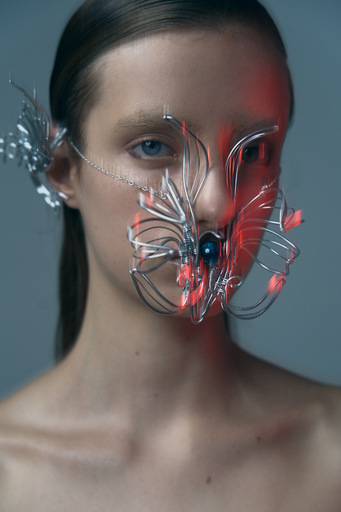
    Jiaying Qian is a designer and maker.
    Jiaying’s work draws on traditional and contemporary textile craft methods and techniques, exploring nature and humanity through slow design and handwork.

    Jiaying began her design journey at the University of New South Wales Art & Design, where she completed a Bachelor design. Jiaying considers her work to be a meditative exercise, using textiles as a medium for her creations, and focuses on the use of natural fibers and the research of sustainable materials. Her practice often to explore the possibilities of biomaterials/environmentally friendly materials for textile development. Create visual, tactile and emotional experiences for the audience.

    more. www.jiayingqian.com

    INTERVIEW with Jiaying Qian
    Carmela Loiacono talks with Jiaying Qian who takes part in the International Art Exhibition NATURAL FLOW – Exploring water’s essence in Matera, at cultural hypogeum Lega Navale Italiana Matera-Magna Grecia.

    Carmela Loiacono – Please introduce yourself and talk about the selected video artwork: “Fading Ocean”  you presented during the exhibition NATURAL FLOW – Exploring water’s essence. 
    Jiaying Qian – My name is Jiaying Qian, originally from China, and I’m currently a practice-based PhD candidate at the University of New South Wales Art & Design in Australia. I’m a designer, researcher, and textile artist, focusing on the intersection of material, technology, and smart textile design.
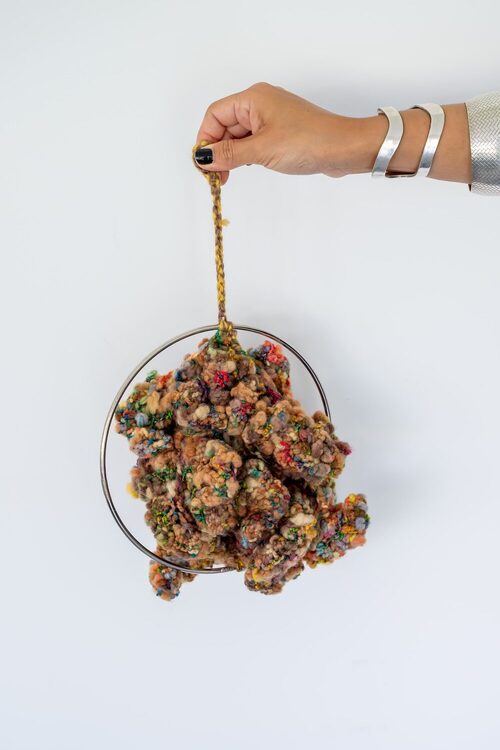
    The artwork “Fading Ocean” was created as a textile installation to raise environmental awareness, particularly about the bleaching of coral reefs due to rising sea temperatures, which is a serious issue affecting Australia’s Great Barrier Reef. I handcrafted each piece of coral using 100% wool yarn, which I spun myself from raw fleece sourced from Australian farms. Through the integration of thermochromic pigments and shape memory alloys, the corals respond to heat—gradually turning white and curling up, as if struggling for survival. It was important for me to create a tactile, responsive medium that evokes an emotional connection to environmental degradation.

    Carmela Loiacono – How would you describe your creative process? What or who influenced or is influencing your work?
    Jiaying Qian – My creative process is rooted in a deep curiosity about non-human life forms and how we might collaborate with them in design. I often start by researching biological systems, then translate that knowledge into experimental material exploration—whether that’s through smart textiles, interactive installations, or speculative devices.
    One of my early inspirations was the Crochet Coral Reef project by Christine and Margaret Wertheim. Their work beautifully connects handcraft, mathematics, and environmental activism. It was eye-opening to see how something as traditional as crochet could be reimagined as a powerful language for scientific and ecological storytelling. That project inspired me to explore textile as a medium not just for expression, but for critical engagement with urgent issues like climate change and species loss.
    I’m also influenced by scholars like Neri Oxman, and Katherine Hayles, whose work challenges anthropocentric perspectives and opens up new ways of thinking about ecology, material agency, and co-creation. I find myself constantly drawn to the intersection of traditional craft and emerging technologies as a space for dialogue between the human and non-human world.

    Carmela Loiacono – What do you think about shared art on social media? Could it be an alternative way of communicating contemporary art?
    Jiaying Qian – Absolutely. Social media creates a space for art to reach beyond the walls of galleries and museums. It allows for more experimental, personal, and even vulnerable forms of expression. For textile and interactive works, where touch and transformation are key elements, videos and process documentation shared online can make the artwork accessible in new ways.
    It also opens up global conversations—someone on the other side of the world might respond to the themes of environmental loss in Fading Ocean and reflect on their own ecological reality. I see it as a collaborative form of storytelling.

    Carmela Loiacono – What are your future goals and/or projects?
    Jiaying Qian – My current research explores co-creative textile production involving biological, digital, and human agents. One ongoing project involves translating data from living organisms like kombucha or slime mold into sounds and G-code, allowing these non-human entities to “design” textile patterns through 3D printing.
    In the future, I aim to continue developing wearable and responsive textile installations that challenge traditional notions of authorship and highlight more-than-human forms of creativity. I hope to contribute to a broader conversation about sustainability, empathy, and collaboration—both within and beyond the field of design.

  • Mohammad Kamal 

    Artist from Palestine/Jordan 

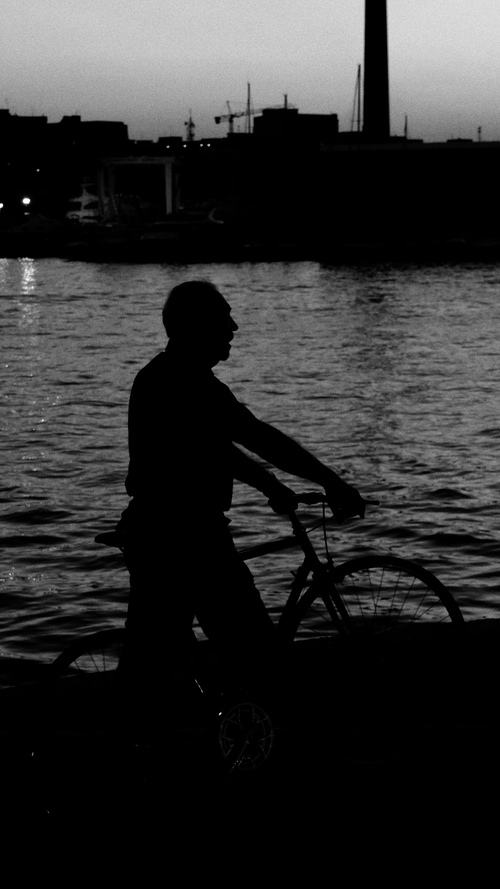
    Mohammad Kamal is a landscape and portraiture photographer based in Dubai. His work has featured in international exhibitions including the Xposure Photography Festival in Sharjah, UAE, as well as a solo exhibition at The Empty Quarter Fine Art Photography Gallery in Dubai. His landscape and documentary work has earned winning placements in the Prix de la Photographie de Paris (PX3) awards, the International Photo Awards, the Budapest International Foto Awards, the Tokyo International Foto Awards, the Neutral Density Awards, Chromatic Awards, and the Epson Pano Awards, as well as featuring in the final rounds of the Hamdan Al Maktoum International Photography Awards. Mohammad lives in the UAE with his family. When not working with his camera, he looks after a research team at a regional investment firm.

    Artist statement
    “As children, we all possess a curious ‘image sensor’ for the world. Our eyes and minds create storylines that we process as both fact and fantasy melded into one. We are incapable of skepticism; we see and believe with a curiosity that is both innocent and piercing in a way that adults do not understand.
    As adults ourselves, our ‘eye’ is both informed and corrupted. Informed by experience and corrupted by selective filters that exclude much of what the imagination used to create.
    Photography draws me in as a means of rediscovering my creative self and the fleeting magic of seeing with a child’s eyes. Photography is my friend and a conduit for lifelong discovery and exploration.”

    more. mokamal.com

    INTERVIEW with Mohammad Kamal
    Carmela Loiacono talks with Mohammad Kamal who takes part in the International Art Exhibition NATURAL FLOW – Exploring water’s essence in Matera, at cultural hypogeum Lega Navale Italiana Matera-Magna Grecia.

    Carmela Loiacono – Please introduce yourself and talk about the selected artworks: “Contemplation”, “Morning Stillness” and “Mosque after rain” you presented during the exhibition NATURAL FLOW – Exploring water’s essence. 
    Mohammad Kamal – Thank you for interviewing me! I am a landscape and portraiture photographer based in Dubai. Photography has been quite a journey for the past 10 years, and a source of creative fullfilment, physical and mental challenge, and a conduit for expression. I don’t do it for a living, and that’s probably a good thing as it has never crossed over into the realm of work, which I believe really affects the creative decisions available to you.
    In terms of the works displayed at Natural Flow, you could say that “Contemplation” is a meditation on the unseen power of the mind, not through might, but through stillness. The sadhu’s gaze into the waters is about the quiet, unseen power of thought. The juxtaposition of spiritual traditions in the background (the temples and mosque on the hill top) brings out the universality of the moment. He is almost a vessel of something far greater; the frame holds a moment where time, faith, and thought converge—and in that convergence, a quiet authority emerges.
    “Morning Stillness” holds far less symbolic value to me. The location is somewhat of a guarded secret that few guides will take you to. The subjects were arranged and posed for the shot. It’s really just a visual piece that has dream-like qualities, thanks to the type of light we had that morning, the mist in the background, and the reflection in water. It looks like one of those typical, traditional paintings from classical Chinese art.
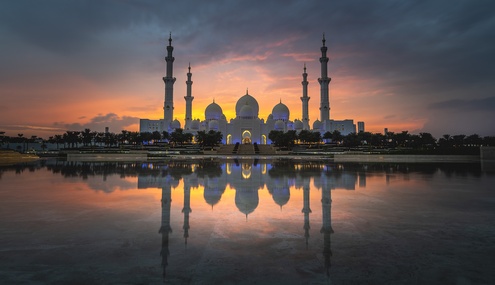
    “Mosque After Rain” is a well-kown composition here in the UAE, as it makes use of a shallow architectural feature in the foreground that collects rain water, and creates a reflection of the grand structure far in the background. I kept my gear on hand in the car for weeks as I drove past it every day towards my office. Finally, on a rare rainy afternoon, I rushed out to the spot and made it in time to capture the combination of dramatic sunset light, undisturbed water in the forground, and no cars driving by, for about 30 seconds. The months-long wait was worth it I think!

    Carmela Loiacono – How would you describe your creative process? What or who influenced or is influencing your work?
    Mohammad Kamal – I usually start with a blank slate and try to find locations or groups of people that may have interesting stories to capture. Social media is a great place to start, and sometimes I just pull up a world map and just scan across and see if any location or country has something about it that I would like to explore photographically. I’ve recently been making light use of AI to gather information about remote communities and under-photographed groups that could make for good, unique subject matter.
    At exhibitions, I often meet photographers and enthusiasts who suggest ideas to me and at times those really open up entirely new directions that I had never considered before. I was exhibiting my large scale landscape prints in Sharjah, UAE, when a renowned photographer suggested I look at the monasteries in Meteora, Greece, because of the breathtaking natural setting surrounding them. 
    That led me down a rabbit hole of exploring themes to do with monastic life and evetually spending time with the monks in a similar but far less accessible location, Mount Athos, and producing a documentary portraiture series about them. 
    In my research, I came across a Youtube video of a documentary film made in the 1980s about the monasteries, and I took note of some obscure spaces that I was hoping were still around, including the ‘skull library’ shown here. Amazingly, we managed to locate it, and from that a unique and striking composition emerged. Some of the monks featured in the documentary from 40 years ago were still there. I recognized them instantly, and ended up spending invaluable time with them. So the lesson I learned from all this is that listening to input from anyone willing to share it is an invaluable way to find fresh ideas.
    When I’ve got the basic theme or idea decided, I do a bit of planning, but leave a lot to be decided on the spot and on location. Some of my favorite images came about while responding to how the elements in the frame were behaving while I was shooting, rather than trying to force a composition. That to me is the best part of the whole process; discovering your subjects as you go along. It’s great to work with location guides and fixers who understand photographers and can draw my attention to something I would otherwise miss. 

    Carmela Loiacono – What do you think about shared art on social media? Could it be an alternative way of communicating contemporary art?
    Mohammad Kamal – It’s a great place to discover art, but nothing beats seeing quality prints on a gallery wall. I really like watching informed hosts interview or showcase great work on social media; it’s great exposure for emerging artists. 

    Carmela Loiacono – What are your future goals and/or projects?
    Mohammad Kamal – Artifical Intelligence is taking art and specifically photography, in a very interesting direction. On the one hand, hardward and software will change dramatically, making the entire workflow completely different. From focus acquisition and stacking to dynamic range and even composition, everything looks like it will make huge forward leaps very soon. 
    On the other hand, AI is generating imagery that is arguably superior in impact to traditional landscape work, and that brings into question the relevance of authenticity; does it matter if a grand vista actually exists or not? I already feel like working with my DSLR camera, which I havent upgraded in almost 8 years, is now some form of retro/old school art, only a few years away from being consigned to the same niche categorization as film photography. 
    I’ll probably spend some time figuring out how the medium reains relevant in the long run, and how I can adapt to all the changes. I’ve also found it increasingly difficult to find uniqie subject matter that someone hasn’t done before. Nevertheless, there’s an infinite number of ways to interpret a theme or idea, and that’s a good thing. I’m looking at locations such as the Algerian desert, Pakistan, and Mongolia for my next project. 

  • Philip van den Dool

    Artist from The Netherlands 

    Philip van den Dool is a Dutch artist born in 1950 in The Hague. He currently lives and works in Uithoorn near Amsterdam. Philip van den Dool followed in the 1980s in The Hague, in addition to his work as an engineer, the famous Free Academic art school.
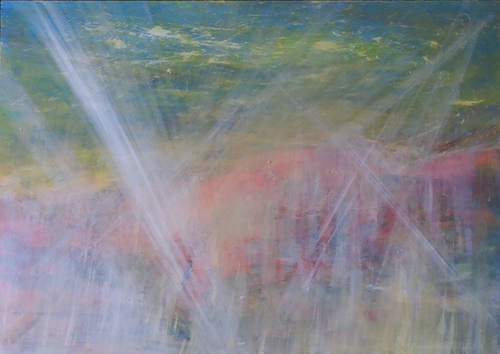
    His practice relies in addition to traditional techniques, the use of the iPad as an innovative technology and he uniquely combines digital technology with artistic expression. The bright colours, the fast, direct and clean working with layers, brushes and colours, offers plenty of room to experiment.
    On the iPad, Philip draws and paints with an Apple pencil in a personal style. The drawings are built up in layers with a variety of digital brushes and a rich palette of colours. The digital paintings are printed on art paper, acrylate or Canvas on small, medium and large formats. The works of Phlip van den Dool can be characterized as expressive with a lively colour palette and own handwriting. In 2021 he made a unique series of 110 paintings during the Lockdown, with title: Lockdown 2 Spring which shows the climate that year. A summary of these paintings was exhibited during the climate 2022 exhibition in Zwolle (NL) in the Dependence of the Fundatie Museum. In 2019 he received in 2019 the Green Heart Art Prize and in 2024 his art was on display in Palazzo Albrizzi – Capello in Venice during the 60th Biennale.

    Statement: ‘From pigment to pixel, creativity on a digital canvas’.

    more. www.philipvandendool.nl

    INTERVIEW with Philip van den Dool
    Carmela Loiacono talks with Philip van den Dool who takes part in the International Art Exhibition NATURAL FLOW – Exploring water’s essence in Matera, at cultural hypogeum Lega Navale Italiana Matera-Magna Grecia.

    Carmela Loiacono – Please introduce yourself and talk about the selected artworks: “Jardin de Monet Giverny-3, 4, 5, 6” you presented during the exhibition NATURAL FLOW – Exploring water’s essence. 
    Philip van den Dool – I would like to take this opportunity to introduce myself. My name is Philip van den Dool. I am a Dutch artist, born in 1950 in The Hague. I pursued my artistic education alongside my career as a physicist-engineer in the 1980s at the Free Academy of Visual Arts in The Hague, where I was taught by inspiring artists. After retiring as an engineer, I dedicated myself further to my artistic pursuits, with a particular interest in the intersection of new technologies and art from an engineer’s perspective.
    The introduction of the iPad in 2010 was a catalyst for me to explore this new medium. The direct way of painting, the vast color palette, and the ability to work with layers add a new dimension to two-dimensional art.
    For the exhibition in Matera, NATURAL FLOW – Exploring Water’s Essence, I have selected four works from my series Jardin de Monet – Giverny. In June 2024, I had the opportunity to visit this garden, located 100 km west of Paris, which still exudes the same atmosphere found in Monet’s paintings. Based on photos and sketches taken on-site, I have captured my vision of this garden—its magnificent pond, water lilies, and characteristic bridge—on the iPad in my own style. In these digital paintings, water and the reflections of plants, trees, and objects play a crucial role, adding depth to the compositions.
    In my iPad paintings, I employ a distinct style using various digital brushes, including dots, lines, and combinations of different forms. This approach creates a sense of depth and movement while maintaining an impressionistic atmosphere focused on light and color rather than rigid details. The combination of abstraction and recognizable elements makes my work contemporary yet also classically inspired.

    Carmela Loiacono – How would you describe your creative process? What or who influenced or is influencing your work?
    Philip van den Dool – My creative process begins with careful observation on location, followed by sketches and photographs. In my studio, I use these as a foundation to develop the artwork further on the iPad. Intermediate results are reviewed, and accents are adjusted. The iPad allows me to correct mistakes and experiment with new layers. Once the final piece reaches a satisfactory resolution, it is sent to a photo printer or printing service. Prints can be made in both small and large formats. For the Matera exhibition, I have chosen a 30×30 cm format, printed on art paper.
    Among the artists who have influenced my work, I would like to mention Vincent van Gogh and David Hockney—one of the first artists to fully embrace the iPad as a painting medium.

    Carmela Loiacono – What do you think about shared art on social media? Could it be an alternative way of communicating contemporary art?
    Philip van den Dool – Social media offers an alternative way to share contemporary art. I personally use Instagram for this purpose, though I still prefer presenting my artwork in hardcopy form. Social media can be fleeting, and screens too small to fully appreciate the details. Large-format prints and physical presentations have a stronger impact on the viewer. However, a disadvantage of hardcopy prints is the need for international shipping, which comes with logistical challenges and costs. In this regard, digital works have an advantage, as they can be showcased globally without physical transportation.

    Carmela Loiacono – What are your future goals and/or projects?
    Philip van den Dool – My future goals and projects include various international and national exhibitions, as well as continuing to experiment and create new work. Participating in the Matera exhibition, NATURAL FLOW – Exploring Water’s Essence, aligns perfectly with these ambitions, and I hope to have the opportunity to visit Matera and Puglia and meet dr. Carmela Loiacono in the future.

  • Miyako Shimizu

    Artist from Japan

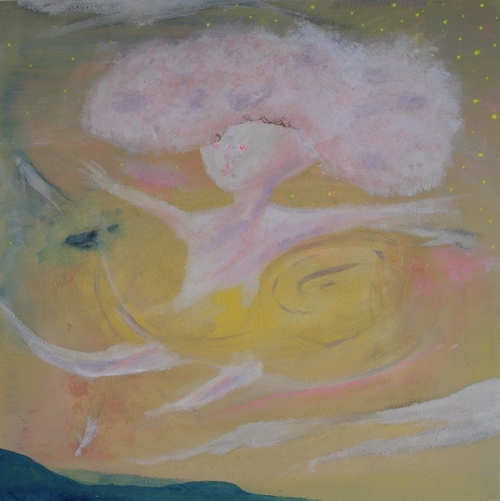
    Born in Shiga, Japan. Raised in a life of familiarity with nature and Japanese traditional spirituality in her everyday life. After training as a professional Japanese traditional cuisine chef, she started managing a Japanese restaurant at the age of 38. After that, one day – in between a dream and reality – she saw a universal mandala vision. She thought it was from the Wisdom of the Universe. 
    On September 4, 2022, she got an inspiration to paint that mandala. 

    The idea was just like the advise from the higher dimensional world, she thought. Then she started creating her  artworks although she had no experience at all in painting and moved into the world of expression. 

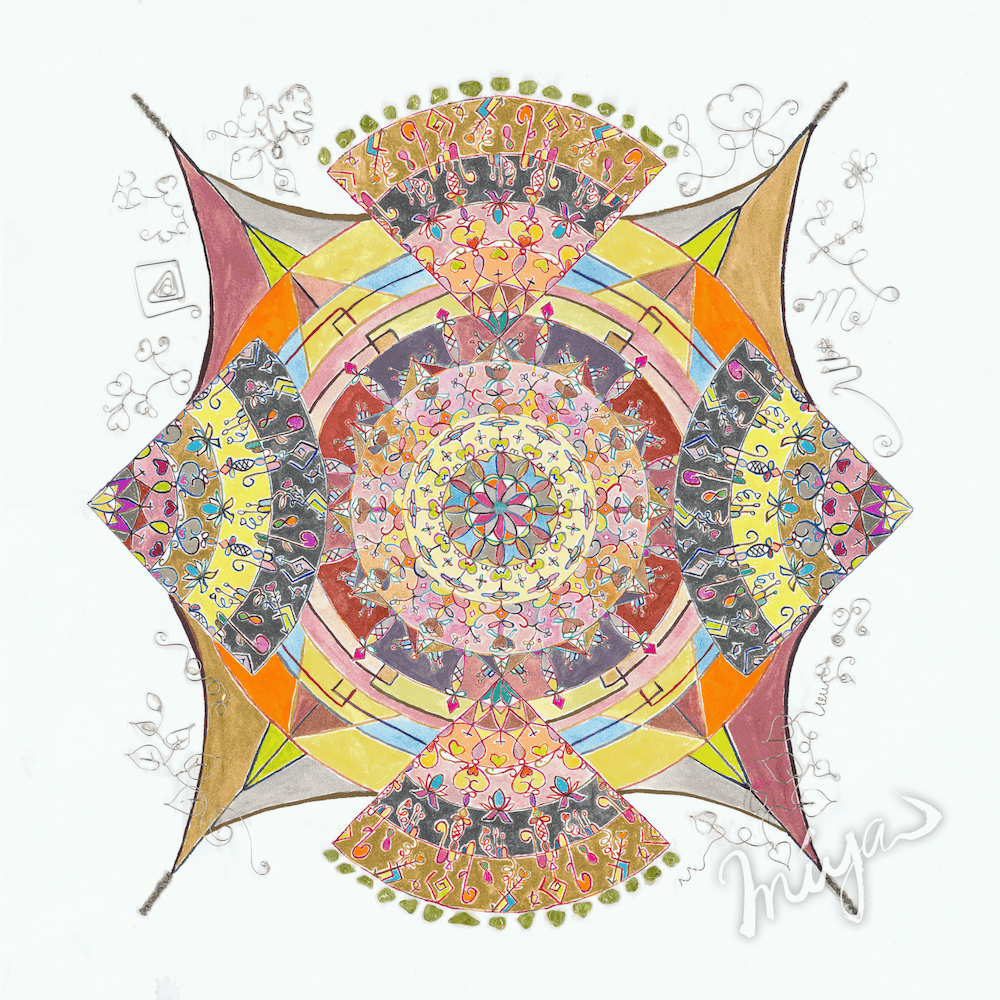
    Miyako Shimizu’s artwork expresses the wisdom from higher dimensions. Using carefully selected Japanese paper, this watercolor painting is made with sacred water from two Japanese spiritual locations. Holding a Lemurian crystal in her left hand, she carefully depicts a world beyond time and space on paper. “A special message for you is vibrating in the paintings. I hope to deliver them to those who can sense them.” – Miyako Shimizu

    more. galactic.miya.art

    INTERVIEW with Miyako Shimizu
    Carmela Loiacono talks with Miyako Shimizu who takes part in the International Art Exhibition NATURAL FLOW – Exploring water’s essence in Matera, at cultural hypogeum Lega Navale Italiana Matera-Magna Grecia.

    Carmela Loiacono – Please introduce yourself and talk about the selected artworks: “0058” and “0060” you presented during the exhibition NATURAL FLOW – Exploring water’s essence. 
    Miyako Shimizu – This artwork expresses information from higher dimensions. It is a watercolor painting created using carefully selected washi paper and sacred water collected from two different sources. Holding a Lemurian crystal in my left hand, I meticulously paint a world beyond time and space on the paper.
    The design varies according to the information received from higher dimensions, and each person resonates with different aspects. I am confident that these paintings serve as a switch to awaken and open the door to the potential of those who resonate with them.
    A special message for you vibrates within the painting. I hope to deliver this message to those who are able to feel it. 0058/0060
    The artworks are a pair, but not created simultaneously. The one completed before the spring equinox of 2024 is 0058, and the one completed after the equinox is 0060.

    Carmela Loiacono – How would you describe your creative process? What or who influenced or is influencing your work?
    Miyako Shimizu – The creative process does not involve deciding the final form from the beginning, but rather it unfolds as I paint. I carefully separate the colors and work on each line, so I would be happy if you take your time to observe even the smallest details.

    Carmela Loiacono – What do you think about shared art on social media? Could it be an alternative way of communicating contemporary art?
    Miyako Shimizu – I would like to share my art with as many people as possible through social media and reach those who need it. It is important for people to first become aware of it, then see it in person, and receive the energy it carries.

    Carmela Loiacono – What are your future goals and/or projects?
    Miyako Shimizu – I will continue to work on my creative endeavors. I plan to exhibit my works not only in Japan but also around the world, delivering them to those who can feel their energy. Thank you for your support!

  • Gwendoline Nalvarte

    Artist from Sweden 

    Gwendoline Nalvarte is an interdisciplinary researcher and artist who seamlessly merges documentary filmmaking, performance art, and visual arts. Her upbringing in Lima, Peru, amidst a diverse blend of cultures and traditions during a politically turbulent era, significantly shaped her unique artistic journey. Her heritage, a mix of Basque, African, indigenous, and Spanish ancestry, is a rich and intriguing influence on her craft.
    At 12, Gwendoline Nalvarte moved to Sweden, a pivotal moment that shaped her identity and artistic perspective as she learned to navigate the complexities of living between two distinct worlds.
    After completing her BA in Film and Drama Studies at Queen Mary University of London, Nalvarte immersed herself in diverse cultures and explored the intersection of performance art, theatre, and filmmaking. These experiences further enriched her understanding of the human condition and the power of art to challenge conventions, enlightening her and the audience about the beauty of diversity in art. Upon returning to Sweden, Gwendoline Nalvarte rediscovered a newfound appreciation for the country’s natural beauty and peaceful atmosphere. Despite feeling a solid connection to

    Sweden and Peru, she ultimately identifies as a citizen of the world, recognizing the interconnectedness of humanity and the importance of preserving cultural heritage.

    In Sweden, Gwendoline Nalvarte pursued a Master’s in Film and Media History at Lund University. This rigorous academic training, which deepened her understanding of the historical context of cinema and media, is a testament to her knowledge and expertise. It provided her with a solid foundation for her future artistic endeavours. For instance, her thesis on the influence of Indigenous cultures on modern cinema directly informed her passion for ‘ayahuasca documentaries’.

    more about Gwendoline Nalvarte. gwendoline nalvarte | Video interview

    INTERVIEW with Gwendoline Nalvarte
    Carmela Loiacono talks with Gwendoline Nalvarte who takes part in the International Art Exhibition STORIES OF IDENTITY – From hidden places to daily life in Matera, at cultural hypogeum Lega Navale Italiana Matera-Magna Grecia.

    Carmela Loiacono – Please introduce yourself and talk about the selected video art work: “Latin Swedish Women, 2024” you presented during the exhibition STORIES OF IDENTITY – From hidden places to daily life. 
    Gwendoline Nalvarte – born Swedish artist. Concerning The Stories of Identity exhibition, I wanted it to be something organically made. All I wanted to do was to connect to the inner child, because I think connecting to the inner child… will unfold answers… So I asked, these women to write a letter to their individual inner child and that is how we started with a workshop. We actually filmed outside my house in the surroundings. I live close to a natural reserve and so we went outdoors and just being connected to nature. Being grounded in that way. So that felt… Organic and raw, somehow where we could be ourselves without any masks. 

    Carmela Loiacono – How would you describe your creative process? What or who influenced or is influencing your work?
    Gwendoline Nalvarte – Sometimes we lose the connection to who we really are inside and we are a bit, you know looking for answers. But really, it’s about looking inside and so I wanted to build this bridge, first for myself in developing the process, but also for these two women that I interviewed and that was part of the creative process… And then… that actually unfolded memories… And they remembered games, that they have kind of kept locked in the back of their heads. So it was fascinating to look that happening right there. 
    Frida Kahlo, because of her unfiltered human experience, the power of authentic storytelling, the vulnerability.
    Salvador Dalí, because of… the surrealism and boundary pushing visuals… which in this case, I didn’t use it as much in that short video piece that I had. But there are elements that I considered when exploring… the physical. 
    Agnes Varda, who is a documentary filmmaker from France. She is such a dynamical… eh… influence because of her energetic candor and she is also very intimate with the things that she films and I like that. 
    Lastly, Paramahansa Yogananda, because of the spirituality and her focus of introspection.

    Carmela Loiacono – What do you think about shared art on social media? Could it be an alternative way of communicating contemporary art?
    Gwendoline Nalvarte – I believe social media it’s a vital tool for Art communication because it democratizes Art connecting people and stories that might otherwise be unseen. It allows us to transcend geographical and linguistic barriers through, features like… Multilingual subtitles now we have that so we live in a world where now we are having all these different tools and we should use them, but the way on how we use them plays in the intention. It’s all about the intention. 

    Carmela Loiacono – What are your future goals and/or projects?
    Gwendoline Nalvarte – Well, I want to continue on portraying different women in Sweden. Sweden it’s a small country with about ten million people, but we do have about over a million of immigrants or generational mixed races, ethnicities and cultures, nonetheless. So I want to explore that. I look forward to it to interview and… to meet different cultures within Sweden, to explore and also to raise awareness, because there is so much we can learn from these women. 

  • Camilla Fransrud

    Artist from Norway 

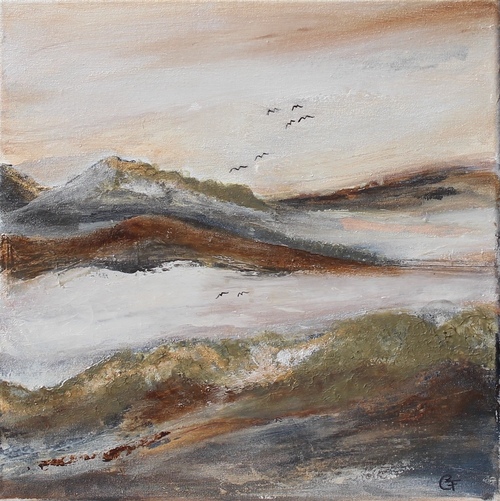
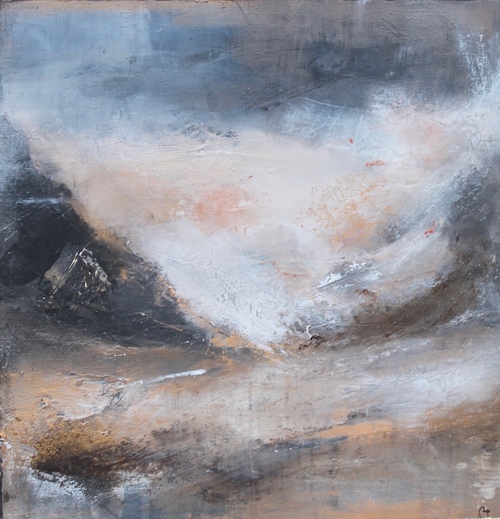
    Born in Oslo in 1974, Camilla Fransrud is a Norwegian Contemporary painter. She is self-taught in this artform. She moved to Trondheim in her early twenties and has now lived her for 30 years. Her love for art has always been with her and in sixth form college in her art classes she felt at home among the brushes, easels and colors. Her art teacher was the well-known Erlingur Jonsson, an Icelandic sculptor and he became her mentor and friend.  She started to paint professional in 2017, and she paints with acrylic in both an abstract and figurative form. The seaside landscape is close to her heart, and she is living in the countryside with the se nearby. 

    More about Camilla Fransrud: artbyc_fransrud

    INTERVIEW with Camilla Fransrud
    Carmela Loiacono talks with Camilla Fransrud who takes part with her paintings: “The Girl from the broken land” and “The Moorland” in the International Art Exhibition STORIES OF IDENTITY – From hidden places to daily life in Matera, at cultural hypogeum Lega Navale Italiana Matera-Magna Grecia.

    Carmela Loiacono – Please introduce yourself and talk about the selected works you presented during the exhibition STORIES OF IDENTITY – From hidden places to daily life. 
    Camilla Fransrud – My name is Camilla Fransrud. I am a contemporary abstract painter from Norway. I also Photograph,my artistic journey started with the camera.
    I am self-taught in both artforms.  I have always painted, but in 2017 I got the courage to share my paintings with the world and had a exhibition in Trondheim where I am based. 
    I paint with my heart, and I also write poetry. My selected works for Stories of identity talks about life itself. When you create art, it is layers of life you are sharing with the viewer, and when you peel of this layers you will come to the core and that is your heart and that is what  I attempts to evoke in my art a moment of poetic stillness in this busy world, a place where you can breathe and a place where you can dwell in. 
    I had an abstract landscape painting and a figurative painting in this exhibition. They both talk about the sea and my love for it. And it talks also bout the journey  in, that the marks and scars you carry with you makes the person you are and that in this world you can always find light and strength in you to carry on, and that life itself is quite magical and beautiful -you just have to see with your heart.

    Carmela Loiacono – How would you describe your creative process? What or who influenced or is influencing your work?
    Camilla Fransrud – My creative process  always starts with a good cup of espresso ,and some music  which brings me in a mood to create. I can also get a vision when I read and a painting takes form in my mind. I have a studio in my a house and I have a spectacular view to the sea, and this brings some emotions, reflections  that make me inspired to share its beauty ,layers and lightning.
    I also get inspiration from museums and exhibitions, and this gives me new ideas and inspiration. When I start a project, I create a mood board, I Sketch, and I mix materials and color to bring life to the canvas.
    My art teacher Erlingur Jonsson is the person who inspired me, and he is still inspiring me. He was an Icelandic artist and sculptor. The way he looked at life and the person he was is something I will always carry with me.
    I get inspiration from daily life and other artist, like Joan Mitchell, Håkon Bleken ,Vebjørn Sand and Monet.

    Carmela Loiacono – What do you think about shared art on social media? Could it be an alternative way of communicating contemporary art?
    What are your future goals and/or projects?
    Camilla Fransrud – I think social media is a powerful megaphone to amplify artistic voices and images. It is like a gallery where you can curate your artistic narrative, share your best pieces and invite the viewers to explore your creative world. I think for artist this I a powerful tool that can transform their artistic journey and to share their work to a global audience.
    I would like to develop me as an artist, to embrace change and that my projects naturally evolve from my creative journey always seeking to showcase my work at exhibitions.
    I hope to set a mark in my paintings by continuing be curios to the world and to create Unique art and I think I want to develop a affordable art project with smaller images, a step for those who want to be more familiar with art.
    I have some exhibitions in Italy this year, in Palermo and Bologna, and in Stockholm.
    And I will also develop my photographic art projects further   and I will have some exhibitions with my paintings and photographs together.

  • David W. Whitfield

    Artist from France

    David W. Whitfield was born in the N. East of England where after leaving school attended Sunderland College of Art whereafter worked in land surveying to maintain financial independence and freedom of artistic expression. Exhibitions were few but supplemented by book illustrations for Heron Publishing Company. A move from surveying into nurse practice (State Registered, psychiatry) for many years gaining an insight into many different behaviour able traits, eventually he took early retirement and moved permanently to live in France where he still now resides painting full time and into a later venture of writing, publishing poetry, short stories and novels.

    Many paintings have now been exhibited in most European countries, England, France, Austria, Switzerland, Germany and Italy including USA and India as well as works being published in books and periodicals.Art is a visual attempt to come to terms with the world, to make sense of it, an aesthetic philosophy. An exploration and a journey of materials, aesthetic principles and the subject matter of the work itself. A painting requires three components to bring it to life, the work itself, the artist and the viewer. The relationship between the artist and the painting is of an intense private emotional journey of exploration and commitment to the ongoing work. However once finished it lies waiting to be brought into the world to be presented to the viewer only then can it assume an identity which may fulfill its potential. The judgement rests upon those who interpret the image set before them, labelling of such work surely restrict any interrelation from an open unbiased point fo view and limit its full potential.

    To entitle or burden it with a meaning shrivels the work, to devoid not only it, but that of the viewer, a chance of a more expanded interpretation beyond that of a title or single meaning.

    More about David W. Whitfield: davidwwhitfield.com

    INTERVIEW with David W. Whitfield

    Carmela Loiacono talks with David W. Whitfield who takes part with his four watercolour paintings in the International Art Exhibition STORIES OF IDENTITY – From hidden places to daily life in Matera, at cultural hypogeum Lega Navale Italiana Matera-Magna Grecia.

    Carmela Loiacono – Please introduce yourself and talk about the selected works you presented during the exhibition STORIES OF IDENTITY – From hidden places to daily life. 
    David W. Whitfield – Born in the steel town of Consett in the N. E. England, attended Sunderland College of Art (as it was ten know) after leaving school, to gain independence worked first as a cartographer, land surveyor and finally as a qualified psychiatric nurse/manager. 
    Lived mostly in Manchester with periods of work in the Middle East and various countries in Africa as a land surveyor. Finally took early retirement form nursing to live full time and remain in S. West France. 
    Exhibited art work in Sunderland, Manchester and London, with some illustrations for the book publisher Heron, before the move to France, then to exhibit more wildly in Europe, particularly in Italy, including Germany, Spain, Austria, Switzerland, as well as India and USA.

    Carmela Loiacono – How would you describe your creative process? What or who influenced or is influencing your work?
    David W. Whitfield – The works shown in STORIES OF IDENTITY are one of intimacy obviously of a sexual nature the most intense and personal interaction and through this engagement may be revealed a true identity sometimes a surprising one to the partner and oneself when passion strips inhibition and the subconscious takes control, in spite of oneself!
    Water colour in this instant is the ideal medium possessing an immediacy and freshness to do justice to subject matter itself which relies on immediate instinctive ness for it to succeed as in the act of painting.
    Given subject may help to commence a work but from then on in it is purely instinctive in the construction design and composition, which is especially true when faced with the horror oh a blank canvas…
    Where to begin and with what…!
    After the rift few marks and with a vague notion, then the journey of exploration begins, constant staring at the canvas until a hint of an idea, more marks and a slow progression toward some final solution, the process being g of partnership with the work, to force a path against the instinctive one presented by the canvas usually ends in disaster or a poor finalisation. 
    No meaning no ideal, only marks on a canvas mostly recognisable but the interpretation may be as diverse as every individual as through their own experience of life.

    Carmela Loiacono – What do you think about shared art on social media? Could it be an alternative way of communicating contemporary art?
    David W. Whitfield – Influences are as varied as your personal experience of life, initially from other artists, which may be a constant thread, but often from your own ideas of life, mostly philosophical, and through conversation with many people which enriches ideas and a viewpoint which eventually is channeled back into your work, either consciously or otherwise. 
    Any means to show and share work is fine as long it is not used for propaganda means, the more people are enabled to view art outside of a gallery cannot be a bad thing.

    Carmela Loiacono – What are your future goals and/or projects?
    David W. Whitfield – I have little regard for commercial or financial success to create something and be acknowledged for possessing some merit is enough, but I am my most severest critic and never satisfied. To have a work in a private or public institution would be nice, to have passed by and not be in vain, to be acknowledged would be enough.

  • Alessandro Carbonara

    Artist from Italy

    Alessandro Carbonara is a pharmacist and a Fine-Art Photographer, born in Bari (Puglia, Italy) in 1983. Since 2024, he has decided to begin an artistic journey, driven by the desire to get involved, because nothing in life ever starts too late.
    Self-taught since 2007, he has studied in manuals and magazines, leaving room for an inner creative flow.
    He believes that passion is the wood that constantly feeds the fire of creativity. Perfectionism is his core belief.

    He considers photography a tool for creating, documenting and transmitting what is essential, not trivial. He tries to give photography its due value as an expressive and narrative art form, winking at different methods. He prefers the photographic genres of portraiture, from classic to experimental, and expressive, evocative, unconventional landscape photography.

    More about Alessandro Carbonara: alessandrocarbonara.photo | Video interview


    INTERVIEW with Alessandro Carbonara

    Carmela Loiacono talks with Alessandro Carbonara who participated in four International Art Exhibitions:

    1) STORIES OF IDENTITY – From hidden places to daily life in Matera at cultural hypogeum Lega Navale Italiana Matera-Magna Grecia with his photos series “Breath”.
    Carmela Loiacono – Please introduce yourself and talk about the selected works you presented during the exhibition STORIES OF IDENTITY – From hidden places to daily life. 
    Alessandro Carbonara – I’m a photographer for passion and pharmacist by profession. Firstly I was to thank you, Carmela Loiacono, the curator of the exhibition, for the possibility you gave me.
    Regarding the context of the photos, I wanted to play on the words of the exhibition title “Stories of Identity”. The story as a time span that wants to tell something, in which something happens. I decided to tile the four artworks: “Breath”, because the time span, in which the entire composition takes place, is that of a complete respiratory act. So about a few second when something happens. The identity can normally be represented by a series of elements, which are intended to define something or someone in a certain way. However, since photography is a form of art and in art it’s good to step outside the box. In this case on the concept of identity, I preferred that the identity of the individuals shown in the photos was hidden. In fact, the main exposure is the landscape, as a result, the figures are underexposed, so they aren’t recognizable, because in this case identity should not only be what the subject represented in the photo has to tell, but also it should be the identity from the point of view of the viewer. So consequently I like to imagine that anyone can identify with the couple in the photos, whom I firstly don’t know. I took these photos in Monopoli on the harbor and I like the idea that any of us can imagine being there, present at that moment. In this scene something happens. We can imagine that they could be a married couple just taking a walk. The peculiarity comes from the fact that they aren’t in all four photos together, but for example in the first photo where the woman walks alone and then she’s joined later by her husband and they stop and look in the same direction. So there is also something, a storytelling that I leave to free interpretation in the eyes of the viewer of photo’s sequence.

    2) NATURAL FLOW – Exploring water’s essence in Matera at cultural hypogeum Lega Navale Italiana Matera-Magna Grecia with his diptych of photos: “Fluctuations I and II”.
    Carmela Loiacono – In the artworks “Flactuations I and II” the intense blue forms the backdrop to small droplets of water that imprison a hidden force. What is their deeper meaning?
    Alessandro Carbonara – The water droplets are of great importance throughout the composition, as are the background and the ethereal human figure. They are a source of life, survival, and completion, almost as if representing cells of the human body about to unite to develop tissues, which in turn form organs and which, together, define the human figure in its complete and finished form. We are witnessing an extraordinary stage in the formation of human life, normally invisible because it develops in the mother’s womb, but artistically visible in a small evolutionary moment.

    3) CREACTION in Matera at cultural hypogeum Lega Navale Italiana Matera-Magna Grecia with his photos: “Mater Terra”, “Acrofobia” and “Fermarsi”.
    Carmela Loiacono – Could you kindly tell me about the works “Mater Terra,” “Acrofobia,” and “Fermarsi” exhibited during the CREACTION exhibition in Matera? What techniques you used for each photograph?
    Alessandro Carbonara – Through the photographic technique known as ICM (Intentional Camera Movement), I sought to recreate an idea of movement capable of conveying an expanded perception of time. By convention, we live without being aware of the infinitesimal instant, and in Fermarsi and Acrofobia I wanted to evoke physical and temporal sensations that we might perceive if we had the ability to slow down or momentarily stop time.
    The feeling of emptiness that arises at the beginning and end of a sudden movement is indeed perceived by our brain, but our sight cannot fully capture it.
    Mater Terra is a digital collage composed of two photographs representing the passage of time for both a human being and a landscape — the latter marked by centuries and far more enduring than the former.
    Although separated by time, the profiles of the woman and the caves seem to merge, as if aging together, in a visual union that gives us the impression that the head and the land are intertwining — creating a connection between mother (fertile earth) and earth (mother of nature).

    4) STORIES OF IDENTITY – The 2nd Edition in Matera at cultural hypogeum Lega Navale Italiana Matera-Magna Grecia with his photos: “Inferno”, “Purgatorio” and “Paradiso”.
    Carmela Loiacono – The works “Inferno,” “Purgatorio,” and “Paradiso” make up the series presented during the exhibition STORIES OF IDENTITY – The 2nd Edition in Matera. What is the deeper meaning hidden within each photograph? Are there specific messages you wanted to convey?
    Alessandro Carbonara – In the three realms of the afterlife — viewed from a cultural rather than a religious perspective — we are called to spend our spiritual eternity. Whether it will take place before a higher God, through atonement of sins, or in awaiting a final judgment, we cannot know. Yet these three realms embody the essence of who each of us has been on earth.
    The black souls in Inferno bear an eternal weight.
    Undefined souls in shades of grey are in a state of purification.
    White souls are pure, wandering blissfully.
    None of these conditions can be seen as entirely separate — redemption and damnation may coexist in a dynamic process where the two fates transform into one another.
    Is there a message? Yes! Let us strive to be the best vessels for our souls; let us take care of our bodies while on earth, for they will not accompany us at the moment of passing.

    Carmela Loiacono – How would you describe your creative process? What or who influenced or is influencing your work?
    Alessandro Carbonara – I always try to convey some emotion, I don’t want photography to simply be a photocopy of reality. There must be something more to what I do, and my photographic tool must become an extension of both my eye and my mind. The vision must create an expansion in the instant it is conceived. I would like to be the drop that creates circles in the ocean, which although losing intensity as they expand, continue to influence everything they encounter on their journey. 
    I do not have a single source of inspiration. I want to be inspired and contaminated by everything around me. I don’t want to have any limits.

    Carmela Loiacono – What do you think about shared art on social media? Could it be an alternative way of communicating contemporary art?
    Alessandro Carbonara – We are children of our past, but we live projected into the future. Social media are our calling card and should therefore be used in the best possible way. Yes. Social reaches further than our voice.

    Carmela Loiacono – What are your future goals and/or projects?
    Alessandro Carbonara – I would like to try to make a recognisable mark in my photography by continuing to study, reinterpret or create unconventional genres. During this quest for maturity, I will continue to exhibit my photo-works by collecting feedback from my observers.
    To keep improving, seeking new ideas, new inspirations, new ways to reflect — to let myself be guided by curiosity in all its forms.
    To live while trying not to waste my time.

  • Satoshi Morita (Raymma)

    Artist from Japan 

    Satoshi Morita was born in Fukuoka, Japan, and raised in Saga, Japan. Satoshi is a traveling ‘Amazinist’ who seeks and continues to capture and seek “Beauty” from varying perspectives. All of Satoshi’s artwork transcends all genres. Morita continues to play with photography, painting, along with playing improvised piano through his unique, original, and self-created way.

    Artist Statement
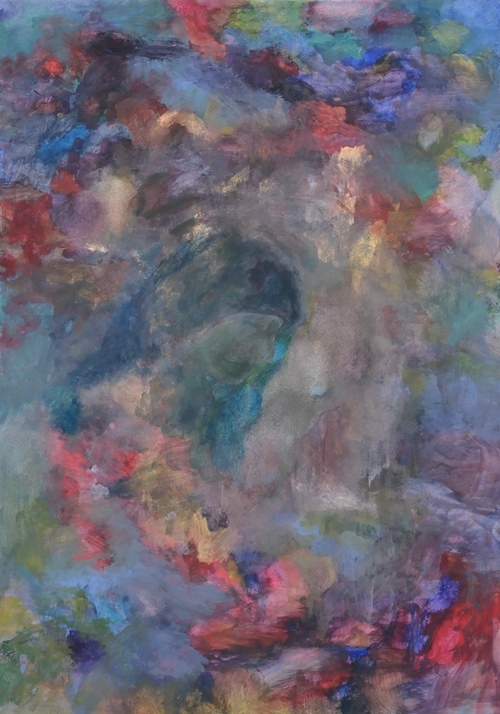
    “I aim to make the invisible visible. Projecting new stories. Sharing new lights, while exploring unknown light and darkness and expressing a story about how light and darkness are reconciled. My painting process and technique encompasses a number of mixed media along with approaching the work from varying angles. I paint, rub, scrape, and do various things whatever I think of.
    My body just follows along with my energy and inspiration. I feel this natural movement of my body is my technique and that makes his art unique.
    In regards to inspiration, my voice sometimes ask myself , “Is the source heaven, hell, or even the universe? I am playing with the image whichever source it comes from.”

    More about Satoshi Morita: raymma.info/satoshi-morita | Video interview

    INTERVIEW with Satoshi Morita

    Carmela Loiacono talks with Satoshi Morita who participated in two International Art Exhibitions:

    1) STORIES OF IDENTITY – From hidden places to daily life in Matera, at cultural hypogeum Lega Navale Italiana Matera-Magna Grecia with his artworks: “PYUUUUUN”, “MAI” and “YAKAI”.

    Carmela Loiacono – Please introduce yourself and talk about the selected works you presented during the exhibition STORIES OF IDENTITY – From hidden places to daily life. 
    Satoshi Morita – My name is Satoshi Morita. Iʼm from Japan. Well, I define myself as “The questioning artist”.
    About all of these artworks: “PYUUUUUN”, “MAI” and “YAKAI” – since I create them with no intention at all, I myself have no idea what will come out while I am creating them.
    Sometimes I create in the dark.
    The reason why I ask the question is that when I look at my own artwork, I look back at myself, or rather, it is like a mirror, so I have to see what the audience sees from my artwork. And this is how my artwork is completed – by gathering each viewpoint of all the audience, my artworks will grow into a multi-layered and unique form.
    About this collaboration, first of all, I am very happy to have come to this city, Matera.
    I had great time to walk around a lot and feel the activities of various ancient people.
    The theme of this exhibition – “STORIES OF IDENTITY” reminds me of a lot of stories with my very own roots and myself, so I am very grateful for this wonderful opportunity.

    2) CREACTION in Matera, at cultural hypogeum Lega Navale Italiana Matera-Magna Grecia with his artworks: “Sei”, “Dou” and “Sin”.

    Carmela Loiacono – How would you describe your creative process? What or who influenced or is influencing your work?
    Satoshi Morita – My creative process begins with starting the day in a good mood! Taste my favorite honey, drink a leisurely cup of coffee, or take a different driving route to my studio…depending on my mood that day. In my studio, I rock in my favourite rocking chair while looking at the scenery. Then, I suddenly start painting.
    Before start creating, I haven’t decided on a theme, a painting medium, or anything else. I just let my body do the colouring without thinking about it.
    Sometimes an unexpected process comes in. And when my hand spontaneously stops, the artwork is complete.
    Then – as the first audience – I look and feel the artwork from various perspectives. I find something from the painting and the orientation of the painting is determined. At this point I have followed this creative process, however I don’t know how it will change in the future. That is also something to look forward to!
    Influences.
    – The beauty of nature, living and playing in the countryside as a child, traveling. People who have influenced me.
    – My children, Nanako Ijichi, Leonardo da Vinci, Hokusai Katsushika, Picasso, Gaudi, Matisse, and my friends.

    Carmela Loiacono – What do you think about shared art on social media? Could it be an alternative way of communicating contemporary art?
    Satoshi Morita – I am very grateful to social media because they made my artwork known and through those, many people in art approached me. Then various exhibitions were realized.
    However, when I look at social media from multiple angles – I find some issues.
    There is the adjustment of the administrator’s algorithm. And of course, artists who are skilled in showcasing in social media take more advantage than old-fashioned person on the internet. In light of these and other things, it is questionable whether social media genuinely works in art, in my opinion.
    I also believe that there is no experience beyond facing the artwork in real life.Therefore, I believe that social media should be used well as a tool. As for its use in art, it should be used as a communication tool to recognize artworks and the artists themselves, and to obtain comprehensive information.
    If an artist creates only for the purpose of getting attention on social media, that person may lose sight of the essence of their own art.
    I would like to continue to focus on the essence of my activities and try to have a good relationship with social media.

    Carmela Loiacono – What are your future goals and/or projects?
    Satoshi Morita – My goal for the near future is to hold a solo exhibition in Tokyo and Osaka, Japan in April/May 2025, so that many people can actually view and interact with my artwork.
    As a new project, I am also considering creating artworks to order. In this project, I will create one-and-only artwork for each client, according to their request theme in a very short sentence, for the inspiration of the piece.
    Plus, also planning to start renting my artwork. I will propose this as an easy first step for people to feel familiar with art. If someone would like to display a painting but cannot afford to buy one, this will be a casual, good option.
    One more fun plan – organizing an art party to enjoy together! I am thinking of holding a salon for a small group of people. It will be like a regular small party where we can enjoy good food /drinks, painting together, talking about artworks and travel episodes through my art exploring.

  • Marita Setas Ferro

    Artist from Portugal 

    Marita Setas Ferro, born in 1967 in Beira, Mozambique, is a Portuguese cultural manager specializing in art, fashion, sustainability, and crafts. She integrates these fields in innovative projects as a fashion designer, sculptor, culture manager, and creative director. Ferro focuses on Fine Craft and heritage, merging crafts with design and art to create impactful projects.

    Ferro is the Founder and Board President of Between Parallels – Ass. for Design and Sustainable Development, and a board member of Portugal à Mão. Since 2012, she has held an artisan professional card and craft production unit, training in craft, design, textiles, and fashion. Her notable works include the “Soft Works” series and “Wearable Sculptures,” exhibited in Portugal and at World Art Dubai, selected for COLLECT OPEN 2024 London), Future Icons Selects/London Craft Week 2024, 74th A-ONE exhibition, Silvermine Arts Center, Canaan, Connecticut, USA and several on-line exhibitions.

    More about Marita Setas Ferro: www.setasferro.com

    INTERVIEW with Marita Setas Ferro

    Carmela Loiacono talks with Marita Setas Ferro who takes part with her leather sculpture “Symbol #2” in the International Art Exhibition STORIES OF IDENTITY – From hidden places to daily life in Matera, at cultural hypogeum Lega Navale Italiana Matera-Magna Grecia.

    Carmela Loiacono – Please introduce yourself and talk about the selected work you presented during the exhibition STORIES OF IDENTITY – From hidden places to daily life. 
    Marita Setas Ferro – I’m a Portuguese artist that works within several areas: art, fashion, sustainability and crafts and I like to combine them in new and impactful approaches. I’ve been exhibiting and also developing and curating exhibitions dedicated to Fine Craft and Sustainable Design. 
    Focused on the Fine Craft and heritage with a desire to combine crafts with design and art, I always tried to developed unique and distinct art pieces and artistic projects that combine different aspects in which the artistic perspective, the connection to crafts and the need to positivity impactfully people’s life has always been a constant.

    Carmela Loiacono – How would you describe your creative process? What or who influenced or is influencing your work?
    Marita Setas Ferro – My creative process is deeply rooted in my visual perception, where small details, lighting, images, and reflections capture my attention and inspire me to stay curious. This heightened awareness leads me to seek out more information, adding layers to my creative vision. Exhibitions and museums are also a constant wellspring of inspiration, fueling my work with fresh ideas and perspectives.
    When beginning a project, I start with a broad theme and gather images, ideas, and relevant information. Once I feel ready, I select the materials and techniques that best fit the concept, moving into sketches or collages. Often, I can clearly visualize the final piece in my mind, making the process of bringing it to life smoother and more intentional. Each step is a journey, blending intuition with structure, transforming ideas into tangible art.∑

    Carmela Loiacono – What do you think about shared art on social media? Could it be an alternative way of communicating contemporary art?
    Marita Setas Ferro – Sharing artwork on social media is incredibly exciting because it allows us to showcase our creations to a global audience instantly and effortlessly. The reach and speed of digital platforms mean that our work can connect with more people, including curators, galleries, and fellow artists, fostering a network of creativity and collaboration. Social media becomes a dynamic space for inspiration, feedback, and exposure—turning what was once a local showcase into a worldwide art community.

    Carmela Loiacono – What are your future goals and/or projects?
    Marita Setas Ferro – My future goals and projects naturally evolve from my creative journey. I’m actively pursuing opportunities to showcase my work at various exhibitions and biennials in textile and fiber art, which will allow me to present pieces that weave together textiles, leather, and other materials in unique, unexpected ways. I’m constantly exploring new approaches and materials that better express my artistic vision, pushing boundaries and discovering fresh avenues for creativity. Each project is a chance to deepen my practice and reach new audiences, connecting with the art world through an ever-evolving tapestry of techniques and textures.